The next move is yours
We’re ready when you are.
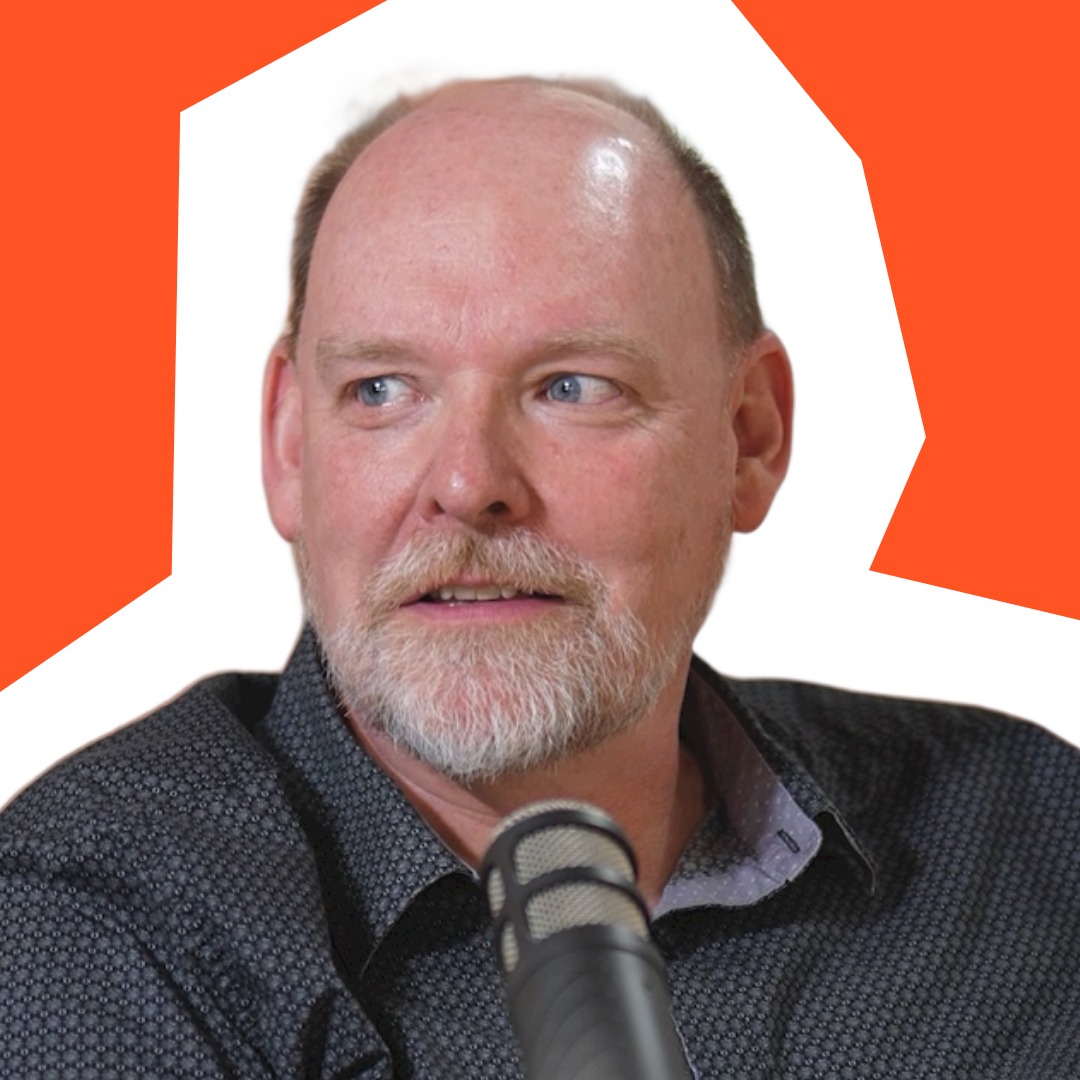
Steven Ten Holder is the co-founder of Acorn Biolabs, where he’s redefining the future of health through groundbreaking work in cell preservation and regenerative medicine. From pioneering CRISPR for plant immunity to launching a successful startup backed by Y Combinator, Steven’s vision is reshaping longevity-tech. His work blends artificial intelligence, biology, and synthetic breakthroughs to help people live sharper, stronger, and more resilient lives. A dual-minded thinker, Steven continues to lead the next wave of innovation in the biotech industry.
Steven Ten Holder [00:00:00]
When I was in grade 10, I had a realization that we are going to die. I think we had all kind of understood that before. But your brain has to get to a certain sort of like maturity level to really grasp and fully understand what that means.
Mo Dhaliwal [00:00:13]
That's a pretty early realization, though.
Steven Ten Holder [00:00:14]
Yeah, yeah, I think I think it was.
Mo Dhaliwal [00:00:16]
I think for me it was like late 20s after like a really bad hangover.
Steven Ten Holder [00:00:19]
Yeah, pondering it all.
Mo Dhaliwal [00:00:22]
Yeah, but oh my god, grade 10 is quite early.
Steven Ten Holder [00:00:24]
Yeah. I agree it was definitely early and strong as well.
Mo Dhaliwal [00:00:32]
Welcome to High Agency, igniting conversations with inspiring people, leading transformative change. The future of health isn't just about living longer. It's about living sharper, stronger, and with more resilience. We're on the edge of an era where your body's cells might be stashed away like precious assets, ready to regenerate a healthier version of you. Welcome to the thrilling world of regenerative medicine, a space that's catapulting from sci-fi fantasy to a billion-dollar reality. By 2026, this field is projected to hit $26 billion. Driven by innovations that don't just patch you up but aim to freeze the clock on your cells, preserving your vitality for the long game. It's no longer just about lifespan; it's about life power. Scientists and entrepreneurs are hacking biology, leveraging AI, and building digital avatars and twins of our bodies. Think of an ecosystem where your preserved cells could one day repair, restore, and even enhance you, where personalized cell therapies address the root of the problem before it becomes a crisis. From non-invasive cell collection to synthetic biology breakthroughs, the field is evolving at light speed. And in the midst of this bioengineering revolution is Steven Tenholder. Steven isn't your typical biotech founder. He's a boundary-pushing innovator who leapt from lab experiments to co-founding Acorn Biolabs, a game-changer in cell preservation. While still a student, he was already pioneering CRISPR technology for plant immunity. And snagging awards at iGEM. Acorn Biolabs started in the University of Waterloo's Velocity Garage, where Steven mixed science with grit to grow a company that's now backed by Y Combinator. A dual-minded thinker, he holds patents, mentors future disruptors, and works to help science and technology startups thrive in the Canadian ecosystem through the Creative Destruction Lab. Steven's work is redefining how we think about health, longevity and the very structure of our lives. So today, we dive into his vision, his journey, and what he's cooking up in the next wave of bioengineering and making longevity tech accessible to everyone. Welcome, Steven.
Steven Ten Holder [00:02:53]
Thank you, Mo.
Mo Dhaliwal [00:02:54]
So longevity tech. I mean, isn't this what Brian Johnson's doing?
Steven Ten Holder [00:02:57]
Yes. I love Brian Johnson. He isn't just bringing insights into health into the mainstream. He's also pushing a bit of an ideology. I don't know if you've seen his talks, but he loves saying the don't die movement, right? Almost as if it's a new way of just like looking at the world. So I appreciate that he's doing the hard work that it takes. To change people's culture around how they think about living longer. So, beyond just the fact that I think he's a great guinea pig doing these experiments on himself, we all get to learn from. When you dig deep beyond the sort of superficial weirdness of it, he's actually also a very interesting and philosophically sound thinker.
Mo Dhaliwal [00:03:41]
So what was the genesis of Acorn Biolabs? Like, at what point did you decide that bioengineering for longevity is going to be your purpose, and this is an area of your life where you're going to focus so much?
Steven Ten Holder [00:03:53]
I mean, I have to admit it is a bit of it; it stems from naivety. Honestly, when I was in grade 10, I had a realization that we are going to die. I think we had all kind of understood that before, but your brain has to get to a certain sort of like maturity level to really grasp and fully understand what that means.
Mo Dhaliwal [00:04:12]
That's a pretty early realization, though.
Steven Ten Holder [00:04:14]
Yeah, yeah, I think I think it was.
Mo Dhaliwal [00:04:15]
I think for me it was like late 20s after like a really bad hangover.
Steven Ten Holder [00:04:19]
Yeah, pondering at all.
Mo Dhaliwal [00:04:21]
Yeah, but oh my god, grade 10 is quite early.
Steven Ten Holder [00:04:23]
Yeah. I agree. It was definitely early and Strong as well and it made me look into the philosophy of it and The fear like the core emotions of fear Drove my brain into thinking about what to do about it and for whatever reason It decided that science and doing something in an engineering biology way Was at least like if I only have one life span and I have to do something with the project of my life's career anyway I might as well give this whole like we could live longer and not have to die At least in the short 80 years in front of us kind of a shot give it a good shot Anyway, so I had decided that from grade 10 in my undergrad. I went to waterloo very innovative university awesome place. I honestly expected I would just be like a thorough academic, right? This is a basic science problem, but I had the concept that, hey, there are all these Silicon Valley people. They're very interested in longevity as well. 23AndMe was a thing at the time, much more popular than it is now. And you could send cells through the mail to get sequenced for DNA. And so I thought, hey, real quick, let's just get the enthusiasts, send their cells through their mail, I'll freeze them in one freezer, and then a group of us get to bring our young cells into the future,e and maybe we'll get to use them to live longer. I thought that would be a cute Kickstarter side project, and I'd go off and do my PhD, but it ended up becoming a whole company.
Mo Dhaliwal [00:05:54]
That's incredible. You know, I think there's always been a fascination with living longer, having more opportunity to exist in this state, and, you know, whatever that means. I'm not sure if you're a fan of Dune. Dune, yeah. Yeah, I am. And there was one of the later books where there was this amazing quote, and it was like one of The Bene Gesserit was kind of reflecting on like ancient humanity. And she was saying that like, you know, I think they were talking about spice production and how critical it was, and they were talking about longevity and. The fact that they had about 300 years, 250, 300 years to kind of get their life's work done. And she was talking about ancient humans that could barely make it to a hundred years, and oh God, they were just in such a hurry all the time. So it is kind of interesting because as you get older, I feel like suddenly life becomes more precious and you start thinking about how much time you have left, throw it ahead. I'm definitely pondering my own mortality far more now than at any point in my life. But there is this interest and appreciation for saying, okay, now that we've kind of arrived at this consciousness and in this state, how can we get more out of it? But let's just assume it's gonna happen for a second. I just wanna go through like a thought experiment with you. I think it might be an interesting journey. If we were to project it into the future and say that the work that you're doing, the investments into this area, that they all pay off. And a natural coming-of-age thing for us now is that as you're growing up, everybody gets their cells frozen. And then later on, 80, 90, you're just, you know, getting the right thing to just extend your lifespan. So now that every human is living to 800, right? What does that look like?
Steven Ten Holder [00:07:37]
A lot of changes. So I bring this up with people all the time, as you might imagine, and I've heard every critique that you could possibly have. So one of them is, you know, dictators will live forever, and we won't have change. Another one is like, the world's going to overpopulate, and you know, we just don't have the resources to keep everyone alive for that long. Another One is sort of like bad ideas that stay in the minds of old, calcified people; they need to die so that the young, new ideas can recycle through. It's like that quote, right? That science progresses with every funeral. That's what I do. Yes. I'm not going to claim to know the answers to any of these things necessarily. Basically, any prediction that you make more than 20 years out into the future and now more than 10 years out in the future is almost certainly wrong for reasons that you can't anticipate. But what I will say is that I think we're underestimating how much smarter people will also get so Look at Neuralink look at obviously what AI is already enabling us, you know ten years ago We had a cell phone in our pocket that allowed us to communicate with anybody and look anything up and then we have a cell Phone in our pockets with an oracle we can speak to. Mm-hmm. And in ten years, it's gonna be even better, even more Positive so I don't think long-lived humans that make it to 200 are going to be okay with calcified minds. I think they're going to prefer having young, nimble minds that move with good ideas and reject bad new ideas as well. So I actually think it's just going to be the best of both worlds from that perspective. What part do you question the most, do you think, personally?
Mo Dhaliwal [00:09:18]
So on the surface, it just sounds awesome. Right? Yeah, because I feel like if I could be you know 40 years old for the rest of my life. Yeah, like who wouldn't want that? It sounds incredible. Yeah, and I'd know for me, I think 40 is the right age, cool. But you know, when it comes to the technological integration, I sometimes think back to you know, this quote, it was like a tech panel somewhere and like Elon Musk was speaking at it, and love him or hate him. He's got some great one-liners and he said this thing where he basically said that you know biological life might be the bootloader for technological life right and for anybody that's curious a bootload was you know on more legacy operating systems it's like you would start up your computer it would check the memory check the ram run all these checks before the real thing showed up right and the real things would be windows the real thing would be your old Mac OS operating system. These days, the bootleaders get hidden from us; we don't necessarily get to see them processing. But the idea is that there's this little thing that shows up that just kind of readies the environment for the real thing to show up. So for him to say that you know biological intelligence might be the bootloader for artificial intelligence, you know, like it was profound, it kind of blew me away a little bit because yes, we can extend our lifespans, but at the end of the day, you know, it might be centuries. Could it be longer? I don't know. Without massive technological intervention And at that point, why not be just entirely technological and fully solid state, where it doesn't, now suddenly time doesn't mean anything because you could be 100,000 years old, you could be a million, who cares? Okay.
Steven Ten Holder [00:11:00]
A few thoughts on this. One is that I don't think the human experience, as it was created by evolution through natural selection over the last 100 million years, is the peak of experience. You could think of the space as just like possible experiences that conscious things in the universe can have, and human experience, like the human condition, is a narrow sliver of all those possibilities. It's a great one. Don't get me wrong. I freaking love humans. Humans are great, and we happen to have been born humans, but we have a unique. Opportunity to peer beyond that. So this is why I think the work Neuralink is doing is actually maybe the most important work that Elon is doing. The humanoid robots are probably gonna be next, you know, 20, 30, 40 years, but then I think beyond that, we will want to merge with the AI hyperintelligences and take on new forms. I question this idea that we could like upload our consciousness. I think there's way too much hand-waving going on there, and we don't actually understand consciousness deeply enough. To understand whether we would actually just be killing ourselves and giving birth to a clone digital version of ourselves. That's actually a deeper and more fundamental problem than a lot of people give it credit. But yeah, I think I don't know if people give it this label, transhumanism, right? Even though I think it's sort of like a limited version of thinking about this. So yeah, in the Dune series, the Bene Gesserit, you know, thinking on this sort of 300-year scale, I love that Frank Herbert's vision showed us. What thresholds get unlocked as fundamentals of the human condition change? Obviously, the Benejes weren't exactly the greatest force in the universe, necessarily, but you could think of old people who think about climate change now as personally knowing that they will exist on Earth 200 years from now and therefore making different policy decisions as a result of that. Right. Yeah.
Mo Dhaliwal [00:12:53]
That's an incredible perspective. Yeah, and by no means is this forum, this experience, the peak of what's possible. I think a lot is gonna be unlocked. But what else do you kind of see as being? There's the engineering aspect, where, socially, perhaps there's a bit of an aversion to the idea of engineering. I think maybe it comes from GMO crops and a lot of negative perception around that, and so we're kind of talking about GMO humans and the immediate reaction for a lot of people as a bit of a version of that, right? We're taking something that is natural, therefore wholesome, and now adultering it, actually in wild new ways, without actually understanding what that might mean on a thousand or 10,000-year time scale, right? Where do you think the predictability kind of comes in, right, of all of these changes we're making willy-nilly? If we make them, how do we predict the outcomes? What if...
Steven Ten Holder [00:14:01]
You kno,w when you walk outside of your apartment, and you go on the streets of a city you're taking a risk of being hit by a car I think a core difference in temperament between people here is risk tolerance and How good they think Good risks can be I think that is the fundamental distinction And so then moving up a layer from that. I do think in the future. We're going to bifurcate society will be the people who are afraid of taking risk because they feel like their classic human existence is awesome already and why take these risks that might hamper it even a little bit and there are other people who aren't as happy being sedentary and who have visions of a future that is fundamentally different and interesting and worth pursuing and they will be taking risks with you know, AI is a risk already. We're literally already going full-forced into that risk, and biology is no different. You're totally right. So there's that perspective. There's also... Yeah, I mean, like if you look at GMO, it does seem like that was basically just a giant miscommunication, like what? Actually has gone wrong with any human from GMO food I think they kind of like conflate it with monsanto and like pesticides and stuff Um, you know, it is a bit funny when you go to the grocery store in a highly educated market like whole foods I'm sure everybody there is college educated, etc And yet they are buying organic apples as opposed to the what inorganic apples? That doesn't even make sense, given how chemically there's no such thing as an inorganic apple to say it's an organic apple. Anyway, so you can see that my position here is basically that it got a bad rap, and I hope it will get a better rap over time. And then, yeah, I mean, on the human modification side, like I don't think you're going to be able to hold people back. Like the innovators are going to innovate. They're going to do it where they have to do it. And they'll bifurcate it away from the people who want to be like Amsterdam, like Europe, where they've got it made in the shade, and they'd rather regulate than innovate.
Mo Dhaliwal [00:16:13]
And actually, I think it's probably even more than a bifurcation. Like I was reminded of this years ago. I was talking to this guy who was a far futurist at a department in Oxford, and they're running models and simulations on a one-hundred-thousand-year time scale for humanity. Right. And doing risk assessments and all this sort of stuff. And I was. Talking to him about this technological advancement and what it means, because I asked him about his pendant, and he had this, this pendant he wore. That basically had some instructions about how to cryogenically freeze him when he dies. And I was blown away because I was like, that is so interesting. After all, it's like this program, and he's a part of it. And we're on this like bus ride in Amsterdam, and he said, or I asked him, I'm like, oh, that's amazing. So when you die, this thing has instructions on where to take you,u and your whole body's gonna be frozen. And he turned to me like totally nonchalantly. He's like, no, no that'd be inefficient, just the head. He's right. And, so, you know, AF found that fascinating. I'm like you, this is normal for some people. But the other part was, as I was talking to him about, like a change in technological innovation, you know, he kind of reminded me that, you know, we are on a planet that, um, still has like fourth world tribes, right? And we are on a planet where, you know, the future has arrived differently in different areas, right? It's all over the place. And so there's going to be an increasing fragmentation, it seems now with neural language technology, where, you know, even the idea of human, like right now. We can still generally identify a human, right? Whether it's a fourth-world tribe or us, you can say, okay, all these people have about the same characteristics that have been around for the last 100,000 years, right? But what you're describing in this future, it kind of changes what a human is, then, doesn't it?
Steven Ten Holder [00:17:56]
Totally, and sorry, I thought where you were going with that,t as well as the sort of wealth inequality of it all. That's definitely a part of it, right? Right. Who can afford these futures? Right? Yeah. Fortunately, it seems like economies of scale make this democratized, as in, you know, the wealthiest people don't have access to a better iPhone than you or I could get. The wealthiest people don't have access to a better version of ChatGPT than you or I could get, and you know GPT 3.5, I think four like some versions of four four mini are available for free to everybody in the globe right now. That's amazing And I think, and I hope longevity technology and like intelligence technology, you just kind of loosely framing it that way, you will also become democratized, like, you know, yeah, so I'm hopeful about that. However, I also see this sort of thing. You know, should we have should the United States in 1969 have landed on the moon and spent many billions of dollars, however they did do that, you know, while they still had homeless people on the streets in the United States, while there were still third world countries that were literally malnourished, you just with basic needs. And I think the answer is actually still yes, I don't know that we're going to solve those problems anytime soon, even with much better technology. And on top of that... I do think if we allow some of those innovators, quote unquot,e at the top or who are getting millions of dollars in VC funding to pursue these crazy ideas, that technology may allow solutions to these policy and corruption issues that actually have continued to keep people impoverished in ways that would not have been possible in the past without allowing the innovators to do that. Maybe that was a little bit kind of eluding, basically leapfrogging. India leapfrogged wired telephone poles. They went straight to wireless. Exactly. And that has created more lift in terms of poverty than anything else. So it turns out the innovators somewhere else led to poverty reduction through this leapfrogging effect. So I do think it's worth allowing the innovator to keep pushing forward, even if there is this inequality in wealth, because it will actually benefit the lower half as well.
Mo Dhaliwal [00:20:10]
I was definitely on the side of years ago, you know, space exploration, technological investments. You know, why are we doing that while there are homeless people on the streets? And then eventually you come to learn that actually it isn't a capacity or resourcing issue for, you know, homelessness or for those levels of inequality. It's actually political will for the most part.
Steven Ten Holder [00:20:32]
Conversation for a whole other group of people. I guess what I'm trying to say is that I think it's basically impossible to make the policy and political change that people would like to see because it's humans continuing to just have human fundamental traits that will not go away, whereas technology is actually changing the fundamentals of the game and allowing gains beyond policy and politics.
Mo Dhaliwal [00:20:54]
A technology conversation without talking about AI and everything that it's doing and you know your role is quite fascinating to me for that reason as well because I mean talk about changing multiple variables simultaneously right like bioengineering you know was and continues to be a massive category unto itself and then AI research as we know has been happening you know since the the 50s, right, until now, and it's, you know, compounded. But the acceleration that we've seen over the past number of years is pretty insane. What you're doing now is at some sort of nexus between bioengineering and artificial intelligence. What has it done for you, and what's coming?
Steven Ten Holder [00:21:38]
I mean, it hasn't done anything yet. It's been a lot of research and a lot of development with some of my old co-founder friends. We've been meeting weekly for months because we're this excited about it. Okay, so AI is already helping people administratively, right? This is the sort of highest-level task. You don't want to send as many emails. You want it to look through your entire email chain and just make it so that you don't have to spend as much time doing these dumb administrative things that take up a lot of time, and that's gonna improve efficiency for scientists and everybody. Layer two for scientists is this idea that it's going to be able to help do things like literature search. All the body of written text knowledge for scientists will allow them to make connections in the literature. To better direct their research. And I think that's going to be amazing. And then the third level, though, the deepest is AI. Fundamentally, understanding the patterns of biology itself. The chemists are working on this as well. The fundamental patterns of chemistry or even physics, this will be a sort of far cry one, but AIis giving us unintuitive solutions to physics problems. So this is at the sort of highest level, how I think a lot of AI researchers are excited that it could help with science itself and create and fuel discoveries. I'm obviously most excited about the biology one and there's already a bunch of traction that's been happening here You know, obviously not my work the work of a lot of other very brilliant people to take the language of life DNA a CSTs and G's and apply a very similar transformer model transformer architecture To that to get these interesting outcomes right to be able to prompt I want this DNA sequence and have it actually spit it out or to prompt and say hey, I just sequenced the bottom of the Atlantic Ocean. Here's a whole bunch of random DNA for you. What does it look like to you, right? And then the AI can categorize it for you and say this is this, this is that, this will probably behave this way, this will behave that way. And then you could even add that to a library of sorts of biological capabilities. You are now aware. Are possible as a sort of like catalog of parts or a catalog of capabilities and then remix them and generate new things so this sort of Jurassic Park future, I think is possibly closer now Because AI this ability to like read and write the language of life Was the sort of missing piece this is the optimistic view and I could I could get into into more of it. Yeah
Mo Dhaliwal [00:24:06]
Well, I mean, it's the optimistic view, but you reference Jurassic Park like it's not like nothing went wrong there, right?
Steven Ten Holder [00:24:12]
Yeah, a lot went wrong there. And this was at the macro scale, right? Bringing back dinosaurs, like, alright, we could shoot them with gu,ns like I think it'd be fine, bringing back ancient viruses, can't shoot a virus. So that's actually the scarier one to me. There are plenty of very smart people who are preempting this and saying, We don't want people to be able to use AI to design bio-weapons. That would be obviously horrible.
Mo Dhaliwal [00:24:38]
So, I kind of glossed over it earlier, but I just want to back up for a second and talk specifically about Acorn Labs, where you said it was a bit of a lark, like a hobby project. You thought this would be fun on Kickstarter. But then you got into Y Combinator, and it's an independently running company now. What's that looking like,e and what's the future of Acorn?
Steven Ten Holder [00:25:02]
So it continues to expand. To be clear, I stepped back personally from day-to-day operations and working at the company itself about four years ago. I still have some ownership, and I personally made a secondary exit out of it. So a happy story. So originally, I had wanted the Brian Johnson type market for Acorn. This sort of like, I rationally explained to you that you should preserve your young cells because you want to live longer, and this is smart,t and then people buy it. It turned out that there was a market there for that, but it wasn't as big, especially, I guess, seven years ago when we first sort of launched. Six years ago? But where there was a bigger market was cosmetic biotech, right? Like these sorts of Botox, clinics, PRP, you know The sort of beauty esthetics biotech market. It turns out there's a really good fit there. So, Acorn at this point, if you go on the website acorn.me, and you look at the map of where they have partner clinics. It's a lot, I think it's like over 50 or something across North America at this. Point. These are locations that people can go to physically book an appointment, and then a nurse or one of the people who are trained at the facility will pluck 50 of your hairs and freeze them for you. And then, boom, you've got your cell stored. So that's where Acorn's at now, continuing to grow. They finished tories A, and I'm very proud of the team and what they're doing, and it's fantastic.
Mo Dhaliwal [00:26:31]
So, what have you moved on to since Acorn?
Steven Ten Holder [00:26:33]
Right, so now I'm in Vancouver, Acorn was back in Toronto, and I've moved on to, yeah, so, you know, Acorn is fantastic in the sense that it is a curator of human cells in freezers, and it is a marketing machine to get people to do that, and that is exactly what it should be doing, totally. I also want to participate in what we will do with those cells. The core science behind you know, eventually the scientists are going to unfreeze them and do something with them, right? Acorn has done a lot of work to their credit on validating exactly, you know, a bunch of things that could be done with those cells, and the entire scientific community of regenerative medicine is working on a thousand different applications as well. So that work is ongoing, but now for me it's sort of like, actually, yeah, AI for biology could work for this as well, so what you store when you store cells with Acorn is stem cells. Stem cells are these sort of like, you know, baby-like cells that can divide into a whole bunch of different cell types, heart, liver, neuron, et cetera. So in the future, the example I like to use is the liver. You know, we've all been drinking our whole lives. Our livers start to go bad when we're 80. That has all these systemic effects on the rest of your body. You start feeling bad, your brain starts feeling bad. Everything feels bad, so you need a new liver. And you were smart enough to store some of your young cells. But it turns out, Even let's say 40 years from now the scientists are still struggling with exactly how to take one of your young embryo baby-like cells and turn it into the entire complex variety of 50 Sub-cell types that make up your liver and to make a full replacement unit for you That's the dream because then you can just transplant a literal young version of your own liver into your own body And now a young liver is helping improve your entire feel right? That's great, AI. It may turn out to be the perfect tool for helping us understand how to nudge that cell into the perfect two, and then for each of those into those perfect two with the right set of signals and the right sort of factors and the set of everything to get it to grow perfectly into a liver. So I'm working on, yeah, specifically what I'm working on now is not what I just described to you. Because I think that's a little too far out, and it's not exactly a venture-backable idea today that's going to generate any sort of revenue. Is it that far out you think? Yeah. Yeah. I think other startups are working on that. I guess it does take doing a sort of business analysis, though, and saying, like, are they going to be raising money on milestones for the next five years, or are there other ideas for how to use AI today that will generate revenue in the next year? To get things going in a more meaningful way. And then if you do have a successful company, then you can expand it to other things.
Mo Dhaliwal [00:29:26]
And so it's more about the tangential technologies that you're exploring, where these things intersect, and that might turn into other opportunities. Is there anything that keeps you up at night? Like, what are you most worried about in your field? Like, are there specific regulatory technological challenges that are on the horizon that you think might fully thwart this? And then the reason I bring that up is that I recently read this book, Why Machines Learn. And it was actually on the Creative Destruction Lab reading club and it was fascinating to me that you know research into machine learning and AI was way older than I had realized but then these periods of AI winters as they describe them right and at the time it wasn't regulatory or technological it was more so just in the field of research of going down a path and then realizing that's a dead end and then taking a long time for somebody to pick up on something and you know, tangent off in a different way. But those winters existed right and they came up like three times and so right now we're at this you know maybe it's the apex maybe it still kind of the beginning of the curve but there seems to be this moment we're in with artificial intelligence and the explosion of its applications to fundamentally every aspect of society and I wonder if this explosion is just going to continue blossoming forever and just you know radically accelerate research and progress in a variety of fields, or if there's anything that could create a sort of winter, right, for this nexus of bioengineering and artificial intelligence.
Steven Ten Holder [00:31:04]
Regulatory is definitely one of them. As you mentioned, regulation ultimately is like, what is the will of the population of a people? You know, if they don't want GMOs, whether they don't want it for the right or the wrong reasons, regulatory is gonna push back on GMOs. So public communication is actually a hugely important part of this. On the flip side, I also think like a lot of people who suffer from diseases want innovations to happen. Your grandfather, who's suffering from Alzheimer's, and then you're looking at yourself, and you're like, Oh, man. We kind of want innovation so that we don't all suffer from this, so I think there will be that tension between the regulation, the desire not screw with things, but also the like, hey, we could actually cure some of these things that cause us a lot of suffering. That's one big one. Yeah, so the regulation is one, but I don't know, I'm getting more optimistic about that one. I think regulation will be fine. I think the bigger one, and the reason that AI had AI Winters, is Mother Nature. Mother Nature will respond as she will. It turns out that the original neural net researchers from whatever the 60s, 70s, 80s were actually onto something. They were right. They were doing it right. It's not like they were wrong. They just didn't have NVIDIA GPUs yet. If they had done essentially the same experiments that had been done, but with whatever 100 billion parameter models, they would have discovered some crazy shit by then, right? So it could be that biology is like this as well. It could turn out that while ChatGPT is able to run successfully, they haven't actually published how many, but I'm guessing it's something like 400 billion parameters for GPT-4.0. It could turnout the biology is just a fundamentally much more complex language. Human language, it may be 1 100th the complexity of biological language. And it could turn out that we need. A 100 trillion parameter model in order to be as effective in biology as they were in human language. So that's why I say Mother Nature is the ultimate decider of whether there's going to be a winter for this part of the field. Now, I'm still optimistic that there will be subsectors of biology that will be improved no matter what, like we're already seeing, like we were already getting very positive, you know, futures here. And I already know of a bunch of companies that are training large models to do specific, unique tasks. Interesting things with biology. So I'm optimistic anyway, but I think the Jurassic Park future And I don't want to the Jurassic park future because I think it's funny and everything It's and it's also gonna be cool and it also gonna just be one of those like, you know SpaceX is exciting and interesting because a whatever 20-story rocket is literally coming back down on earth I also want biology not to just be abstract It would be super cool if we had a 20-foot story T-Rex that people could then relate and say, oh, it's exciting live application and actually connect with it in some meaningful way. Exactly. So I'd like that anyway, also. But actually, what it hints at is that we will have deeper control of human biology and the biology of things we care about around us, like agriculture, et cetera. So I kind of went on a little bit there, but the point is that I'm optimistic that we won't have a complete winter. And then the ultimate. The answer is going to come from what Mother Nature says in terms of what we understand about the complexity of biological language.
Mo Dhaliwal [00:34:23]
What else are you excited by? Like, I mean, there's a work that, you know, I can feel it, like, it's like reverberating from you, the passion. But when you look out into the world for fields that you know you're very familiar with, who else is doing interesting things? What else is exciting to you out there?
Steven Ten Holder [00:34:39]
Okay, I personally love when technologies invade your living room, as in like your grandmother or grandfather, you know, you could sit them down and just be like, hey, check out this new object that's been invented, and they get to have a cool experience directly with that object. Virtual reality is that for me, like I'm just a and it sounds like you are in this camp as well you know somebody who's into you know dune is likely the kind of person yeah so um you know I haven't actually tried the apple it's called the vision pro right yeah um yeah and I totally should have I bought the first oculus the second oculus I played through half-life alex I freaking loved that thing during covid I was basically spending my entire time in vr just checking it out and doing stuff and that's exactly the kind of technology you can slap on somebody and it changes their experience I do think we're going to have some amazing movies and video game experiences in our lifetimes that are just going to blow us away. They're just going be so engaging and so awesome that it's going to make you really enjoy interacting with other people too. People often imagine it's gonna be this sort of isolating, like, you know, get out in nature and touch grass. Don't stick in your virtual world and become a robot or something or a zombie. No, I think it's actually going to be. It's going to feed to humans what humans want, which is ultimately contact with other humans.
Mo Dhaliwal [00:36:09]
No, it's an interesting one for me as well, because there's also some interesting research into the fact that that degree of immersion does interesting things to, like, kind of hack the empathy centers of your psychology. So the connection and the experience you have, the messages that you're susceptible and perhaps vulnerable to, it's pretty extreme in VR. Yeah, yeah, I agree. How about you? What are you excited about? You know, I'm actually, how should I put this? I'm kind of excited about all of it, but also I think kind of scared, right? But excitedly, it's the anticipation of the unknown, right? So when something's unknown, there's always a little bit of trepidation, but mostly it's excitement. And so for me, when I, you know, much like yourself, the living room technologies, that's really fascinating to me. Like, just a couple of years ago, I had this experience with my mom, we were in the car, we were like driving to a wedding or something. And she's sitting there, I think, setting a reminder or an appointment or something with Liri on her phone, right? And I just like looked across at her and I said, like, mom, like growing up, you know, when you were a little girl, right, did you ever imagine that you'd be sitting in a car, driving to a wedding in Canada, you know talking to like a fucking robot with like a piece of glass in your hand and giving it instructions? She kinda looked at me, she's like, no, of course not, right? Because she grew up in a village that didn't have running water or electricity at the time. So in many ways, the degree to which technology has changed in the last 60 to 70 years has been incredible. And I think by and large, there's been a lot of incredible social benefit from it. But humans have been human-ing pretty hard. So, you know, environmental impact, like there's the damage part of it that I think. Weighs on me sometimes. I think about, you know, what the costs of it are? What are we doing? So I think it's the unintended consequences that sometimes give me pause, right? For example, I think maybe weeks or months ago, there was some sort of headline I read that there was like a Mars Rover that discovered the first piece of litter on Mars, right? Like from a previous mission. Exactly, right, right. So I was like, you know, and when I was thinking about it, it was quite profound to me because I think the story was just meant to be kind of cute, but it was profound to me, because it was like we go to a new space that is kind of pristine from human contact. And you know- First thing we do is like- We're not picking up after ourselves, right? Cause our rapper is out there. Yeah, a hundred percent, right. So, same thing with space exploration, right, it's, you, there's this model, and I suck at remembering names or terms. But there was something that might be a limiter to our ability to travel in space. And it's essentially if a planet becomes enveloped by so much garbage, like space junk, right? That you can't actually escape your gravitational pull anymore. So it's those unintended consequences from such a rapid wholesale change that give me reason to pause. But beyond that, it's all exciting, right? Like the fact that I can pull up the latest version of ChatGPT on voice and get it to explain something. Really old Punjabi idioms and folk songs that I kind of got but not quite and have a conversation with it like I mean my head and my heart explodes when that happens right because there was so much like knowledge that's trapped there that I think you know largely was probably lost with my grandparents right and and previous generations but there there's you know some amount of context that it's able to give me that nobody around me can so the opportunity is incredible right but as always I just kind of you know I worry about humans just doing human shit and you know, fucking up a lot on the way,.
Steven Ten Holder [00:39:52]
Which ,the waywaya,y is part of the reason that I think human nature isn't the be-all end-all that we have a human show is chauvinism. But we also have, yeah, we have, we like humans because we are humans, and it's the best example we have for it. And we revere, and we hold sacred our ancient cultures and the. Yeah, the unique things our grandparents brought to the world, et cetera, but clearly they were also flawed because you know, within them was also the sort of throw the trash out, you know, like, who cares about the environment around you kind of thing, like that was in there also, right? So I don't know. This is why it's super dicey, but I think it could also be super meaningful to notice the things that were accidentally evolved into our brains to suit. What our ancestors needed 400,000 years ago was to do some snipping. Tribalism is one that I would get rid of pretty quickly. Another one is a desire for sugar, simple sugars, right? This one is definitely just like super dumb. We don't need that. And there's gonna be 20 other ones. You know, the desire for what is behind corruption? Often,n it's like somebody who wanted to prove to their high school colleagues that they were actually quite interesting and cool, and they actually did get power, and now they lord their power over everyone else, and it makes them feel special. So many psychological principles behind that.
Mo Dhaliwal [00:41:22]
And a lot of it evolutionary, right? Because social prowess was tied to survival, just as carbohydrate intake was for physical survival. That's right. Yeah, a lot of evolutionary sort of vestigial components lying around for sure.
Steven Ten Holder [00:41:37]
Anyway, so we should revere those vestigial things and consider them sacred as the ancestry that we came from, but we should also not hesitate to shed parts of it that we can tell. Just logic goes rationally. It doesn't make sense.
Mo Dhaliwal [00:41:53]
So, I mean, I've challenged some of the ideas and thinking in this conversation, but have you encountered people in your realm, in your work, that you can't get onside, that you're talking to excitedly about this future, about the possibilities, and whether it's in academia or outside of that, that just aren't able to come along, and what are the obstacles?
Steven Ten Holder [00:42:20]
Yeah, I mean, yeah, totally. And there's, there's a spectrum of that. It's so radical, longevity is definitely a harder pitch for a lot of people, right? It's like, I want people to live like two, three, 400 years, people will play with that idea, but then to like, take it seriously, and to devote effort and time to support it is a totally different thing. Fortunately, just shy of that is health span. Which is just, let's make people live healthier until they die. You know, the ideal human life in that view of the world is, you know, you live well, well, well, and then when you're 95, a period of just malaise, that's right. And then when you're 95, you just die in your sleep one day, right? As opposed to sort of like a slow decline and having to live years of suffering, which I'm also on the side of. And what's great is that the fundamental research for both of those is the same. It's not like it's different. It's just ideologically, or sort of a vision of what humans ought to be doing, ends up being different there. And eventually we'll have to litigate that difference, but for now the research is basically the same. So great, I'll work with those people, and they'll work with me. I think it's fine. And then, yeah, I mean, obviously, I care about my artist friends. I care about my environmentally driven friends. These are our colleagues, our neighbours, the people who we see at the movie theatre and shop with at the grocery store. Even if you and I read something like Dune and are awestruck and want it to happen, there actually are plenty of people who see it very differently. Like they'd rather live in a you know, a happy commune of colleagues who do simple things like farming, creating gardens, and you know, exploring art with each other, and that's kind of what they want. And that's it. And and and I really don't know what the solution is here, but that is ultimately the strongest pushback I've gotten has been even on just like fundamental priors.
Mo Dhaliwal [00:44:19]
Mm-hmm.
Steven Ten Holder [00:44:20]
As in, like, ambition itself is to be questioned, you know. Why? Yeah. Why you want to do more than just sort of have the basic human experience is questioned. I don't know that there will be reconciliation there. And I'm starting to believe that it's not even worth going for reconciliation. I think it's actually worth going for, you know, a sort of co tolerance, a sort of, like, you will that group. Or multiple groups, subgroups, whatever, will live their lives the way that they want to. And we support that still. Hopefully, they support what we want to do as well. But just in sort of different spheres, because the human what the human mind ends up wanting just ends up being different for different humans. And there isn't like a core philosophical reason to say one is better or right compared to the other. And so I think they just have to exist in slightly different parts of the universe. And they both review each other and consider each other sacred. And harmonize without having to fight.
Mo Dhaliwal [00:45:21]
So I've got a two-part response to that. First is on the Dune piece. Again, because of the imagination, the possibility of looking 20,000 years into the future, and what does that look like? Whether it's Dune or this series I just watched this year, I think, called Foundation. Yeah, Isaac Asimov. Yeah. Isaac Asimov, like, incredible, but I think any far future science fiction where there's a rumour. That this thing called earth might have existed where humans came from and nobody's really sure i love that yes right because the exponential degree to which humanity must have gone in order to expand out into the universe and that and how the human experience kind of also exponentially splintered into so many different things that's a great opportunity for you know this form and this consciousness and and you know i feel like there's no better way to honor um you our existence than to wish for a future like that. But that bifurcation that you're describing here, right? Public will is pretty critical, right? And a lot of decisions are going to be made around that. And this is kind of related to that regulatory winter question I was asking earlier, is I just wonder how we're going to negotiate some of these spaces because there's a lot of room for things to fundamentally drastically change with the type of you know engineering and possibilities on the technology side I wonder if public will can keep up right because you know in any political environment you've got you know five percent of the people that feel really strongly one way and five percent that feel very strongly the other way and the ninety percent that you know aren't quite sure don't give a shit or you know we'll vote the way their their neighbor voted yeah so navigating that public will is probably the thing that might need to be reconciled to some extent. To say that this is happening, but here's how we're kind of taking care of, you know, the present state or the status quo or society as it exists.
Steven Ten Holder [00:47:23]
Sorry, this is where I hope groups like skyrocket will help. Oh, wow, right like this is the communicators of the world, the people who understand these visions and understand the art and understand the human mind. How do you put this right, like the sociology of the majority, that 90% you identified in the middle, and how to speak to them? Apple does this amazingly, obviously. You know, look at how they're doing AI to you and me. I open up ChatGPT on my phone. I have a dedicated button for it now. Uh, and I think it's fantastic. I freaking love it, and I'm sure you do too. I open Uh Apple Intelligence Siri, the new siri And it sucks a lot like I really don't like it, and yet you just described your grandmother, or sorry, your mother Who used Siri? That's interesting. So Apple is clearly not saying we are you, we are building AI for the tech enthusiasts, we are slowly building it for everybody and humanizing it. So whatever lessons we can learn from Apple's clear success in humanizing and artistifying, artistifying? Artificializing the technology to make it palatable is actually maybe half the battle. Like half, that's a lot. I think you're totally right.
Mo Dhaliwal [00:48:47]
Yeah, it comes down to the experience, right? The experience creates the appreciation, the adoption, and then the willingness, right, because if, my mom can't use an Android for that reason, right, if Android's great for power users because you can do lots of shit and get in there and really customize stuff, but from that five-year-old to 90-year old bracket, they don't do too well, right. Yes, yes. So let's talk more immediately. We've talked everywhere from like centuries out to a hundred thousand years and then back to 20,000 years. Is there something coming up in the next, you know, months or a year for your particular initiative that you're working on that you really want?
Steven Ten Holder [00:49:25]
Shout out to AWS, it could have been Google, it could've been Azure, Google Cloud, whatever. You know, they are helping startups that are excited by AI kickstart their efforts. So, I don't know, a lot of startup people would be familiar with this, but like the sort of AWS startup credits. So, they've gifted us 100K in these credits. We've abused those. Oh, you've abused them, too, yeah? Repeatedly for years, yeah. It was just like every four years, they're like, yeah, have another 100,000. Which it's so funny that it feels like funny money, you know, when they do that, but it's also genuinely, in this case, for me specifically, like I would have wanted to train a transformer model anyway. It buys a lot of compute. It's, yeah, and it is weirdly like a capital expenditure at this point. So I've set up laboratories in the past for the biotech science work that I've done, and you spend, you know, you raise money from investors, and you spend some of it on these pieces of equipment that then If it turns out whatever the startup doesn't work or whatever, you can sell the equipment. It's just like sellable, and you can like get your money back or some of it at least. It's like capital stuff that you keep making money off of. And in the AI world, foundation models, like training your own transformer, whether it's just fine-tuning or transfer learning or actually doing a full foundation model, 100 million parameters or something, that has become the new capital expenditure, which is amazing that Amazon is just giving us the sort of capital expenditure on. And we could probably go to GCP and be like, yo, we didn't have a great experience with Amazon. We'll come with you and get another 100,000. Maybe we'll see how that works. But anyway, I'm excited by that because we're actually taking. Some of the most bleeding-edge models that exist now. We're tweaking, adding data, building out a laboratory, a physical zebrafish laboratory. We're going to have thousands of fish. I know it's a whole conversation we could have about it. There's a model organism that we're going to use to test toxicity on upcoming drugs, cosmetic drugs, or it could be pharmaceutical drugs, and they need that result. AI will help get better insights as to why they reacted the way they did, and therefore, to learn from that to get better products in the future. So that's basically the business model I'm going after. So we're going to have this farm of zebrafish that represents nature. As in, we do experiments and nature gives us back the raw output, the raw correct answers. And then we're going to have our AI, our capital invested AWS transfer learned AI that we will keep feeding new data from the real lab based on tweaks that we've done and based on experiments and perturbations, et cetera. So our AI will get more and more powerful. And as we return results to customers. We'll say, yeah, here's your standard results that you expected. By the way, this time we'll just give you some AI results as well. They say that this is how deep it went, this is the mechanism, these are the connections that you didn't expect. And then they're going to be like, wait, wait. What was that? And we're like, oh yeah, yeah. Just our AI is getting better. If you want it next time, it'll be 20K. So that's the current strategy and the current kind of thing that I'm excited about.
Mo Dhaliwal [00:52:29]
Beyond the technology and bioengineering background, I feel like you've got like a marketer buried in there as well, because what comes along with so much of the technological stuff you're working on is also an idea around how to actually attract somebody to it, right? Which is, you know, often missing, right, from a lot of people who work on engineering problems. They don't necessarily understand what motivates people, how to make it relevant, or how to make a connection. But yeah, I feel for you, if it wasn't bioengineered, it probably would have been marketing.
Steven Ten Holder [00:52:56]
Yeah, I appreciate that. It's so funny. I've gone back and forth on this. I think I told you my journey was like, originally I thought I would just be like an academic, like a scientist. I kind of still think of myself as a course. Carl Sagan is my sort of like Jesus, and like most of my philosophy sort of descends from a science romanticism, and yet I've had so many people, when they just like kind of hear about what I've done, they're like, oh yeah, yeah, I'm like, business guy, Steven. I'm, like, no. I'm a scientist. I swear, I'm not a business person. But then, when you really look at it, it's like, sorry to do it to you again. But I just said it right now as well. Exactly. A marketer, sales and marketing, that kind of thing. And I'm grateful,l and I actually am flattered, and I respect all of those disciplines, and I hope that I can be I can actually still hold some of those core science things, and maybe be seen as somebody who is selling or communicating science. And technology, well, but yeah, you're totally right. Like, you have to convince people to do their life's work with you. You have to convince customers that it's exciting. You have to convince AWS that it is worth investing in. So I appreciate what you said, yeah.
Mo Dhaliwal [00:54:02]
No, I mean, application of hardcore science to, you know, society, economy, community, like, I think we need to see a lot more of that, right? There has to be more relevance towards these spaces because things are moving way too fast, right, for anything to be happening in some deep, dark room somewhere. And then later on, some papers emerge that the average person's gonna be largely disconnected from, right. So yeah, those two things must intersect in powerful ways because we don't have time to catch up. Like, things are moving way too fast.
Steven Ten Holder [00:54:31]
I totally agree with you. So what's exciting for you then? In the most immediate future, like a year or two years, how are you guys thinking about AI, if I may ask, AI and integration and all that?
Mo Dhaliwal [00:54:42]
Yeah, I mean, this isn't, I was about to be like really protective about the answer, but then I realized that'd be stupid because I was gonna talk about AI. Well, so even AI is gonna fundamentally change our, fundamentally change your business. And, you know, that's not a secret. No, it's, I think the degree to which it's changing things is, I went from feeling like, oh, this is cool, we're adopting cool tech. To almost overnight feeling like we're on the back foot completely, right? And so what I'm really interested in is, as a thought experiment first, and then as a business principle later, thinking entirely from transformers and language models first and being like, okay, that's the center of the business, right? And now, how do we work through that in order to shape the outcomes that we're after? And that's creating some, again, unintended consequences, right? Because on the one hand, it's an exciting proposition to take our model and go from having AI tools at the edges, which we do today, and we're using them quite well, from creative to code to copywriting, like AI is touching everything that we do, right? But to take that and move it to the center, sounds good and well. Interesting unintended consequences. So at Skyrocket, we've been around for 13 years now, and for a period of seven or eight years, we had almost like an unbroken chain of designers, meaning that we had a creative director who trained up designers under him. After a couple of years, they became seniors, we hired juniors under them, and it was almost like this lineage, and I took some pride in that, right? There's like this ongoing lineage of talent and our way of doing things and our perspective on the world. And that's been fundamentally broken, because between economic pressures and between everybody trying to do more with less, I feel like there's a level of, frankly, junior work that AI does a good job at, right? So anybody who was gonna be in some sort of service industry today, you would, of course, hire. You need people, absolutely. People are critical. But you're gonna be looking for senior talent that can actually orchestrate and shepherd, perhaps some junior talent, but a lot of AI agents and tools to make things.
Steven Ten Holder [00:57:03]
It's the way to think of it. You could even have junior people if they are visionary enough to lead AI to a result.
Mo Dhaliwal [00:57:12]
But that's super tough, right? And I feel like that's gonna be the, you know, the needle in the haystack that's going to set those junior people apart. Because part of the reason why in creative spaces, they have to apprentice, you know, under senior people, is that they need the experience and they need that feedback loop that, on AI, is kind of instantaneous, right? But they need years of it to reinforce learning and gain that experience, right? So the odd time you'll, you'll definitely find, you know, a diamond in the rough, and they're amazing. A lot of times, people just need the time to gain the experience, right? So my heart kind of goes out to, I think, junior creative talent right now, more than anything, because senior creative talent still needs to be able to shape and curate the offerings to understand, right? Right, whether it's another person or whether it is AI, today we still need them to actually curate the offering, right, but I feel like that's caused a pretty massive disruption there. But having said that, the future is already here. So what I'm looking forward to at Skyrocket is to actually. You know, just flip our ways of working, and these tools and these ways that are on the periphery right now are taking some time and kind of scratching everything off the map and saying, you know, we're not gonna think of this as an iteration, but as a fundamental, like if we were gonna start skyrocket tomorrow, right? Actually act like a startup and say, nothing else is going on. How would we start this today? And how do we start? We would place AI at the center and then say, how do we work through this? That's, yeah.
Steven Ten Holder [00:58:35]
Yeah, but funny enough, yeah, we're thinking basically the same way for me it is the the if you were to recreate all of this bio data, thinking about it is going to be used for AI first, it would not be as scattered and all over the place as it currently is. And it would probably help you stand out because you were going to have a version of an AI that is just going to be more powerful. That's going to be a moat. That's gonna be what's gonna. Be able to distinguish you in a genuinely hard-to-replicate way. So yeah, I'm glad you're thinking about that. That very forward thinking of you And I also, yeah, as you're thinkin about the sort of like junior creatives, the diamond in the diamond and the rough, the one And you know, one in a hundred that is able to sort of make Marshall these AI tools toward outcomes. I hope that they will create startups around their co-creative juniors. You know what I mean? Because they also have access to these AI tools, and they also get to start from scratch. You obviously have the benefit of probably resources and experience and subject matter expertise developed over decades, but there will be a flip side, sort of like nimbleness and youthfulness that comes from the young creatives that I hope they embody or embrace. That's that's
Mo Dhaliwal [00:59:49]
That's absolutely my hope as well. Hope to see that. Steven, you're doing a whole bunch of really wild and crazy shit, man. Thank you. If people want to learn more about what you're doing. Where should they go?
Steven Ten Holder [01:00:01]
X.com, and you can follow me on X.
Mo Dhaliwal [01:00:04]
You're not going to do the jump?
Steven Ten Holder [01:00:08]
It's Twitter, right? It might be Steven.10. No, I think it's just StevenTen. And on Instagram, I guess, if you want, StevenTen as well. StevenTen holder, you just look me up. Yeah, I think it's so easy. In the future, I'm pretty sure people will be able to, like, you just hear the name of a person, and you'll just go to your personal AI, and you will just be like. Hey, I heard this interview. For me, would you follow Steven 10 Holder on whatever, all the platforms that I use, right? It'll be easy as that, so thank you for your time. I really appreciate the questions, and having met you and everything that you're doing for the local community as well is huge, so I just want you to know that I really appreciate that as well.
Mo Dhaliwal [01:00:47]
Yeah, and thanks for asking me questions. Nobody ever asks me any questions. Really? So it's so nice of you to do that, yeah.
Steven Ten Holder [01:00:51]
I don't think of it as nice, I think of it as like you're somebody who is clearly thinking intelligently about these things, and I want to learn about it as well.
Mo Dhaliwal [01:00:58]
Alright, thanks, Steven. Thanks for coming to High Agency.
Steven Ten Holder [01:01:01]
Thank you, Mo.
Mo Dhaliwal [01:01:04]
Well, hopefully we've given you a lot to think about. That was High Agency, like and subscribe, and we will see you next time.
.jpeg)

Get our latest insights on brand transformation and digital innovation delivered monthly. Join forward-thinking leaders who are building momentum.
We’re ready when you are.