The next move is yours
We’re ready when you are.
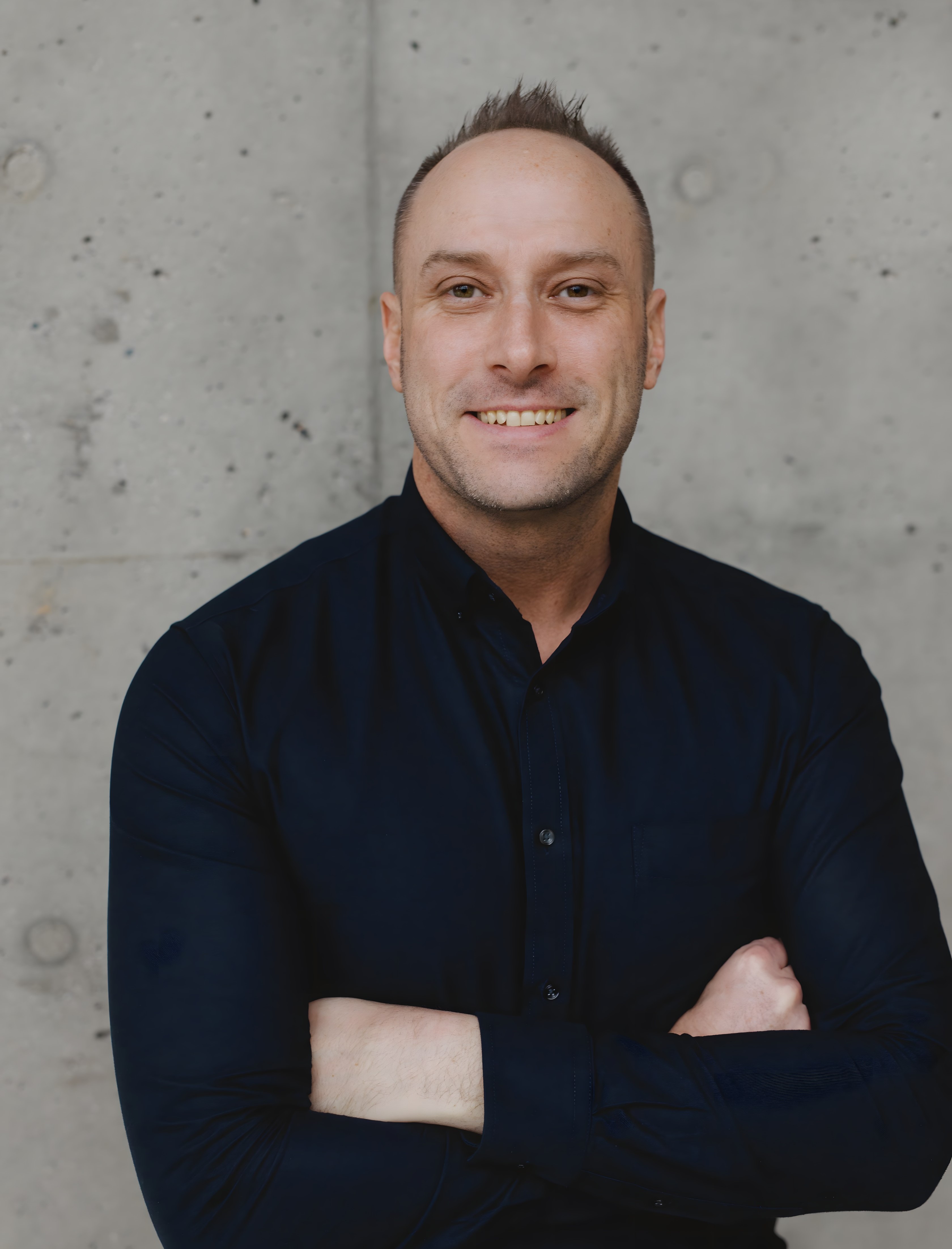
Kraig Docherty is a strategic HR leader with over 20 years of experience in building and scaling high-performing teams across multiple industries, from technology and gaming to healthcare and logistics. As the founder of Why Talent, Kraig has been a trusted advisor to CEOs and founders at top companies like Electronic Arts, Activision Blizzard, and Indochino. He specializes in aligning people strategy with business objectives, focusing on transformative HR leadership and creating environments where teams can thrive.
Kraig Docherty [00:00:00]
It's not just the words being used or said, it's sometimes the words not being used or said that matter. And so if it's as an organization, we have in our value statement, something on transparency, just as an example. I see that everywhere. What does that mean? Does that mean we share everyone's salary? No. Okay, well, that means we're selectively transparent. So what does that actually mean?
Mo Dhaliwal [00:00:23]
Welcome to High Agency, igniting conversations with inspiring people, leading transformative change. The world of work is undergoing a profound transformation and it's reshaping how we think about people, culture, and business. No longer just to back off his function, HR has stepped into the spotlight as a driver of strategic impact. Data-driven decision-making is replacing intuition. People analytics are empowering leaders to make informed choices about hiring, engagement, and performance, aligning talent strategies with business goals. Human-centric leadership is gaining ground. Emphasizing purpose-driven environments where employees feel valued. Research shows that organizations with strong cultures are nearly 90% more likely to achieve their goals. Technology is also a game changer. AI and automation are freeing up HR professionals from routine tasks, enabling them to focus on meaningful initiatives like employee experience and strategic growth. And really the results speak for themselves. Companies that are prioritizing employee experience see revenue growth that's four and a half times higher than their peers. Looking ahead, the future lies in building flexible talent ecosystems, fostering authentic cultures and crafting personalized employee journeys. This evolution isn't just a trend, it's a necessity. And organizations that create these environments where people thrive will be the ones that succeed, proving that a strong people strategy is the cornerstone of lasting impact. Entrepreneurs, senior executives, leaders of all types acknowledge the changes that are taking place. And they've long since witnessed the challenges that come with aligning people towards a common purpose. Yet, many of us still struggle with this. But thankfully, we have people like Kraig Docherty. Kraig is a strategic HR leader with over 20 years of experience building and scaling high-performing teams from technology, gaming. Retail, mining and resource companies, to emerging healthcare and logistics sectors. As a trusted advisor to CEOs and founders at companies like Electronic Arts, Activision Blizzard, and Indochino, he specializes in aligning people strategy with business objectives. Known for his direct, truth-telling approach, Kraig focuses on creating conditions for teams to deliver maximum impact through transformative HR leadership and talent solutions. Fundamental aspect of Kraig's approach is that he focuses on measuring and harnessing the energy that individuals bring to an organization. He advocates for using tools like the GC index to properly align people with roles that will maximize their impact. This alignment between individual capabilities and organizational needs forms the cornerstone of high-performing teams. Welcome to High Agency.
Kraig Docherty [00:03:20]
Thank you for having me. wow, what an intro. I haven't heard the name Activision or Activision Blizzard or Electronic Arts in quite some time. So thank you for taking me down memory lane.
Mo Dhaliwal [00:03:30]
Absolutely. Um, so before we get into your career and how you work with people, um, really curious to hear about when you recognize within yourself that this is what you wanted to be doing, right? Because, you know, the classic HR word, I think, you know, for a lot of people, perhaps still, uh, conjures, you know, visions of, I don't know, what was his name? Toby Flenderson from the office, right. And that, you don't kind of really dry. Bureaucratic, policy-driven thing. Right, yeah, administrative, yeah. Yeah, absolutely. And considering when you actually came into the industry, perhaps it was a bit more of that back then, and it's transitioned since. But when did you notice that this is something that you really wanted to focus on?
Kraig Docherty [00:04:12]
Yeah, this'll reference my... Age for sure, especially with the bio and 20 years experience there, but no, when did I get in the industry? So I think firstly, I don't have a traditional HR trajectory in terms of my career path. I didn't start as an administrator and coordinator and get promoted to an HRG and a director and so on and so forth. That is a typical linear type career path within the HR industry. So, my background is actually in the IT industry and I went to school at BCIT. Configuring computers, servers, was involved in technical sales for a number of years before I was tapped by Robert Half way back in the mid to late 90s to come and launch Robert Half Technology here in Vancouver. So that was my first taste, if you will, of an aspect of HR, which is more on the recruitment side of things. But what it gave me a flavor for was two things. One, client side, working with CIOs, VPs of technology, to really just understand their pain, what it is, what problem they're setting out to solve. And in my case, our inventory or the solution that we would provide would be this incredible talent that was available to them on either via an hourly management consulting under a full-time basis. And so that's how I cut my teeth, if you will, and started to build my Rolodex. What the shift for me was into what we know as HR or an aspect of HR was when I was working at a video game development company, heading recruitment, and I saw all of our hard work. At times walking out the door. And I didn't understand why. We just busted our butt to try and find this incredibly difficult, hard to find, in some cases Emmy award-winning type talent. And for one reason or another that I didn't have visibility or an understanding of then, they were leaving the company. And so my first foray into HR was in my next role in trying to get ahead of that.
Mo Dhaliwal [00:06:08]
Trying to solve the problem of why we're losing these.
Kraig Docherty [00:06:09]
Right, what's happening. And sort of just poking and asking questions as I tend to do to try and get ahead of that. So that was sort of my career path and initial trajectory into HR.
Mo Dhaliwal [00:06:21]
Yeah, I mean, it takes a certain type of curiosity and probably a little bit of entrepreneurial flair to look at a problem and say, I'm just gonna go try to solve this. And, you know, in the intro, we talked a lot about this transition that's taking place of traditional AR, people and culture. You know, what do those terms mean even? And there was mention of this thing and I purposely didn't look it up because I wanted to keep our conversation very natural. Yeah, yeah.
Kraig Docherty [00:06:47]
While I show up with papers, you know.
Mo Dhaliwal [00:06:50]
Well, I prepped as well. I just, you know, let go, you have a teleprompter to read things from. But the GC index, what is that? And you know what sort of tools do you use to try to figure out and solve these problems of making sure that people are active, engaged, and we're, you now, fulfilling their potential.
Kraig Docherty [00:07:07]
Yeah, the GC index just must have popped up in an internet search. I think it's one of many levers or tools that we can engage with, depending on the problem we're setting out to solve. So I think before I get into tools, I think that that's where I would start and would encourage anyone to start. And frequently when I'm engaged with an organization, I find there to be misalignment in. And that is, what problem are we setting out to solve, right? What does success look like in whatever it is we're trying to do? Whether it be organizationally, whether it be from a team perspective, whatever that thing is, and then we write it down and we play it back. Because I find even going through that exercise of articulating it and writing it down, sometimes that hasn't even been done. Sometimes I find there's misalignment as to what we understand the problem to be or the words that are being used to describe the problem or to measure success against the problem. And so I find aligning the stakeholders, visualizing it, playing it back as quickly as possible as one of my superpowers and translating it. So through a series of connections and interviews, et cetera, getting to the heart of what problem we're trying to solve. Then once we understand that, then it's a matter of looking at what are the right tools, methodologies, approaches here, frameworks, if you will, that we can use to engage with this problem. For me, it starts with connecting with the user first that we're trying to solve the problem for. So in the context of HR with good intention, HR people, sometimes out of the gate, let's just take performance as an example, since you had brought it up earlier. The answer isn't just to smash a performance management platform into a company immediately. I think again, or vice versa, if a CEO is coming to you as an HR leader saying, we need to abolish performance. Altogether. Like I've read a thing on McKinsey and they said performance reviews suck and we need to get rid of them, deal with it, figure it out, come back to me with a plan. And again, like this is where I would want to connect with the stakeholders to sort of understand how do you feel about how performance is handled with the organization? Like, what is it that we use it for? Is it to inform compensation? Is Inform your development does it provide you value like I would look at the data you reference data earlier To sort of tell me whether that be NPS scores engagement scores There's the data available to me and then most importantly again, it comes back to the user Who are you solving this problem for engage with them early? Engage with those super users the ones that are candid and honest and want to engage not just the ones that perhaps are the loudest people in the room. Like, again, engage with a diverse subset of your population, your employee population, et cetera, whether they be hourly, salaried, full-time contractors, executive teams, the various leadership layers, because I think you're fine, you're not gonna have the full story if you just focus on, for instance, just the executive leadership. And at times, there can be even a disconnect there. So I'll stop there, but that's. Rather than just jumping into the tool immediately, I really wanna understand the problem, visualize it, play it back, and ensure that before we start exploring tools that we're all clear and aligned on what we're setting out to solve.
Mo Dhaliwal [00:10:23]
Well, that's probably the necessary conversation either way, right? Like whether you're adding the tool or whether you just need your reaction of ripping one out. Have you had the wider conversation about that? So the thing that I'm kind of actually, you know, personally quite curious about is when you say that there might be some disconnect with executive leadership, it feels like that's actually a weird norm sometimes. And there's a bit of attention in many organizations, like I run my own company now and try to do a better job of it. But I was in plenty of roles before that, where I consider myself to be a very, you know, accountable, high ownership, High Agency person. Yeah. And in the right work environment, I would have a you know founder or a boss I was working with that knew how to kind of cultivate that and direct that and channel that energy properly and really was interested in my realizing my potential. And then there was also bad situations where somebody saw you know an idiot kid with a lot of energy and you know exploited me for frankly all the energy and juice I had to give until I was just so exhausted from a role that I just burned out completely. I was like okay I'm going to quit this. And that was actually my experience in technology right. It in like mid-2000s. Um, landing a role with a company that I could work remotely. So I moved back here from California, continued, uh, working as a software developer remotely, but I had a bad boss, right? And so I would hit for the most part, every objective, every goal, every deliverable given. And so they were just made bigger and bigger and bigger until finally, I'm like, you know, working 12, 14 hours a day working, you now, in my parents' basement, um, and you know that's not a life, so I just, I actually left technology completely as a result of it. There is business to be done, right? Corporations, these companies are- They have stakeholders. They have a stakeholder that's trying to earn a profit. And so the worst side of it is the full-on exploitation of let's grind these people down and get everything we can out of them. And then sometimes, you know, some companies try to weirdly kind of paper over that with we're a family, we love everybody, and you know we just care about people, and perhaps not entirely authentic. But how have you navigated this tension?
Kraig Docherty [00:12:40]
Really, I mean, there's so much to unpack to what you just took us through there. But I think firstly, it starts at the beginning when you're connecting with these organizations, ensuring you're doing your due diligence and interviewing them as much as they're interviewing you. So before I get into the meat and potatoes of once we're at the company, what do you do? I can't encourage people enough that as they are connecting with these companies, engaging with them, do your due-diligence. If it doesn't smell right, trust your gut. If you need to meet additional people to get. The necessary data to make an informed decision on is this right with you, ask for it. And I think before you do any of that, I think you need to have a clear sense of your own hierarchy of values, if you will, your own purpose. My purpose are to create the conditions for teams to do their best work and deliver the most impact. I'm very clear on that. Everything I do, I'm relentless in serving that purpose. As to how I show up, the questions I ask, the type of opportunities I take, the type clients I engage with. And companies and people I engage with, networks I connect with, the list goes on. These are my guide rails, if you will. And the same is true for companies. So shifting gears now into the company. So I'm working with an organization recently that actually required I go and meet with their leadership team, which was these are wicked smart people, but running very dysfunctionally. And there were several reasons for it. But first I had to do a bit of a. Validation if you will from a diverse set of people again coming back to first principles to then understand that well They don't have guide rails in place even simple vision mission values
Mo Dhaliwal [00:14:16]
Don't know what they stand for.
Kraig Docherty [00:14:17]
They don't know what they stand for, they don't why we're doing what we're doing, they don't know what the North Star is, nor do they know what our immediate focus needs to be. Values are a big component of that too. They're the lenses by which we're going to pass our decisions through. And then an added layer I like to add especially to a newer leadership team is our leadership guiding principles. So these are over and above and are in line with certainly our values and our vision mission ladder up to that, but they're an additional layer of clarity. Of behaviors and norms of what we do and what we don't do. It's important to highlight that, what we do and don't to as a leadership function, because it's hard. And so we want to create the conditions for you to be the best manager and leader. Leaders are critical to any organization. They set the tone. And so what is it that we need to provide you? And I believe guiding principles are key to that. Additionally, we just got clear on what the hell we need deliver in 2025. So now that we have those other pillars, we worked together to land on our 2025 OKRs, the big rocks that we wanna move amongst everything else that we need to do that year. And then finally, the piece that is so critical and people sort of forget about is what is our operating system at the company? So we're clear on our guide rails, that's great. We're clear in the rocks we need move, great. Now, how is it that we're gonna execute on that? And so that's where typically and I know you've had. Is that more of a tools conversation at that point? It could be a tools conversation. It could. So EOS is an example of that. I'm not suggesting that that be the first thing that an organization review, but it's a great example of a cadence, rhythms, et cetera, that one could follow and embrace. But I think it's just first even looking at how your organization communicates, how it disseminates and shares information. And as a leadership function. How and when are you coming together with intention and what does that look like? Is it just another meeting in your calendar that has no agenda that you're not showing up prepared for nor has any information been shared with you? That's a problem. To me, that's a waste of time. And so is this a meeting that actually needs to be a meeting? You know, can it be offline? Can we embrace tools like the Trello, Asana, other dashboarding tools, et cetera, just to feed you, call it a report card on a monthly basis? I would say yes and. And so there needs to be a combination of those things. So back to your question, those are the places I go first to sort of unpack and understand like, how are we showing up as a leadership function? Are we even showing up his leadership? Or are we individual contributors who are really great, smart people that have just been thrown into that role and not necessarily supported or set up for success? So I'm a big believer in these guide rails or first principles as Ray Dalio would talk about. What are the things that we need like that we stand for that we absolutely need to do and get back to?
Mo Dhaliwal [00:17:18]
Have you ever been in a situation where you were dealing with some inauthenticity and leadership where the words that were being used were all the right ones? Sure. You know, we wanna take care of our people, we wanna make sure they're active and engaged. Yeah. But when you actually set out to do the work, you discover that there's some misalignment and they're not actually standing for what they said they wanted to do.
Kraig Docherty [00:17:41]
Yeah, and I would add it's not just the words being used or said, it's sometimes the words not being used or said that matter. And so if it's as an organization, we have in our value statement, something on transparency, just as an example, I see that everywhere. What does that mean? Does that mean we share everyone's salary? No. Okay, well, that means we're selectively transparent. So what does that actually mean? So that may be a bad example, because sometimes at a CEO level, it could be something completely different, more, more at a strategic level, but It, for me, it starts with just, again, first principles. What problem are we setting out to solve? What's our concern around whatever the issue or subject is that we're dealing with? Let's unpack that and understand it. Why is it that you're approaching that way? So you brought up curiosity. One of my values for sure is you need, I need to be curious, I need to poke at things and I clarify and qualify that with clients before I engage with them that. If you're expecting to someone come in and execute in a very linear fashion, I'm probably not your resource. You know, I I'll want to come in an understand and explore, play it back, make sure I'm crystal clear on the things and then then execute. And so much the same, if there's a genuine, genuine misalignment, I want to understand why. And sometimes it's a matter of just not having some of those things we've discussed first principles. Sometimes it's lack of clarity in the problem we're setting out to solve or the expectation of how that CEO is expecting. We solve that problem. And sometimes I find that we've just not taken the time to have the necessary exploratory conversation with a CEO of the executive leadership team to understand what's on their mind. What's keeping them up at night? Why are they stressing about this? Maybe this is something, nothing to do with the thing that they're pushing back on. And they're sort of getting pressures from their stakeholders. So this does come back to strategic HR leadership, that before you can get into a people strategy and all of those things, you have to understand the business. And I know that that goes without saying, but what does that mean? Well, who are the stakeholders? When do they meet? How do they met? What are the top five topics that are discussed at a board level, if it's a board run organization, private, public, et cetera. You need to speak that language. If it's public, it's actually easier because you can pull up materials from Cedar and so on and so forth, but. It's really important you look at all of that information and ask questions around it and validate it for yourself and play it back. Speak the language of your stakeholders, in this case, your CEO or whomever you report to. That to me is where it starts. Because if I'm disconnected from that or I'm not understanding why they're approaching things in a certain way, I can't be of service or have the level of impact that I would want to have for myself or certainly the team that I hope that I'm helping enable. We're working on the right things in the right way. And we're delivering to expectation or beyond.
Mo Dhaliwal [00:20:33]
Out of all of that, like values is a really interesting one for me, because for some of the organizations that we work with, when we're developing a brand strategy, we're often looking to actually build on a lot of the work that you mentioned of saying, does this company have a solid vision, mission, value statements? And what I found is that even the vision and mission, like they can evolve over time. Right? Yeah, definitely. Yeah. You know, market forces, there's other cultural dynamics at play, but the values are an interesting one because they tend not to. And when we're working with a client, especially in brand strategy, when they say they wanna be a certain type of company in the market, and we're looking at if they've got expressed values, an interesting thing to me is, and it's kind of a bad pattern, but values when a leadership team is trying to articulate them, so often get into this word smithing exercise of advertising actually, right? Of, here's how we wanna be seen. And so the hack that I use, and I'm not sure if it actually helps or just confuses people, but I say, your values are the thing that you would do anyways, even if there was a small chance you might get arrested for it. Sure. It's the thing you might get away with. It's a thing you do when no one's looking. Exactly, right. I just tried to paint an extreme example to really- Yeah.
Kraig Docherty [00:21:50]
Yeah, yeah, right. You're sending people to jail.
Mo Dhaliwal [00:21:54]
But, you know, how do you actually, when you're working with a leadership group, get them to work on values in a way that's real to how they're going to show up? Because I've also worked with founders and C-suite teams that you bring up these exercises and these conversations and roll their eyes a little bit because these terms have kind of been turned into just business speak, right? Yeah. And you're trying to get at something more profound and deeper. And connecting and being like, you know, as a human, how do you want to show up and what sort of humans you want to attract around you? But we're using tools and language that's been kind of beaten into submission to be, you know, kind of mundane.
Kraig Docherty [00:22:36]
And as well, I think it's important to unpack the relationship that whomever you're talking to, let's just use the CEO in this case, has with vision mission values. So there may be a bit of PTSD there, as an example, to your point there. Or even what's their experience with HR, just as an an example. And how do they view HR? You started off the topic, is it viewed as an administrative function and that's just where I go to get my benefits and payroll and you don't have a. Seat at the table, so to speak, because the HR is just not even seen like that. It's a philosophical disconnection. And so that's where that's a very different conversation with a CEO that needs to be had offline and away from the leadership team and so on to sort of connect of where do you see this? And I would hope any HR leader coming into an organization would have done that already so that there's a level of philosophical alignment. I'm like, look. To do the things that you're setting out to do, that I hear you saying you want to do. I want to be a $2 million company. I want expand into these markets. I want do this, do that, do, that we can do that. And a people strategy, which is really a business strategy, it should be a business imperative can absolutely enable, amplify and actually accelerate all of that. But it requires you to show up in this way and you to rally sort of the team around that common cause. So yeah, I mean, as far as the values piece and someone viewing it as marketing spin, that's why I try not to position it as a brand strategy. Sure, and this is why sometimes from a strategic HR perspective, my purpose that I gave to you earlier, sometimes it's not just HR rolling up into me, it's change management, it's communications, it's all of those things because these are the things that are needed to drive an organization. They are one of the guide rails that are need. And so... That gives us the permission to poke and explore, are these things true? These values that were written in a CEO's garage 10 years ago with good intention, and maybe they were what they were then. They need to be revalidated and revisited so that they are true. They're not just words on a wall or words on website. We're actually living these things. They are operationalized and felt in the organization. And sort of how I speak to a CEO about it is, let's first understand what we're trying to do as a business, and then let's have the discussion of what needs to be true for us to get there. Operationally, through people, through culture, through all of those things, and how does that executive team view that? Are we all on the same page? Because this isn't gonna work if we're disconnected. And, you know, that has meant having some very real and honest conversations with, starting with the executive or leadership team. And certainly, as an organization goes through various points of time in its journey and transformation, if you have good guide rails, one of which is your values, and you continually revisit those, this allows you to revisit who's on the bus and who should get off, right? And done well, individuals should self-select as an organization flips the page and the next chapter of its journey. Uh, and we perhaps revisit, refine, uh, and validate our vision, where we're going now, our North star, our mission, sort of our immediate area of focus, her time horizon wise, that's the next 12 to 24 months. That's mission. And then your values. Some may say, I'm not for the new skyrocket digital. And it's like, that' s OK. That's a fantastic thing. Let's let's work together to manage that. And how can I best support you? Like, that it working. And and so that's real values. In addition, it can help amplify all those things that we were talking about, because now we're attracting, engaging, leaning in, creating opportunities for supporting all of those things, those behaviors, all of the inner workings of an organization, it starts to make sense because you have those guide rails in place without being a micromanager and sort of telling everyone what to do. They're sort of given the space to be able to lean into their strength and do so within those guide rail. And experiment within them. And that's the process working, that's an authentic set of values for me.
Mo Dhaliwal [00:26:41]
I mean, it's really validating to hear that because when I work with clients on a long-term sort of repositioning strategy for their brand, one of the comments I make that sometimes causes leadership teams to bristle a little bit is I'll say a really effective brand strategy is evident when some people will raise their hands and say, I didn't sign up for this and kind of check out. And when you start attracting in new people that are now excited by what's going on and what you're doing, right? Yeah. Um, and one of my phrases, and I'm sure you've heard this a million times, is the idea that, uh, culture eats strategy for breakfast, right? Um, you know, and all the best business strategies, it's a handful of decisions that you're, you're guiding in a, in a plan or a strategy, but culture is driving the thousand decisions that aren't written down anywhere, right, but it's how people show up. It's all of the, the micro moments that, that, that show up in all of this in my introduction. I mentioned a number of trends that are going on in corporate space and the appreciation of HR, the appreciation of people and culture, and it sounds good. This has been sourced from, you know, a number different.
Kraig Docherty [00:27:49]
HBR and all the rest
Mo Dhaliwal [00:27:50]
Yeah. Yeah, and you know, in your experience over the last you know number of years, have you seen that play out to that extent? And that change in transition over let's say even like the past decade of how people are appreciating, or maybe even changing their approaches to how you assemble people towards a common cause or purpose?
Kraig Docherty [00:28:11]
I still think it's in the process of changing. It all comes down to leadership and their relationship with HR. And, I mean, a real unlock for an organization is one that sees HR as a strategic function and partner to the business that, as I said, can amplify, can accelerate towards where we're wanting to go as an organization. If we back up and look holistically, it's not just about finance. It's not about marketing and product market fit and. Operations and all those pieces with equal footing. I mean, we all know, and we've heard the term before that the largest line item on any budget within a company's, uh, you know, budget or PNL is our people, uh, followed by real estate and kind of all the rest. And so in saying that, why aren't we leaning into that investment more? It just doesn't make sense to me. And, so back to fundamentals, right? And first principles, we need to set the tone on how we approach that. So for me, before getting in all the cliche things and the shiny objects, I can't stress enough that getting back to first principles, having a CEO that's aligned with those first principles and is a purple, a people first leader, or at least has the relational and emotional intelligence to realize that perhaps they aren't one and they needed to surround themselves with people who can engage and help because we're all on the team and that's where I think when there's a disconnect That's where I like to start is the problem. Yeah, let's get clear on that. But also like we're on the same side. So can we agree that this is where we're going? Great. Here's my role in that. Now, how can I help you? It's sort of always been the approach. So we're coming from a common place and then we can kind of build the trust and build the rapport and build a momentum from there. Once I understand, okay, if organizationally this is our North star, these are the big rocks. If it's like, let's say the head of operations is an example, I understand what's going on in their world and what it's going to take for us to, um, really move the needle in that group. And then my question becomes much like it would be to a CEO. Well, then how can I support you and your division and organization and your people, if you've got these critical pain points? Um, but one thing to mention though, is, is through all of this validation is critical. I can't, I stress that enough again with good intention, leadership, CEOs, they make assumptions. Based on various signals, and sometimes data, which is great, but it requires us just to pause for a moment and connect with folks within the organization to validate what we think is true, and you can use technology in some cases to do some of that, but really the power is in the conversation in creating a safe space to get to the real truth. We've all worked at organizations before where. You're given a handbook and you on board and you meet a bunch of humans. And then there's always this unwritten rule of like how that company actually works or sometimes the, the politics behind it or that some of the nuances it ultimately is, I mean, I'll be mindful of swearing. It's ultimately how you get stuff done is it's all the behind the scenes stuff that you just, that's never written down. And so I want, I want into that. I want to get into the meat and the potatoes so that we can really just get to work and create a space where I would hope that inevitably as we encounter challenges, misalignment, everything we've talked about today, that we could have honest and real conversations knowing that we're going in the same direction and we're on the same team and we are coming from a place of wanting to win. And we have these guide rails, like all of those things, those are the first principles I'm talking about. Because that's that when I think magic happens, right when you get a leadership team like that That's on that same page that the trust is there except for the emotional and relational intelligence is there all of those things line up Man magic happens in terms of just all of the multifaceted talent that that's we can then tap into. Yeah, right
Mo Dhaliwal [00:32:19]
See, the challenge that I deal with sometimes is, you know, we have a small team here and there is a power imbalance, right? When you're, you're the founder and the owner of a company and you assemble a team around you, you can say all the things of, you know, you wanted to show up as your full self, that there's, you know, I feel a certain authenticity to how I show up in this space and I want others to feel the safety to feel, you know, the same way. Sure. But establishing that has been a bit of a challenge for me. And there's been times where it's worked well, where I could actually look at the team and say, I fully believe that everybody here is saying exactly what's on their mind and they're being direct, um, and very, um yeah, just truthful about it, right? There's a self-disclosure happening and you can see it, but there's definitely been times, where as much as we might try to hire for values and do all the processes, and there's a mess, right. Where we can still feel like somebody's either performing, you know, their, their professional identity. Or is withholding and we just aren't quite connecting there. So the leadership group that you described, I feel if this is a large corporate environment, perhaps there's a leadership group that has enough 10-year experience, skilled people sitting together, really having a lot of good self-disclosure, a lot of really honest, direct conversations, and that space is getting created. But what do you do when you're in a structure that has a lot imbalance, right? And maybe it isn't unique to small companies. I'm sure there's also a lot of large corporations where perhaps you had a founder or a CEO that was very single-minded in how they do things. And as a result have kind of generated this power imbalance, right? But how do you kind of correct that asymmetry?
Kraig Docherty [00:34:03]
Yeah, just to comment on your, the sort of larger organization, that's utopia, not saying that happens even at larger organizations. In fact, the dysfunction can become when you're dealing in a multi-billion dollar, thousands and thousands and thousands of people, the problem can become even more amplified and more costly in the long run. It takes longer to change the direction of the ship, as they say. Um, to, uh, to move those things, to work through and understand all of the downstream and upstream impacts of what we're talking about. So yeah, that's utopia. I mean, in the example of even here, let's say we have a team of 10 and I've worked at those organizations from 10 to 12,000 people and I find the first principle still to be true. And that is, um, I mean I would encourage from a leadership perspective that we be vulnerable and demonstrate that vulnerability. And live what it is that you say that you're doing and would want to see and even at times when it makes you uncomfortable And so let me give you an example Paul So in a recent we do my HR team when we come together we do sprints So we tend to do we take our big rocks and part of our operating system as we've got so much to do Shiny objects things are being thrown at us all the time But we still need to deliver on our commitments and so how we break the work down is on a weekly basis so we come to get there at the beginning of the week kind of plan out, hey, these are the things that we're going to focus on this week. This is the sort of KTLO, keep the lights on stuff that I need to do as well. But then there's like these other, other things we need to too. So that's the beginning of the week. And then the end of the week we do a review and retro kind of look back. It's kind of a modified agile sprint. So why I bring that up is sometimes things come out right in those meetings of, uh, oh yeah, I attended a meeting. So-and-so saw this, observed this and I'll challenge the team or I expect they challenged me. That's not what I heard. This is what I observed. Um, am I, did I hear wrong? Or am I misinterpreting that wrong? Um, if it's appropriate, not necessarily in a group setting, if I'm having a one-on-one with a team member, I'll say, Hey, you know, how you delivered this today made me feel like this. I don't know if that was your intent, but that's the level of vulnerability and radical candor, pulling a page from Kim Scott's book that I think you need to build enough rapport with your team and connect with them and create the space to have those conversations and then in time they're to start. To see how, in this case, you are delivering that, but doing so in a way coming from a place of care and concern, I mean, humans above all else, right? Like it's the iceberg scenario, if you only see what's sort of above the surface and there's all this other stuff going on. And so we're running out a lot, both at work and away from work. How is it that you're creating the space to have those types of conversations and, and, and questions. And if you're seeing something that isn't sitting well with you, or you have a sense that something is off, I ask now granted, sometimes that gets me into trouble. I'm a bit more of a type A personality as you can tell. And others aren't. And so sometimes that's a, whoa, where did that come from? And so then sometimes I'll get back because we've created that space. I'm not ready to have that conversation yet. I appreciate you asking. I'm okay, thank you. Let's move on. And that's the process working. And so I think it's just demonstrating those behaviors over time. And I think its also sharing when you're struggling. It doesn't make you less of a leader. I think in the case of vulnerability, for instance, if it's a, wow, we went through this client meeting and pitched today and man, I felt like I dropped the ball. Here's why I'm feeling that way. Like that kind of vulnerability is, you'll be surprised at how the group engages with it. And not just to pick you up and make you feel better, but also, yeah, we could have done that better. And you know what? Next time I'm gonna lean in support in this way. Would that help? That's when I think, you know, you've got the right team if you have them leaning in proactively. Does that help, does that answer your question?
Mo Dhaliwal [00:37:53]
Absolutely. And I'm just having flashbacks as you're talking, because, you know, thinking about Radical Candor, fantastic book. Yeah. And the flashbacks I'm having, though, is in my own career and experiences, I've kind of vacillated between these two states. Yeah. There was times when I did like just extreme levels of candor right without the care. And then I overcorrected and it was like Kumbaya. And I just felt like I was fully repressing myself. And then years later, I discovered radical candor. And I mean, it makes sense. It's quite logical. It's to say, anybody that you have built a solid relationship with, you can actually share anything and you're gonna be understood, right?
Kraig Docherty [00:38:32]
I think there's only one other or a couple of other variables I would add to that. And that is, and I think Kim Scott talks about this in her master class, which is also really good. Uh, and, uh, and on her podcast, um, we should ask, be asking people how they like to receive feedback, like how, how they liked to receive it and when, and even when you think the time is good, a one-on-one meeting, um. Preface it. Hey, I have some feedback. I'd love to give you, uh. Is now an okay time. Because sometimes it's not, for whatever reason. And that actually can lead into a conversation, right? And so that would be my, I guess coaching in this case would be make sure that the space and the time is right to be able to have those times. And I have that same type of conversation with the CEO. And if I get back, look, I don't have time for this feedback crap. Well, then there's a problem there because this cannot be a one way conversation. If we want to move the rocks that you say we want to move, and again, that's the language I speak, right? If I speak their language back to them. So we can go there, but we need to have this conversation.
Mo Dhaliwal [00:39:39]
Predicated on. Right.
Kraig Docherty [00:39:40]
Right. So if what I'm hearing you say is now is not a good time, come back at this time. Great. Let's get that scheduled and we'll come back and we need to have this conversation because this is the outcome we need. And this is where I'm coming from. It's not my agenda, it's our agenda. Let us help move it forward. Much the same with our team. This is the sort of space we want to create. And in time it will become part of their programming that from a feedback perspective and when to see you and how to see and how to approach you. Everybody likes to give and receive that differently. And so it is a matter of figuring that out as to what's gonna work with your team and not just chat. Like I really commend some organizations in their operating system where they can have those types of conversations in group settings. It's mind blowing. And when you see it happening, it just seems so natural and no one's getting pissed off or offended or taking things personally. It's just, that's their ethos and it's great. But that's not for everyone. And I think that that's where it breaks down as. People see these videos and podcasts and so on. And they're like, yes, I'm going to do that. And they come in and lay one into one of their team members. And then they realize that did not land well. And we need to sort of restart.
Mo Dhaliwal [00:40:44]
No, I like that a lot because it lands as an invitation and invitations are inherently empowering, right? Because you're inviting and you're saying, you know, you tell me how and when you want to do this. You mentioned EOS earlier and one of their really powerful tools actually is the People Analyzer. Interestingly, I feel that the years in this company, when we've been able to do the People Analyzer on the table together, and I've heard the places where I'm screwing up and not reflecting one of the values, and was able to share candidly with somebody else where we thought they might be flagging a bit, I felt those were actually the years where we had better values alignment because for the type of company we wanna be, it's like we want it all to be on the tables. And the years where it was awkward, uncomfortable and got feedback that, well, actually, I don't think I wanna do it in a group. I get that, but what I was actually feeling from that was this might not be a great fit because for the type of team and reducing information asymmetry is a big mission of mine. We kind of almost don't have the time to work in those ways. So perhaps we actually need to think. More broadly about, you know, the type of people that we're actually inviting to the table and how we're building this team.
Kraig Docherty [00:42:04]
Totally and I'd say that there's sort of individual dynamic and team dynamic to your point. And so Again, what are the guide rails in place to manage expectations around that team dynamic? That's where leadership guiding principles for me come into play and so as a group we can evaluate each other against those Why wouldn't we if we're supposed to be a high functioning high performing leadership function? We should be open and willing to have that conversation in a group setting. Yes, the stage needs to be set Yes, we need to provide you with the tools and the training and the support to be able to understand what those guide rails are, how to engage with them, what the behaviors associated with them are and are not, like all the things we've talked about. We have to do that, we have to provide that as a company, as an organization, as a leader. But the individual sometimes, yeah, sometimes that conversation, that feedback is better done one-to-one. I think it just depends on the circumstance, what it is we're providing feedback on. But if you wanna get to being an organization where you can have those conversations openly. I would engage with the group and ask how they feel about it. So this company that I'm working with now, we recently stood a two day leadership off site that was more than just vision mission values. The meat and the potatoes of it is they, for the first time, talked about the issues that were actually on their mind, because we created the space to do that. And it got to the real heart of the dysfunction that ultimately, yes, vision mission values were needed, for sure. And sometimes I think people lean in that they're going to solve all the problems, and that is not the case. But the exercise of having the conversation, like you had around the leadership matrix or whatever methodology or approach that you're using as a team to evaluate, how are we doing? In terms of, here's how we're defining success and how are doing, how am I doing, all of those things. It requires us to be able to have honest, real conversations. But the setting, you have to set the stage to do that. And. That takes work sometimes. Five dysfunctions of a team talks about this. The first level is trust. And so if there is not trust in a leadership team, there is a problem. There will be dysfunction. There will not be openness to share. People will have competing agendas, all the things that we read. And so this is what I mean by coming back to first principles before diving into complex methodologies and tools and software. Aaron.
Mo Dhaliwal [00:44:29]
I'm a nerd, so that's all I ever want to talk about.
Kraig Docherty [00:44:31]
Me too though, I'm with you and I'm with you, and what I'm learning in time is people process tools, right? I think we talked about that a while ago, and kind of in that order, like engage with the people first, understand the problem, but first principles here, and then look for the tool, understand our needs and our wants, understand the user and how they engage with technology, or don't. I work with organizations, some users don't have an email account. Some are ESL-based, like these are all considerations in terms of the user we're in service of. And so then that allows me to better explore a tool that is a closer match and aligned to our values as an organization and the user, obviously, and their expectation. And most importantly, this isn't one and done. I involve them in the process as we're going through this so that they can hold me accountable as we are looking at, in this case, new software or new technology, new methodology. A new approach to performance, whatever the thing is, whatever the initiative, right, it comes down to you'll read this and a lot of material around HR become coming product centric, running HR as if it were a product or a series of products there in the product lifecycle and the journey and all of those things. I mean, there's tools like pen, for instance, that map the employee journey and the moments that matter through their journey. From from attraction to hire to retire Super interesting work and then having very intentional points in that journey Through technology but also through process and methodology and vision mission values and all those things. Yeah
Mo Dhaliwal [00:46:05]
Yeah, I mean I can tell you that from like again my personal journey from 20 years ago the first time I actually had enough of I guess influencing control over something was when I first started a non-profit organization Actually, I was in festival and cultural production like years ago Uh, but at the time I was so vision and mission oriented that for me, you know, and in my, uh, naivety and youth, like people were the problem and they were getting in the way of.
Kraig Docherty [00:46:36]
Doing what you were trying to do.
Mo Dhaliwal [00:46:38]
Um, and then it took me a long time to realize that actually, you know, we had attracted many, many volunteers, many incredible people to our board members.
Kraig Docherty [00:46:46]
Who are connected to your nonprofit.
Mo Dhaliwal [00:46:48]
They were connected, right? And the appreciation that I lacked was that they're already here for the vision and mission, but I just didn't do a good job of connecting with them as people in order to kind of break through. And actually learned a lot of entrepreneurialism working in that sort of space because yeah, I mean, working in a nonprofit where you're trying to sell an idea is so much harder than, you know, working in a place where you were providing a service that people actually need. That seemed a bit easier. You know that's that's sort of on an individual level but on a industry on a corporate level are we getting better like you know overall with advanced machine technology and AI and you would hope that the amount of automation that's going on the amount of efficiency that's Going on you would Hope that it's creating space for people to be more human in your experience are we
Kraig Docherty [00:47:44]
I think it depends on how they're engaging with what you're talking about, whether it be AI or otherwise, like what's their relationship with it? What kind of space are we creating with for them to engage with it as an example? We can't just without providing against some simple guide rails or creating even a bit of time within your own team on, Hey, we want to do this thing as an organization. Let's each of us engage with HI in our own unique way. Here are some starting prompts or however you want to do it and let's come back as a group and see what we come back with, just as an example of creating a space around something to engage with it, learn together and have a bit of fun while we're doing it. So I think it depends on the organization. I think depends on what the purpose is that they're setting out to do with it. So what I mean by that is your example that you gave about the nonprofit. I find frequently, no matter the size of the organization, that sometimes leaders with good intent have not brought others along for the ride with them.
Mo Dhaliwal [00:48:40]
Mm-hmm.
Kraig Docherty [00:48:41]
And so I think that that comes to a matter of visualizing what they're saying and the narrative around it. And this is where communications play such a key role. It's not just about vision and mission. They're a part of that for sure. They need to be real, especially amongst the nonprofit. But it's almost like, you know, when you're setting out, when you are in an engineering club, like, and you have a hypothesis and you write that hypothesis down and you test it and you validate it and you iterate and so on and so forth, the same needs to be true. For what you're talking about, which if you have these individuals around that are sort of running in various different directions and you haven't brought them along for the ride and they're all using tools and they are not connected with those tools, you're just sort of using them. That's on us to be able to, again, make sure that we establish a very clear narrative around all of this, why we're doing what we're going, play it back to them, engage with them, involve them with that conversation, iterate, and then that's your plan. This is what we are working on. And have a system in place, whatever it is, to constantly revisit that plan, provide input to the plan based on the data that you're getting from market, from your stakeholders, from all of the other things we were talking about off camera, market conditions, macro, microeconomic, all of things that impact business. How are we reacting to that? And so I find the power of just one of the first principles for me, write it down, writing stuff down. There seems to be a tendency to not want to do that these days. So back to your question on, are we getting better? Sure, if we embrace first principles, if we write it down and then engage with the technology, the output is better. So much like AI, it's all about prompts, what you're saying, how you're seeing it, persona-based prompts, all of those things, you get a better output. It's much the same, I think, with companies and with their teams. Hopefully that answered your question.
Mo Dhaliwal [00:50:29]
Yeah, absolutely. Cool. What are you excited by right now?
Kraig Docherty [00:50:34]
It's cliche to say AI, but I mean, AI has been a game changer for me, the ability to When I'm working through complex issues or problems, give AI a persona to give me the perspective of the people I'm in service of, is incredibly powerful, because then I'm able to, the output is just better, right? Or a particular skill set that maybe I don't have. The obvious sort of data analysis, comparison, sure, sure, that helps. But for me, the real power is, oh, I never thought about that perspective, that's interesting, or. You know, the yet to synthesize sort of things like this is what I'm seeing to be based on these data points. You know, how am I thinking, you know? Look at these comparison benchmarks. Come back to me and recommend X, Y, and Z. I mean, just the my ability to sort of blue sky this and then bring it down to operationalize it. AI is a key enabler for me to be able to do that. I can do more. I can go deeper, way faster, way more efficiently. And I would like to think, Again, if I'm. Written in my purpose or to deliver the most impact, to help teams do their best work and deliver the impact. I need to bring not only the input and the validation from those teams, but also different perspectives that otherwise I wouldn't have thought of. So I would like to think that that. Increases my output, my perspective, what I'm thinking about, how I'm thinking about it, whether it be through change management, transformation, human resources, all the aspects within. It's incredible. It's an incredible unlock, whether it be perplexity, open AI, pick your poison, there's a lot of really great technologies that I think can only amplify and accelerate some of the great work that we're doing.
Mo Dhaliwal [00:52:17]
Yeah, I've been describing it as a reflector, right, but these tools are great mirrors that we were kind of missing because quite often we're just trying to get a sounding board and we're in the best situation you can rely on a lot of people, but that's not always available for sure.
Kraig Docherty [00:52:36]
Especially in smaller teams these days. Absolutely.
Mo Dhaliwal [00:52:37]
Absolutely. Right. So private time, your own space to have a great mirror to just reflect back to you what you're thinking until something arrives. It's been great.
Kraig Docherty [00:52:45]
That's the thinking and then like tactically, like I just loved if I give it a persona, like kick it back to me as though a 20 year old can understand as a common prompt because it just simplifies what was in my brain that I was making overly complex and wasting time. And it just gets to the meat and the potatoes of like, yeah, that's what I'm trying to say, got it. And then I can apply that in whatever use case that I need to a deck, a presentation, a website, like whatever the thing is, it just helps. Helps me think, helps me show up better, be more specific, direct.
Mo Dhaliwal [00:53:15]
As a, as a point of specific advice, let's hypothetically, I'm a company founder. I come to you tomorrow and I say, Hey, I've got this mission. I'm trying to build this thing. We've got some funding. What's your first piece of advice to me as a, as a founder of a new company? I just went through this. This is great.
Kraig Docherty [00:53:32]
What are we trying to do? What do you want? What does success look like? Like, let's put that into the delayed person words. Okay, great, I understand that. Where are you getting that from? How are we making our decisions? Who's your leadership team? Like, these are the things I'm gonna immediately explore. Let me see on site. Let me experience the company in whatever capacity that I can. I find it incredibly helpful to observe, to ask, to engage, to be curious in all aspects of that company, how it makes its money, how it makes its product. Uh, how it delivers its service, all of those things that we've been talking about today. Um, and then, uh, then I get to the real meat and potatoes is, okay, now what do our stakeholders expect? So now that I sort of understand what you're doing and what you're setting out to do and want to do, what have we committed to the world, right? Uh, and that varies for depending on the size, how its funded, how, it's taken on money or not privately owned publicly, all those things are factors in that moment. The stakeholders are a real unlock. And I like to connect if I can directly with the stakeholders, whether they be the board or external funders, except for I like, that's usually who I would want to engage with. And so that's where I start. I just start with, again, first principles, fundamentals. What are we trying to do? What problem are we tryna solve? Who are we in service of? What words do we have around this that describes this? Is it clear? Do I understand it? Are the others around here enrolled into what it is we're setting out to do from a leadership team perspective?
Mo Dhaliwal [00:55:03]
I mean, it sounds so obvious when you describe it. I guess the fortunate and unfortunate thing has been that in business, this has been landing more like an epiphany of people are like, oh, of course, it's important to understand what we're trying to do here and who we're doing it with and how to bring all these people together, make them connect and move them towards a purpose.
Kraig Docherty [00:55:22]
And this is the value, like, this is a bit of a pitch for, for fractional executive leadership. And I bring that up because I do operate and engage both on a contract and fractional basis. And I brought that up, because in an example, like you gave with, whether it be skyrocket or any other organization, let's just say it's an org of 10 people. You can have access to a, on a fractional, basis to a CPO, CHRO, CMO, CFO, individuals who otherwise you wouldn't be able to afford to help you challenge your thinking and poke at things as we've been talking about. Perhaps mitigate risk if you're considering an M&A type deal like there's so many value We would fractional should be a part of every company's People strategy and I'm not saying that because I'm one it's because I've observed firsthand, you know the John Fong's of the world Absolutely. It makes incredible sense. It does. It does, but I find that there's an education, especially in Canada. It's more prominent in the United States. But in Canada, there's what we would call it a trend or otherwise. There's an educational that needs to propagate across country. Usually starts out east, comes out west, but there's more openness to engage. And there's more associations like McKay and whatnot that are embracing this more, which is incredible. We need to see more of that because I really think it can be an unlock for a lot of organizations to be able to tap into some of that expertise. Otherwise they wouldn't have had access to wouldn't been able to afford, but for specific pieces of the puzzle and, or even as an embedded executive for a fraction of the cost, to me, it's just like, why wouldn't you?
Mo Dhaliwal [00:56:51]
Yeah. Yeah. No, it makes complete sense. Yeah. Kraig, if somebody wants to learn more about what you do and how you do it, where would they go?
Kraig Docherty [00:56:58]
Yeah, I love it. Check me out on LinkedIn. You can go to ytalent, W-H-Y-T-A-L-E-N-T.com. Kraig, K-R-A I-G at ytalant.com, happy to engage and answer your questions.
Mo Dhaliwal [00:57:11]
Awesome, well, thanks for coming on High Agency.
Kraig Docherty [00:57:13]
Thanks, Mo, appreciate it, bud.
Mo Dhaliwal [00:57:15]
Hopefully we've given you a lot to think about. That was High Agency. Like and subscribe and we will see you next time.


Get our latest insights on brand transformation and digital innovation delivered monthly. Join forward-thinking leaders who are building momentum.
We’re ready when you are.