The next move is yours
We’re ready when you are.
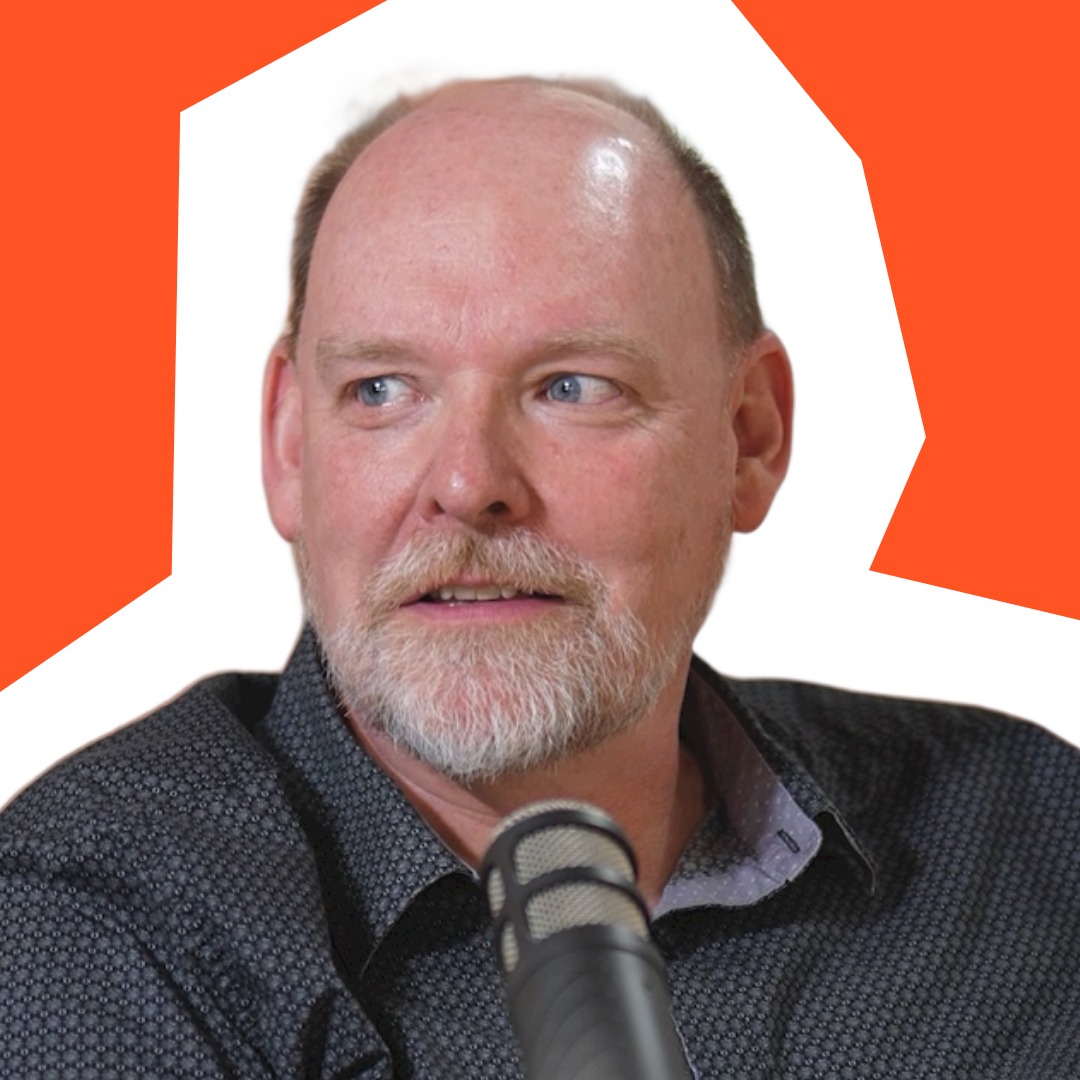
In this episode of High Agency, we sit down with Ian MacKinnon, serial entrepreneur and cybersecurity expert, to unpack the realities of building and protecting products at scale. Ian traces his journey from a scrappy 2014 hackathon project to co-founding Later, which grew into one of the most widely used Instagram marketing platforms in the world, serving over 6 million brands before its acquisition in 2022. He reflects on the early chaos of startup life, including a near-catastrophic database failure that forced him to confront the fragility of fast-moving systems, and how that moment reshaped his thinking around risk, resilience, and responsibility. We explore the tension between speed and security, and why many high-growth companies underestimate the cost of getting it wrong. Ian introduces his current work at Stingray Security, where he’s focused on protecting users from increasingly sophisticated scams and phishing attacks. The conversation expands into the evolving threat landscape, the psychology behind social engineering, and why people remain the most exploited layer in modern systems. This episode also examines the mindset required to move between building and defending technology, the discipline of anticipating failure, and the importance of embedding security into products from the very beginning. At its core, it’s about navigating growth with awareness, understanding where systems break, and building with a deeper sense of accountability in an increasingly risky digital world.
Ian Mackinnon 00:00
The interesting thing about AI is that it can be socially engineered. And I find that to be a bit of a problem. Because if they think you're the one who's their user, they're going to do whatever action you want. So we do need some kind of guardrails.I think that discussion is being borne out online right now because you have a new technology like Clawbot. The agent you can have running on your system that can run, see all your information connects to the internet, that is a security nightmare. As much as there is this desire for productivity gains by using AI. Eventually, there's going to be enough horror stories that the executive pushing AI down everyone's throats is going to come to the reality of, oh, that just had a data breach. And then we're going to see temper some expectations. And I think we're going to see this natural give and take between security teams and executive ones who see the benefit of AI, but realize like, okay, we have to put some kind of guardrails on it. And I think that's what the next 10 years are going to be about.
Mo Dhaliwal 00:59
Welcome to High Agency, igniting conversations with inspiring people. Hackathons are a real community sport these days, gathering with like-minded, talented people, time boxed into an extreme deadline, and then letting loose on ideation and building. Well, a weekend hackathon in 2014 yielded an interesting idea, and then fast-forward eight years, and that scrappy project serves over six million brands, from Fashion Nova, Kylie Cosmetics, ESPN, and others. But here's where the story takes an unexpected turn.The same mind that helped build the infrastructure powering millions of social media interactions is now hunting the bad actors who exploit it. Social platforms process billions of interactions daily. Every DM, every comment, every link in bio represents both an opportunity and a vulnerability. The same data patterns that predict which real will go viral can also reveal the fingerprints of a phishing attack before it strikes. So today we're going to talk about the full arc, from drag-and-drop scheduling tools that turned Instagram followers into customers, all the way to the emerging battlefield where AI-powered scams target the creators and small businesses who built their livelihoods on these platforms. Joining me is Ian MacKinnon, co-founder of Later.com and now founder of Stingray Security. Ian started out with several Vancouver technology companies as a founder or early employee. He taught coding at bootcamps and actively mentors local startups. With degrees from Waterloo and Stanford and a track record of turning code into business, Ian brings a rare perspective on building and defending the social economy. Ian, welcome.
Ian Mackinnon 02:54
Thanks for having me.
Mo Dhaliwal 02:56
So really interesting because at Skyrocket, our agency, I mean we've been fans of Later for some time, early on we remember you from the days of when you were Later-gram I think early on.
Ian Mackinnon 03:10
Yeah.
Mo Dhaliwal 03:10
And then got yelled at by Instagram.
Ian Mackinnon 03:12
No, we've changed it before someone told us to like we knew that cease and desist was going to come at some point. So let's just do it before someone tells us we have to.They had done it to other companies or all right, let's try and stay on their good side and do this before they make up.
Mo Dhaliwal 03:27
Yes, I remember the rebrand. So a social platform, I mean, it sounds like a fun project and you guys were, I mean, right on trend. I think coming about right when all of this stuff was exploding in the early 2010s.But how did you get into all of this? I mean, you had a math degree, you were pretty deep into technology. So how did you get into sort of a consumer social media platform?
Ian Mackinnon 03:50
It really happened because we wanted to do the hackathon and, um, being by three other co-founders, we were just looking for an idea to do. And I always have this note of Ian's dumb startup ideas. I think every entrepreneur, I think everyone has that idea of like that list of things they want to do. You write them down and 48 hours later, most of them are total crap.But that had the idea of that was always kind of sitting around and this is, you know, we did this, we were plotting this back in 2013 when Instagram wasn't a sure thing yet, it was growing. Um, but business hadn't quite fully adopted to it yet. And when we were talking about ideas, I had pitched this one and Matt, one of my co-founders, he knew someone who definitely had that problem and was very passionate. It's not like I had the problem when in 2013, if I have so much Instagram content to post, I need to manage all that is I've never had that problem personally. But it was, uh, at the time Instagram's API didn't allow you to publish content automatically like all the existing platforms did. So we had this like push noted, like what's the next best thing or push notifications. It was a little bandaid solution, but I think what the big take is for anyone who's looking at starting a company, you're better off having something, having kind of a half a solution to something care people care very deeply about then a full solution for something people only mildly care about.
Mo Dhaliwal 05:12
Why did you get into this in the first place? Like, what was it about technology, math as a field?
Ian Mackinnon 05:18
I came of age during the .com days, so just hearing about all these people making millions of dollars when they IPO'd and a very 90s thing, but I was always drawn to technology. Even before that, I was always like computers and programming them. I was one of those people who did it very young, went to Waterloo like every good nerd does, and you're just kind of exposed to that culture of tech and thinking about problems from a very mathematical perspective a lot of the time. So I have a very traditional coding background. I know a lot of people combine it from different ways, but I'm definitely the traditional way.And the traditional way is what? It's like more rooted in computer science, math underpinning, engineering principles, not being specific to any one programming language, understanding how the machine works because that will work through any time in technology. Like a database is still going to work like a database, code is still going to compile no matter what layers of AI we put on top of all of that.
Mo Dhaliwal 06:18
I mean, you know, as an observation, how do you feel about how the culture of development has changed? I mean, vibe coding is obviously a big deal and there's something to be said for having, you know, a bit of a purist mindset about, you know, coming from a, you know, mathematical foundations and engineering background and then applying that to computer science.But it's, you know, there was already a period around, you know, web development when it was like script kiddies we used to call them in the day, right, or just kind of hacking stuff together. You don't really know what, how it works, but you kind of make things go.
Ian Mackinnon 06:50
Well, everyone's a script kitty at this point. I've kind of likened it to Harry Potter. It's like we gave wands to all the muggles and we're going to see what happens. It's going to be really exciting when you give every muggle a wand.How I went to Hogwarts. I'm good. I know how to use these things. I'm not worried about a bunch of people with wands, but it does democratize things quite a bit for everyone to kind of make simple little apps. I think the challenge comes when you realize for a software developer writing code is not most of the job. Understanding requirements, fixing code, refactoring it, keeping it scalable. Because Facebook in 2005, 2004 is extremely different than Facebook in 2007 and 2012 all the way here till 2026. Like software has a natural ebb and flow and a scale to it. And I think it requires a certain level of experience to still do that. Like the AI is not going to have you go all the way. Like you might have to understand a bug very intimately in order to fix it. And AI is not always going to do that. And there's also the bleeding edge. Like AI doesn't know everything about coding, especially when it comes to newer platforms. I do actually worry that we're not going to see many new programming languages or platforms because if it doesn't have LLM support, why would anyone ever use it? So my worry is the technologies we have are just the ones we're going to have when it comes to coding, unless there's something truly disruptive.But all in all, I'm very glad I learned all this long before the ability to kind of not worry about the details happened because everyone can be a software architect now, or rather everyone kind of has to be a software architect. And for those of us who had 15 years experience when this all came out, like, oh, we're fine, we can be truly productive. But the juniors now, if you're leaning on the LLMs all the time and you never get to learn about it, you're never going to have that deeper understanding. You need to scale a platform and maybe fix bugs that are hard to get.
Mo Dhaliwal 08:48
Yeah, somebody recently likened it to, say, getting your driver's license and then immediately being handed the keys to like a Formula One car. And that's just going to lead to bad things.So the experience that you're talking about of growing tech and growing these platforms. So when later first came about, what do you sort of experience, what do you learn in its sort of growth trajectory? Because it came a long ways quite quickly, right? I mean, maybe not the quite the exponential hockey stick growth of Instagram itself, but I mean, quite impressive still, like, you know, serving not just, you know, the end user, but 6 million brands is pretty significant. So what did you learn? What were you challenged by during that period when you were trying to build your teams and scale up the technology?
Ian Mackinnon 09:37
Hiring teams is always going to be the hardest part. Finding talent that can solve problems and work well together, that's always going to be your hardest thing.I always said the technology is never the hard part, it's the people who make the technology that can be the hard part. And I imagine that this has gotten so much worse with hiring tech talent because how do you know you're interviewing a person rather than Claude Code? We're going to have to go back to the days of just writing code on a whiteboard, which seemed archaic during the pandemic, but now we might have to circle back to that just so we can truly understand how well someone knows something. But the people in building a team are always going to be the hardest part, which is I think one of the great things about all these tools for AI is that they'll get you to leverage the existing talent you have. So one developer, he or she can do a lot more than I did before, so you can at least have fewer people. But also just the communication between people, there's always this concept of the mythical man month, where you don't get to software, you don't get to measure it in terms of the number of months it would take. And if it was going to be a 10 month project, 10 people can't do it in one month. That just doesn't work in the software world. The communication overhead is always going to be something, and I think at least with one person able to have more in their head, but you are then having a lot more imposed on that one person, who and how has expectations to maybe write five times the amount of code that they would have a few years ago.
Mo Dhaliwal 11:06
When you were building the team out later, was it inherent, like did you have a pretty good instinct about what you were looking for in people or is there some secret sauce that you had identified that really made the development teams that later work well?
Ian Mackinnon 11:20
Well, we definitely were looking for people who could work collaboratively, and we were like I think very successful at doing that.Sometimes it's tempting to get the superstar who can work on their own, you know, the lone cowboy, that kind of art.
Mo Dhaliwal 11:35
the 10X developer, right?
Ian Mackinnon 11:38
Yeah. And I believe in the concept of a 10X developer. I think it's also the environment a person is. Like I'm definitely 10 times more productive when I'm working with my own stack and my own rules than I was when I was working at a big enterprise. I was working at a big enterprise developer where you had legal considerations and all these compliance, like, yeah, I'm going to be a 10th as productive as when I can do whatever I want when it comes to putting out features.But when we talk about the superstars, they very rarely turn out to be exactly what you want. The best superstars can still work collaboratively and that's often more important. And you can always train people a certain amount on technical ability. Experience does matter and it matters even more now as you're hiring up a team. But just having people who work together well, enjoy their time together, that was always something that we were looking for. We actually found a lot of success hiring from programs from people who might have done a computer science degree after the fact. UBC has this bachelor of computer science program for people who've already got an undergrad already, did something else, came back to school, did a two-year computer science degree. We really found success hiring out of that. SFU has a similar program. I think most computer science programs have something similar. You get people who are a little bit older, a little more mature, they've chosen to go into this field for the right reasons. They didn't just pick it when they were 18 like I did. I lucked out, but there are people who get into this and it turns out they really don't enjoy it and they're just kind of had heard from someone that it's a good paycheck. I imagine that's less of a concern in 2026 given what I've heard about hiring stats out of college.
Mo Dhaliwal 13:14
Yeah, I mean, yeah, the paychecks have definitely changed. So is it just like the life experience and that being more intentional about the field that you're going into that that made the difference?
Ian Mackinnon 13:23
I think it is a willingness to learn less arrogance that worked well with what the culture was that we were trying to create out later.
Mo Dhaliwal 13:32
Yeah, I mean, I've dealt with some of that in the past where I think there's sometimes a, especially a young, smart person will conflate intelligence with experience, right? And so they would attack things with a lot of intelligence and a lot of performance even, right? Where they can build tons of shit, right? So, you know, any problem, they would have these massive, fascinating solutions for the problem.And you bring in somebody that's maybe more seasoned, maybe is in their 40s, has that sort of, you know, software architecture background. And they'd be more likely to come in and kind of pull a pin and say, well, actually we can solve this without building anything and actually by ripping a bunch of stuff out.
Ian Mackinnon 14:11
the best code is no code.A lot of times you know creating code that's something you have to maintain which is you know I think what is kind of lost in all this cloud code can write everything for me like most of the problem is maintaining existing code keeping it to a standard but to your point like a 22 year old superstar if you tell a 22 year old guy that he's the smartest thing ever he's gonna believe you he that's gonna go directly to his head again probably less concerned right now but it takes I think every senior developer has been humbled a few times I think it really takes taking down a production environment like you to really kind of learn you're not God's gift to programming it takes a few of those to humble yourself and then you can become a really good developer one of the things we did with junior developers we celebrated whenever they pushed out a line of code that broke something on production because you know we can fix it pretty quickly it's not that big a deal in our in our case anyway you know we're not in bank finance or medical tech but take that showing to be celebrated is that hey you took it down you've learned why it's important but we write tests why we do testing why you have to be considered about what you're doing and not just whip something out as quickly as humanly possible
Mo Dhaliwal 15:30
So what are, let's hear it then, what are the times that you took down a production environment and learned something?
Ian Mackinnon 15:38
The biggest one that keeps coming to mind, and this is just seared into my psyche, because I know it was Labor Day of 2015. It was, you know, when I was just working crazy hours, so it was working a long weekend was a great time to get ahead on work, because no one was being me on Slack or anything. And I was running a command locally to reset my database, but I actually, that command was set up wrong and it ran it against the production environment. So there was a good two hours on Labor Day 2015, where later just didn't exist.It was gone, all the data was, and I just saw this group of errors coming down, and we had done backups, but our most recent backup was like a week earlier. So like, I can't tell on a scheduling platform that, hey, by everyone, you need to reschedule everything that if in the past week, I'm freaking out, I didn't know what to do, frantically talking to Heroku support, they messaged me back, kind of like, calm down, we've all been there, it was more of a therapy. Worked me through like, no, you have the right, you paid for the right tier of backups, we can do it just in time. Do you know when you did this boneheaded command? And they told me I was able to go, we only lost about two minutes of data rather than a week. So that was the big one. It just didn't exist for about two hours now. Fortunately, it's a holiday. So like, as far as big mess ups go, I did do it on the right day at the right time, middle of afternoon Pacific time on a long weekend. So that's cool. That's the big one for me.
Mo Dhaliwal 17:06
Yeah, and I mean, and we just never knew we'd never knew that later went away and came back. Yeah.
Ian Mackinnon 17:11
So your post might have gone out a little bit later than you thought, but yeah, I know it all worked out. No pun intended. Yeah.
Mo Dhaliwal 17:18
So, you know, I mean, obviously that is seared into your brain because it's such a specific time period that you point to that. You know, what caused you to move away from later? Like were you still enjoying the work? Were you still enjoying building?
Ian Mackinnon 17:31
After about 10 years of working in social media, I was just kind of burnt out on social media. The platforms were, you know, it's always hard building on someone else's playground. We had exited the company, it was acquired by Maverick, then that whole entity got rebranded as later. So it was still going and after just 10 years, I wanted a break and to do something new, new challenges.And yeah, that was kind of the motivation to leave, which is, okay, I've done social for 10 years, I'm in my 40s, now maybe I should try something else.
Mo Dhaliwal 18:04
And then where did you, where did you go hunting? Like what were some of the first ideas that you came up with? Those, those 48 hour ideas that kind of are to be crop leader.
Ian Mackinnon 18:13
Very intentionally when I my last day of later I went through my note and I was like anything social media related Just gonna dump I thought well, I dumped it into the slack I just made a slack channel as I said Ian's dumb ideas on the way Like here is all any IP I would potentially have for social It just you know, and I bet zero of them are in the product now, but the idea was I wanted to start fresh I was gonna take a year off before I started another company One part just because my wife would kill me if I immediately hit something so we took a year off We went we went to Portugal for a month. It was great But I was also doing grad school again, just because I needed something to keep myself busy Otherwise I would immediately start a company But you just immediately start thinking about problems that you have and what can be solved And I found the amount of like cybersecurity was something I had to learn At later because it was no one else's job.Therefore, it was mine Mmm, and we were getting hit there were just different things. I was exposed to later in terms of what we were being experiencing
Mo Dhaliwal 19:14
Yeah, I mean, I kind of made this mistake as well. Like, you know, you would know better.Cybersecurity is an issue for everybody. But sometimes just the brand and the domain, you tend to think of social media and companies like Instagram and later as these kind of like, you know, happy go lucky kind of superficial products, what could possibly go wrong? But what what reason would somebody have to talk later?
Ian Mackinnon 19:36
Well, I think everyone who thinks their product, why would someone attack me? But one does get to a certain size where, no, you're a target now. And even if you're not, as I say, security through obscurity is not really security.The big one was like, we had the code to publish to very many big brands with what we had in our database. And there was an implicit trust that we're not going to push bad content out or misinformation. And we had a lot of security around how we would deal with those permissions that we have from Instagram to deal on behalf of our customers. But the big one we had upfront is credential stuffing. And that's where someone, some service has been breached, a bunch of emails and passwords are out there on the dark web. And very rarely are they targeting one person, but what a bad actor will do, will take those massive lists of millions of emails and passwords and just try them on a whole bunch of services. And we found we had one threat actor who was just constantly trying those breach credentials against us, just seeing what they could log into because then they have access to a certain, then they can take that list and then sell it back on the dark web to say, oh, he hears logins to 10,000 accounts somewhere else. And then do what you're going to do with those, whatever malicious things you can come up with. I think once you realize who's ever doing it might not be the end user of whatever bad thing, they might sell whatever they found hacking you to someone else.So that's when you start to understand how cyber, it's really more cyber criminals than hackers per se, because it's a business, they're selling things. The other one is as soon as you have the ability to take credit cards online, you're going to get people who are testing stolen credit cards against your service to see how good they are. And then those credit cards will get sold again on the dark web. One of our more successful products was Lincoln Bio. And we found the number of people using those to create phishing pages. You couldn't collect any credentials with us, but people would make branded pages looking like AT&T and then, hey, your invoice is past due, log in, follow this link to log in to do it. So we were being used as part of phishing attacks and we would take those down. They'd come right back up immediately and it was just part of the game that they were sending it out. And that's where you realize, yeah, the phishing, the fact that a phishing page might only be live for a few hours is just the cost of their doing business.And there's entire groups of people who dedicated, like this is their job, like there's places around the world where you apply to go work at these scam centers or ransomware groups and they have HR departments, like there are hackers who have an HR department that the company is working towards and has financial goals and things like that. Like that is, when I had learned that, I was like, that is insane to me.
Mo Dhaliwal 22:28
Yeah. I mean, that seems a little incredible to me.And again, maybe I just haven't looked into this world enough, but anything to do with cybercrime, hackers, et cetera. I mean, I'm just thinking ragtag people in their, you know, bedrooms, basements. At their most organized, sure, we know that there's like these scam, you know, call centers and things that there's a little bit of a social engineering component there. But for anything that's more tech related, I mean, I just kind of thought it'd be like a ragtag bunch, not like some formalized entity that thinks this is a business. It was mad.
Ian Mackinnon 22:57
There's a lot of groups who scamming Westerners is the most profitable thing they could potentially do. And you touched on social engineering, that's the real problem now. Getting people to do things, that's the easy part. Hacking into machines, we've come such a long way with automatically updating software, firewalls, EDR endpoints. But Bob and accounting is still your best way of getting into a company by having him click on something he's not supposed to, phone him up to get a 2FA code. People are definitely the weakest link.And one of the core theses of Stingray is that we can do all the training we want with people. It's hard. People are always going to be the most fallible ones. So what tools can we give to help people not get got by social engineering attacks?
Mo Dhaliwal 23:49
Yeah, I mean, and it is difficult, I think, trying to get people on side with a decent enough security protocol. I mean, we're a small company.One of our clients is an IT MSP called Red Rhino, and we were a client of theirs for a while. They kind of fired us because I think we were too annoying as a client. They're still our client, though. But it was because security, right? Yeah, between firewalls and everything else, it all just seemed like a real inconvenience to me. Yeah. And it is. I didn't want any of it. So we would just continue butting heads back and forth on firewalls, security requirements, and having any sort of managed infrastructure. Because to me, if the entire company worked off of one email account with a shared password, I'd be happy as hell. That would be very cool.
Ian Mackinnon 24:34
clear among team Red Rhino in this discussion.
Mo Dhaliwal 24:39
Yeah, it's, you know, so it is, it is difficult getting people on side. Um, and I think that's kind of like the last frontier now, because like you're mentioning, the technology has come a long way, I think.Um, so maybe let's talk a little bit more about Stingray. Um, so, you know, cybersecurity wasn't your initial thing, but you kind of fell into it from, from later, um, and maybe really kind of, you know, attracted to that world, um, but what was it that attracted you to, to cybersecurity specifically of all the businesses you could have started at that point?
Ian Mackinnon 25:06
I think it was that it's fundamentally adversarial. It is always going to be interesting. There are bad guys. There's opposition.When we were making later, sometimes it felt like Instagram was the opposition just dealing with whatever they were changing, whatever. But they were more of our frenemies than anything else. When you're playing in someone else's sandbox, you always have an interesting relationship with them. But here, there's legit bad actors who are creative and technically competent. And they're working towards fundamental flaws in how humans process things and are trusting when they shouldn't be. And our thought was, well, what can we do to help with that? One was everything we do to stop phishing is a little bit of security training. We do some block lists to filter out emails that go to certain places, but that's kind of it.Biggest problem, 80% to 90% of breaches start with that. Like, we've done everything we can do. And our thought was like, well, what else can we do beyond just blocking emails? Our first product is a browser extension that actually runs a very small AI model in the browser. So if you're ever about to give up credentials, it runs a little check to make sure, hey, is this actually a safe page or not? So rather than using a big large language model, we use a small one to check, is this pretending to be AT&T when it's not? Is this pretending to be a Talus page when it's not? Is this telling you you have a parking fine violation when you really don't? Because in a lot of cases, a computer is way better at picking up on those signals than a person would. Your web browser is going to know, hey, this domain was registered four hours ago. Maybe don't give it your credit card. So that was our first idea of using technology and signals that a person might not have to surface information to kind of get them out of this trance they get into when they're being socially engineered.
Mo Dhaliwal 26:56
Yeah, I mean, I've got people in my family that have actually been targeted and taken for like tens of thousands of dollars. And quite sad because it was the social engineering aspect, right? It was like the initial scam that they fell for. And this is the part that breaks my heart, it's like you fall for the initial part, everybody feels horrible, they feel like they failed, they've done something wrong.
Ian Mackinnon 27:20
shame is the worst part and they count the bad actors count on the shame.
Mo Dhaliwal 27:25
To such an extent, and this is where there was a certain genius to it that you almost have to respect, counting on that shame, they reached out again, the bad actors did like months later, as the fraud resolution department to help them recover their funds and then took them for even more.
Ian Mackinnon 27:48
the recovery scam like that's usually just that little stinger on the end of a scam someone coming by saying a little bit of hope yeah, yeah, we can get it back for you. We just need and then and Those lists get sold like if you've ever fallen for a scam You're now on a mugs list and you're gonna get way more outreach from all these ones because they know you're susceptible to it
Mo Dhaliwal 28:09
Yeah, I mean, and that part is so tough because it's like, you know, it's playing on the human psyche. And, you know, anybody I think that's been through that, yeah, you would hold out some hope. And if somebody comes along and gives you a light at the end of the tunnel and says, you know, if you do this, maybe we can.
Ian Mackinnon 28:24
It's hard. I've seen and talked to people who've fallen for romance scams. Those are the hardest.Like every millennial I know seems to have some friend who a family member thinks they're dating Keanu Reeves or some US general or, you know, some person, they've sent them money and those, they just will not believe they're being scammed no matter what evidence you present, what you tell, because I think you just get in once you have that deeper relationship that you're so you think you really don't want to believe it's not true. So there's many stories of people just make everyone can tell they're being scammed, but they're just clinging on to it because maybe that's the only attention they're getting. Sure. This person might've got me into a fraudulent crypto trading platform, but they're also sending the only person sending me text messages every morning. So it gets very complicated throwing the shame sunk costs.Again, they're appealing. You know, humans don't get software updates like Chrome does to fix vulnerabilities. Unfortunately, we have what we got.
Mo Dhaliwal 29:27
I mean, what are the scams that you're saying that, um, you know, smart people that should know better, uh, that they're falling?
Ian Mackinnon 29:35
for. The big one that we're also focused on aside from fishing is a pig butchering. Pig butchering comes out of Southeast Asia, Cambodia and Myanmar. It is often intertwined with romance scams where you meet someone online. That person is leading a somewhat luxurious lifestyle. A lot of cases, you know those like text messages that you get that are like, hey, are you still picking me up from the airport? It's a wrong number. The accidental ones, that is a huge vector to start these where then, oh, that person's like super apologetic. And before you know it, you have a little texting pal. They're sending you photos of their luxurious lifestyle. And all too often, it's just some influencer in China you've never heard of. They're just re-using their photos. And they're going to tell you like, oh, I made my money trading crypto. Do you want me to show you how? They take you to like AI quantum trading. And these pages look legitimate and you transfer the money and you'll see your crypto profits and you think it's it, but your money has been gone. And then, you know, this is the, hence the pig butchering.They keep fattening out. You put more in because if I've turned $500 into a thousand, why wouldn't I put $10,000 in this platform? Then you try and take your money out. And all of a sudden they're trying to hit you with fees. This person that you're maybe in some kind of an online romantic relationship with tells you, oh, this is just normal. Just do it. And you don't know that these two parties are in cahoots. Like it's all coming out of one scam center. And then before you know it, all your money's gone. And then everyone has gone away. And I think what you get are very smart people who maybe felt FOMO over the crypto booms and nothing like seeing your dumbass high school friend make mint in crypto. Nothing will make smart people do dumb things quite like that. So if you're presented with that opportunity, you might think AI quantum global trading dot live is a legit site. So we've been tracking the creation of those sites. We find over a hundred are created every single day. That's how many crypto trading platforms are being created in pig butchering scams. It's just, and they last for months because the interesting thing about phishing is that there's an implicit copyright infringement. Like I'm pretending to be Talos or whatever. And what these pages realize, oh, I can just make my own bonkers crypto brand because people don't know crypto brands and we're just selling a scam to people who get FOMO over crypto. And most crypto brands are bonkers anyways. So there is a very thin line between scammy and sketchy. There's a lot of sketchy crypto products out there. So telling the difference between it and legit scam can get quite difficult.
Mo Dhaliwal 32:14
The so if there's so many platforms coming online and people send in money, like, are these just like pages that have been thrown up like this?
Ian Mackinnon 32:23
templates. You can look at them and see these templates being reused over and over again all too often. And you also see ads for these on Facebook. The number of ads where someone's trying to convince you that Prime Minister Carney is trying to get you to buy crypto through some platform because they saw an ad through Facebook. As we saw, these scams are contributing something like 10% of meta's revenue for advertising.And there was any advertising some crypto page. Maybe they'll try and get a lead information from you, but they'll reuse that template over and over again many times because often you're the only person who's ever been on that platform.
Mo Dhaliwal 33:03
Mm-hmm and what is this you know this degree of I haven't even heard the term pig butchering until today But this degree of crypto scams. I mean, what is it doing for?People that are let's say Bitcoin enthusiasts or you know working in legitimate spaces That are using blockchain or some sort of crypto technologies. Like are they are they I would
Ian Mackinnon 33:25
to think they're less susceptible to it because they're in the know. Your usual pig butchering target is someone who doesn't know about Bitcoin but saw their dumb ass friend from high school make money on it.And what is somewhat amazing about these fake platforms is they have amazing customer service. They all have little chat windows that are completely responsive. I've plagued with them because what they have to do is get someone who never used crypto to transfer money to a legit platform from their bank like so from RBC to crypto.com to transfer them money. It's gone at that point. But you have to walk potentially a senior citizen through that process. You're going to need a lot of customer service to do that. And there's entire scam centers that do this. This presents a material transfer of wealth from Western countries middle class to Southeast Asia. It was estimated that this is a 15 billion a year problem last year because when you get God, you don't get God for a little amount on your credit card. You might have put $50,000 in this. There's stories of people who've lost a million dollars to these scams because they thought they were legitimate trading platforms.
Mo Dhaliwal 34:34
And why wouldn't you clue in like after, you know, so many successive, cause even on a trading platform, like you're going to be, you know, you're going to be checking your balances. It's, it's a more of an active thing. Right. So.
Ian Mackinnon 34:44
who are checking your balances and those show real profits. They're all fake, but there's just someone behind. Also, it's not a static experience. It's actually, it looks like quite dynamic and they will show you profits and you, you see people, um, victims who fall for this and they're like, well, I want to get my profits out. And it's hard to tell them there are no profits. This is all a sham.The money was gone when you transferred it to this platform and everything from there has just been a charade for you to not, or to get more and more money put in there, because if you see this guaranteed AI quantum crypto trading.com giving you, you know, doubling your money every month, why are you not going to put every dollar you have into it? And then, you know, people get loss aversions like, Oh, would they say I have to have a fee paid in order to pull money out? Well, I don't want to lose all my profit. I'm going to, meanwhile, they're, this is the butchering part where they're taking you for everything you're worth. But again, this is a massive, this is the biggest scam going on right now. So this is part of why we're working with the Alberta Securities Commission in order to detect these pages as quickly as possible.
Mo Dhaliwal 35:45
And so with the Alberta Securities Commission, so is this more like a, I mean, cause I would wonder what sort of preventative measures you can actually bring into place with technology because when I think of technology, I'm thinking firewalls and those sorts of things. But again, because there's a social engineering hand pointed here.So how does Stingray interface with that?
Ian Mackinnon 36:05
Our take is that if you're on one of those, the best time to learn about what a pig butchering scam is, is right now. The second best time is right when you're about to get scammed.So if someone tells you to go, one of those pages, our browser extension will tell you, Hey, this is not a legitimate site. And you can also Google these sites and hopefully they come up. Like we publish advisories on these, we're more proactive about them. Um, but it becomes this tricky thing of like, what is the reputation of this platform? And I'm hoping that there's an awareness part of this where everyone kind of knows now the Nigerian prince isn't going to send you email or send you, uh, you know, the email you get from the Nigerian prince is not going to lead to riches. I'm hoping that cute person you're talking to online who made their money in crypto, like that's not real either. It just comes down. I'm shocked at how many people hadn't heard that term before. Um, I mean, John Oliver even did a bit on this and still I talked to people and they're like, pig booked what?
Mo Dhaliwal 37:01
Well, I mean, I think there's also this cultural sort of thing that's happened, and Bitcoin has been responsible for this, you know, that idiot from high school that made a bunch of money in crypto. I mean, it was probably Bitcoin. And there's a certain legitimacy that that platform's created. And we know that 1000 meme coins, just so much other bullshit has traded on the seeming legitimacy of Bitcoin, where, okay, you know, the value of an individual Bitcoin is so high, it's appreciated so much that there's almost like these penny stock type of platforms that have come up and you feel like, okay, I'm getting on the ground floor of some other thing, even though it might be fake, it might not even exist, or it might just be, you know, some little crypto network that has maybe like 100 users on it. So I think Bitcoin has played a pretty large cultural influence, actually, in making people quite susceptible to this.
Ian Mackinnon 37:54
Yeah, because it seems legitimate. I think there is an understanding that all those little pump and dumps are ... There's a site called Pump.fun, which they market themselves as enabling pump and dump schemes. At least that one's being very honest about what they're doing.Yeah, there's certain integrity to that. Yeah, if you're putting your money in Pump.fun, you know, it's like going to Vegas. Originally, I was a big fan of Bitcoin back in 2013 when it was meant to be a replacement for Visa, but now people treat it like a replacement for JP Morgan and it has enabled so much international, transnational crime. Because when you think about things like ransomware, like these pig butchering schemes, they only exist because we've enabled transfer of large amounts of money cross border with no regulatory checks. I think there isn't a kind of the libertarian argument of like, well, why would the government want to do these regulatory checks? Turns out there's some very good reasons for doing that. And one of them is to prevent your grandma from giving all her retirement money to Keanu Reeves. It's like Keanu Reeves, obviously.
Mo Dhaliwal 39:01
is there any like guardrail against that? Like, I mean, we hear about this, that the big benefit of Bitcoin is that it's, you know, quite opaque, that transactions are enabled, you know, very easily, but they remain opaque and kind of, you know, they're anonymized. And that's the entire value of the platform.But are there any checks or balances? Are there any protections in place that you guys are looking at for something like Bitcoin?
Ian Mackinnon 39:26
We're more focused right now on the pig butchering side. We do consume feeds and tell people if they're on a site that is a wallet drainer. But I think in terms of the size of loss, pig butchering is the biggest one in the ceiling where people just don't understand anything. You just need to know the first time they're on a page, hey, here's a great time to learn what a pig butchering scam is.This site is not real. It's a few days old and one of the things we do is like the cool thing is if you give a pig butchering site to chat GPT and say, is this legit, it'll give you a good list of reasons why it's not. Truth be told, most old engineering, whether it's like a phishing page or anything, if you give it to an LLM, it will let you know it's a scam or not. But you have to have that wherewithal to want to do a check. You have to have that initial suspicion about something. And I think in a lot of cases, victims never had that or they were just drawn into it so slowly they never thought like, hey, is this a scam? Yeah. But yeah, Bitcoin has just enabled and any kind of web three is just enabled a lot and of transnational crimes, especially when people aren't in the know, a lot of these safety checks that we have in the traditional banking system don't really exist on Bitcoin. If you're hosting your own wallet and I think the existing platforms have to have some degree of compliance. There's only 12 platforms regulated in Canada are authorized to operate in Canada for crypto trading. Hmm.
Mo Dhaliwal 40:49
But isn't web three and this whole sort of distributed decentralized thing like isn't this supposed to be the future?
Ian Mackinnon 40:55
of everything. I've been hearing that it's a future since 2013. I'm quite bearish on the web three. The number of things that really need to be distributed I think is completely overblown. I know people were there was talk of like, well, you could have your land deed on the blockchain and like, why? Why? A lot of crypto projects break apart when you're like, why is having a centralized authority for whatever scheme you have? Why is that insufficient? For money, it makes some sense. But I've heard that this is going to be the next big thing. And I'm sure there's a lot of people who are there. If someone is a crypto bull, there is no getting them out of that thinking. But in terms of like how this is going to change the world, I remember when NFTs were a thing, there's always kind of something. And I think there's just this implicit like, a lot of people like the volatility of it. It's exciting. People want to think it's the next big thing, but I've been hearing that for a long time.And I don't really see why everything needs to be distributed. And when it comes to the currency aspect, I think we're also realizing this is those guardrails that we have with traditional currency. A lot of them are there for very good reason.
Mo Dhaliwal 42:08
So, what do you think the future is of Bitcoin?
Ian Mackinnon 42:12
Well, what was today? How much did it go down in the past month? I feel like you're asking me out of almost an unfair time for it.But yeah, I mean, it's going to enable a lot of scams. It's going to enable a lot of transfer of money between from Western retirement accounts to Southeast Asia.
Mo Dhaliwal 42:32
And I mean, but is that your sort of like prognosis for like the foreseeable future or is there anything on the horizon that is going to legitimize it to the extent that I think pro Bitcoin people want, which is that it actually displaces, you know, fiat in economies and that we actually sort of build, you know, a new society around it.
Ian Mackinnon 42:49
I just don't see us building a new society. I don't think anyone wants that.I've noticed even Ken Sim is pivoting away from that thankfully. Oh, I was so worried about Vancouver being the Bitcoin city. Imagine you can actually pay your parking fees by a Bitcoin and that's a legit avenue. The second that happens, every scammer is descending on every phone number in BC telling you, hey, you got to pay with Bitcoin for your parking fee that you got. Hey, we did like the scamming that would enable is just would be completely next level. And also the cost of transactions are so high. Again, I liked the idea of Bitcoin when it was meant to replace Visa because Visa is taking a lot like 2-3% per transaction to move some numbers around. Now transactions on the blockchain are just so much more expensive.And I know there's other coins that are better at that, but my real take with Bitcoin is I don't think it does anything faster or better than traditional currencies and what we have now.
Mo Dhaliwal 43:49
Yeah, I mean, I was pretty curious about that whole Bitcoin thing from our mayor as well. I mean, it kind of seemed to go with his, you know, he's got a little bit of a rural persona going on. So it totally fit. But I was wondering as well how that was going to play out. Because even before Bitcoin, like, don't we have enough money laundering already in Vancouver? I mean... That's kind of our thing. Yeah, it's kind of our thing. We kind of have that covered. So, yeah, I mean, this would have created yet another avenue for sure.You know, you kind of mentioned something at the beginning when you just first started talking about Stingray, about whereas, you know, with later, I think the way you described it was that you didn't quite have an enemy, right? It was like Instagram was there, but, you know, there's always a push and pull when you're working with them at almost a vendor level at that point. And here you've got like, you've got enemies, you've got adversaries, you've got people that you're kind of, you know, up against, even though it might be kind of a nebulous cloud and not a, you know, a specific actor. But has there been a particular project or a particular group that you guys have sort of like gone up against in this like adversarial way?
Ian Mackinnon 44:53
Not in any way that someone we would know, like there are definitely
Mo Dhaliwal 44:56
something that would be the making of like a Hollywood movie.
Ian Mackinnon 44:59
Oh, no, it's never that exciting. No, unfortunately, the closest we've come is that we've been publishing advisories of sites that we fly, I guess, crypto and a lot of times. And we have, but you have to have a feedback because I'm like, report that this is an error. Uh, a lot of times we've had those scam app or trying to be like, no, no, no. My site's totally legitimate. Here's our proof. Look at our trust pilot page that we definitely didn't seed with a whole bunch of fake reviews. So, um, I don't think we're a big enough deal where we're on anyone's radar yet.Um, but we are trying to be, we are trying to add these pages because I think a lot of them exist in this shadow world where no one knows what AI quantum crypto trading dot live is. But if we have a site up and it's like, no, no, here's you like highlight where these are and all these sites, they do actually look, haven't looked very similar in that the about us page tells you nothing about who makes it. If you're ever going to a crypto trading platform, like go on LinkedIn and see if anyone actually works there. Like these little tells, you know, it's very easy to tell someone that has been copied and pasted many times. Um, but whenever we try and out them, you know, well, they're going to have try and have words and try and get, but more often than it's trying to convince us like, no, no, no, all those other ones, those are legit bad site. Mine, however, it's my, my sketchy crypto trading platform. It's the, yeah.
Mo Dhaliwal 46:15
Is Stingray your main focus right now? I mean, you've played many roles, even leading up to later. You're a teacher, a mentor. I think you continue to sort of work with young people that are coming in the tech. And you mentioned that you had a number of companies before that or they start up ideas constantly, so it's mainly just Stingray now?
Ian Mackinnon 46:38
all in on this. We're trying to build products that enable people to detect social engineering events more easily.
Mo Dhaliwal 46:46
So without tipping your hand to hackers and other social engineers, what's on the horizon for Stingray? Where are you guys building next or what's the next big mission?
Ian Mackinnon 46:56
Um, mobile is the big one because one of the things we learned immediately was people don't get scammed on desktop as much as one would think. The big place that people get scammed is on mobile. And this is it true for seniors. Whenever we told any millennial, we would tell about, hey, we're working on this thing. It'll detect phishing pages and pig butchering ones and crypto scams. They're like, cool, my parents need this. This is the big thing people were concerned about. And they're like, oh, well, you can put your parents come on their desktop. No, my parents use an iPad. And we're like, okay, off we go to go make the mobile app.Um, but we're also trying to think about how there is this problem of wire fraud where people will get, especially like accounts payable. If you ever compromise a business email, the first thing you're going to do is send an email to all the vendors saying, Hey, can you update my banking information? This is such a big concern for accounts payable people, because there's no link with a phishing email. There's a link to something. There's a sketchy page, but if I'm just sending you a bunch of numbers that I'm trying to convince you to update, this is the big people think people in the finance world are worried about because there's nothing for us to detect. Like how do you know this is not a legitimate, this is a mule bank account. Um, that's kind of what we're working on next. And we're trying to solve a good way of just making that friction for a little easier. Um, because there just can be a lot of money at stake. Like very famously, I think was beginning of 2024, there was this deep fake phone call where someone was pretending to be a CFO and they convinced some financial analyst to wire $25 million to a fraudulent bank account. Unfortunately, deep fake is not quite, I think that was a little overblown how much the deep paying was involved, but this is the big thing. We are fundamentally getting to a place in our society where whenever you're asking for money for something, we need to do an out of band verification and just have a certain level of distrust. Like the big worry with deep fakes for audio is, you know, if you're a parent, your kid phones you and says, help, help, I need you to interact, me, sell this much money to there. We now have to be in a point where we get comfortable challenging people we know with some piece of information, like a safe word or, you know, cool, that's cool. What high school did you go to? And if they can't attach that immediately, you might be getting fake. We're entering a very low trust society for what we see with deep fakes. And unfortunately, I think enough people are realizing how easy it is to fake video and audio. It's hard to do in real time, but we're, the technology is getting there. So how we do trust is something that we kind of are thinking about on the horizon, especially when it comes to sending large amounts of money and verifying who is requesting that transfer.
Mo Dhaliwal 49:44
No, it's a different time. It was just a couple of months ago that me and my mom came up with a password because we were having this conversation around the amount of fraud and my mom was very guilty of, on random occasions, sending me or forwarding me some Facebook post or WhatsApp message and it would be like, you know, did Jake Mitzing really go to jail?Or there's this deposit account and if I put in $500, you know, this thing, what do you think? So in those conversations, I was like, okay, I called her up one day and I said, mom, one day you're gonna get a phone call and it's gonna sound like this. And I'm gonna be saying that I'm in trouble and I need to, you know, transfer me this amount of cash right away. How do you know it's me? And she kind of pauses on the other end. And it was actually her idea. She's like, well, we should come up with a secret thing then. So we came up with a secret thing. But I don't think, and I mean, I'm like a little bit savvy, right? And I can pretty much guarantee that in our families, in my water circle, we might be the only mother or son that have like, you know, a password amongst us. I don't think that's the norm by any means.
Ian Mackinnon 50:52
And is there something we're going to have to get comfortable with? I've done phishing testing to my mother. I have texted her from a friend's phone, say, Hey, it's, you know, can you send money? And then fortunately, you know, but then she'll text my number back and like, no, no, don't, we're doing a full blown test and, you know, fortunately she just didn't respond. So I think I've trained her well, but, um, to know that that just isn't going to happen, but this is just something we have to do with our families.And I think as millennials, as our parents get especially older, is one of those kinds of conversations we have to have along with like, so how long are you going to be driving? Hey, what happens if I text you or phone you and you hear this voice? Um, what would it take for you? You know, how are you going to verify it? And we're just going to have to get very comfortable as a society challenging people. It's funny. I had, um, one of the VC funds I work with, um, they had to do some change of banking info and being me, he's immediately rhyming off and like, this is the last time we talked to each other. I know this is a car you'd like, he's, you know, self, um, identifying that, you know, he's self-authenticating himself. And I'm like, this is what we have to move to as a society because sure, real time deep fakes aren't there, but almost, yeah, they look not great, but if they're pre-rendered, they can be pretty good.
Mo Dhaliwal 52:08
Yeah, actually, you raised an interesting point where like me and my mom came up with this framework, but I haven't tested it yet. So yeah, you got to test it.
Ian Mackinnon 52:17
get your friend's phone and I'm going to start.
Mo Dhaliwal 52:18
We're also here with some text messages and phone calls.
Ian Mackinnon 52:20
Everything that your IT department should do to you, or would have if you listened to Red Rhino's recommendations, you should be doing to your mother. They're gonna love this podcast.
Mo Dhaliwal 52:29
So, you know, in the culture of building, Stingray sounds like a really fun and interesting project and so timely, right? I mean, this is a very necessary place we're in.I mean, I had no idea that 10% of their revenue could be attributed to scams. These are some wild numbers.
Ian Mackinnon 52:48
And it's tough because like what's their motivation to stop a scam. They're not the one perpetrating it. They're just
Mo Dhaliwal 52:53
the one profiting a little bit from it. What do you see as being the next frontier?AI has taken over everything, and I think the AI conversation is kind of 90s internet level, as in eventually it's ubiquitous and there won't be AI companies anymore. It'll just be like, what's the thing you're here to do because AI is just a part of it? But where do you see things headed in terms of AI and security and your role as a tech founder and a builder?
Ian Mackinnon 53:24
I think AI, very soon, if it hasn't already, is going to be about as novel as saying, hey, we use a database, hey, work, same way security, now with the database, or now with AI. That's going to be the same way to be like, yeah, of course, why would you not use such a fundamental technology in some meaningful way?The interesting thing about AI is that it can be socially engineered. And I find that to be a bit of a problem because all over the web right now, it's although Cloudbot or OpenCloth, the agent you can have running on your system that can run, see all your information connects to the internet, that is a security nightmare. But inherently, AI systems aren't deterministic in a way we're used to with other security ones. So part of it is going to be learning to sandbox these AI agents. I'm not working on that right now, but it is fundamentally like we're not going to be able to do security awareness training for AI agents, or in any way that they're going to pick it up too well because if they think you're the one who's their user, they're going to do whatever action you want. So we do need some kind of guardrails. I think that discussion is being borne out online right now because you have a new technology like Cloudbot, and everyone's kind of seeing like, oh, here's what it can do. There's going to be some horror stories come out of it, and we're all going to collectively learn and iterate on that because as much as there is this desire for productivity gains by using AI, eventually there's going to be enough horror stories that the executive pushing AI down everyone's throats is going to come to the reality of, oh, that just had a data breach. And then we're going to see 10% expectations. And I think we're going to see this natural give and take between security teams and executive ones who see the benefit of AI, but realize like, okay, we have to put some kind of guardrails on it. And I think that's what the next 10 years are going to be about.
Mo Dhaliwal 55:16
There's something sort of nihilistic about AI as well, because for all of the dangers and the warnings, it also seems to be a fascination and curiosity of like, let's see what happens. So some of what you're describing with this whole cloud bot, multi-bot thing is, I mean, it's already happening. There's cases of people that are fascinated that this thing wasted a bunch of their money, but they're so fascinated because for whatever reason, they sent it down, given it a task, it saw that it didn't have what it needed, used your credit card, bought something online, and basically undertook a whole bunch of actions that they had never really authorized.And then on the other end of that, I saw a tech startup recently that is, it basically provides essentially a rental of humans to AIs, right? So it's like if you have some MCP or something set up, and if there's some real world tasks that your AI can't actually, can't enact or carry out, that it's got a protocol or an interface where the AI can basically use this service to request a human to kind of fill that last mile gap. And so there's a weird kind of nihilism in that, because on the one hand, it's like, oh my God, we're so worried that AI is going to take everything over. And then it's like, hey, let's see what happens if AI takes everything over, right? And there's like a push and pull between these things of, we're afraid of the horrible thing, but at the same time, we're kind of like gleeful about the technology and rubbing our hands together as we're like, hey, what happens if the horrible thing happens? Like, let's see, let's see what happens.
Ian Mackinnon 56:45
That seems a little dystopian on the surface, but then you realize like how many times am I doing something? Cause some AI told me already, like I'd make the argument that's Uber. Like the, you know, someone requests a ride. There's an algorithm determining which router it's sending it to. It just now it's a little more explicit that we have this non-determinate, less deterministic AI running to, Hey, I need someone to go pick up some task in order to do that. Those kinds of systems I think have existed for a long time. We just haven't been as exposed. To them, but now they're kind of, we're realizing just how integrated these, what we used to call an algorithm and controlling us is now an AI.And is it that materially different? We probably don't like it as much, but it's just exposing what already happens.
Mo Dhaliwal 57:31
Wow, I hadn't thought of it that way. I guess it is, yeah, exposing what already happens.It's just, you know, there's a, there's almost like a brazenness of how in your face it is, um, and, and that's the part that's interesting to me. Cause it's like, you know, we don't want robots to control us.
Ian Mackinnon 57:43
Well, you feel better if it was happening, but you didn't know about it. Is the real question.Yeah. There's, I mean, there's a certain blister. Yeah. That, that well, then that's the matrix. Like that's the plot of the matrix. Like, yeah, the machines are using you and you don't know you're happier when you don't know.
Mo Dhaliwal 57:58
Mm-hmm, so what are you excited about next?
Ian Mackinnon 58:04
I'm excited about solving real problems for people. I'm excited for building a team again. I'm excited for having a product people come to love.Like we're still at the early stages. We're iterating on what we're doing. Um, there's something about the early stage of a startup, but I'm just love, like there's an energy, the uncertainty of it all. Um, you know, it's nice having a great company. I miss having, um, the, like having to develop a company culture as tough as that is, it's very rewarding to do all that. So, um, just making a product people use and depend on is something I'm extremely excited about and I've just always been excited about that.
Mo Dhaliwal 58:39
And how far into the team building process are you? Like, is it- There's three of us right now. But we're, you know, this is back to later days.
Ian Mackinnon 58:46
Oh yeah, it's great early stage. And I think what you've learned is, and this is all too optimal startups, they raise a lot of money before they've completely figured out their business model. And then they're kind of stuck with it and they have people that might not need.We're afforded a certain degree of experimentation by being so small that we can try things. We can talk to people. We can turn on a dime. I'm even reluctant to hire a dedicated iPhone developer because I've done it, but I know we're probably going to have one. But as soon as you've hired someone for that role, if you decide, ah, we're going to pivot away from that. It's less flexible. Yeah, because now we've hired somebody who's that's their job. Whereas fortunately with all this AI tooling, it allows us to whip up mockups so quickly. Development is not the slowest thing anymore. It already used to be. Now, this is always true. It's just making something people use and finding some of that business can actually use and will pay for. Because that's how you scale a company. I'm very proud of all the work we're doing on the crypto side, but I know business cares more about phishing and social engineering from a different perspective.
Mo Dhaliwal 59:48
Mm-hmm, no, it sounds incredible. Yeah. Um, so if people want to learn more about you or about Stingray, where should they go?
Ian Mackinnon 59:56
You can go to our website, it's Stingray.security. We definitely shelled out to get one of those fancy .security TLDs, but that's where you can find us.
Mo Dhaliwal 01:00:05
All right, and you have no affiliation to AI quantum crypto trading.live.
Ian Mackinnon 01:00:10
No, but I'm trying to think that they have their business model figured out very well.
Mo Dhaliwal 01:00:16
Awesome. Well, I really appreciate your time, Ian.
Ian Mackinnon 01:00:18
Thank you for having me.
Mo Dhaliwal 01:00:19
Thanks for coming in. It was great. Well, hopefully we've given you a lot to think about. That was High Agency. Like and subscribe, and we will see you next time.


Get our latest insights on brand transformation and digital innovation delivered monthly. Join forward-thinking leaders who are building momentum.
We’re ready when you are.