The next move is yours
We’re ready when you are.
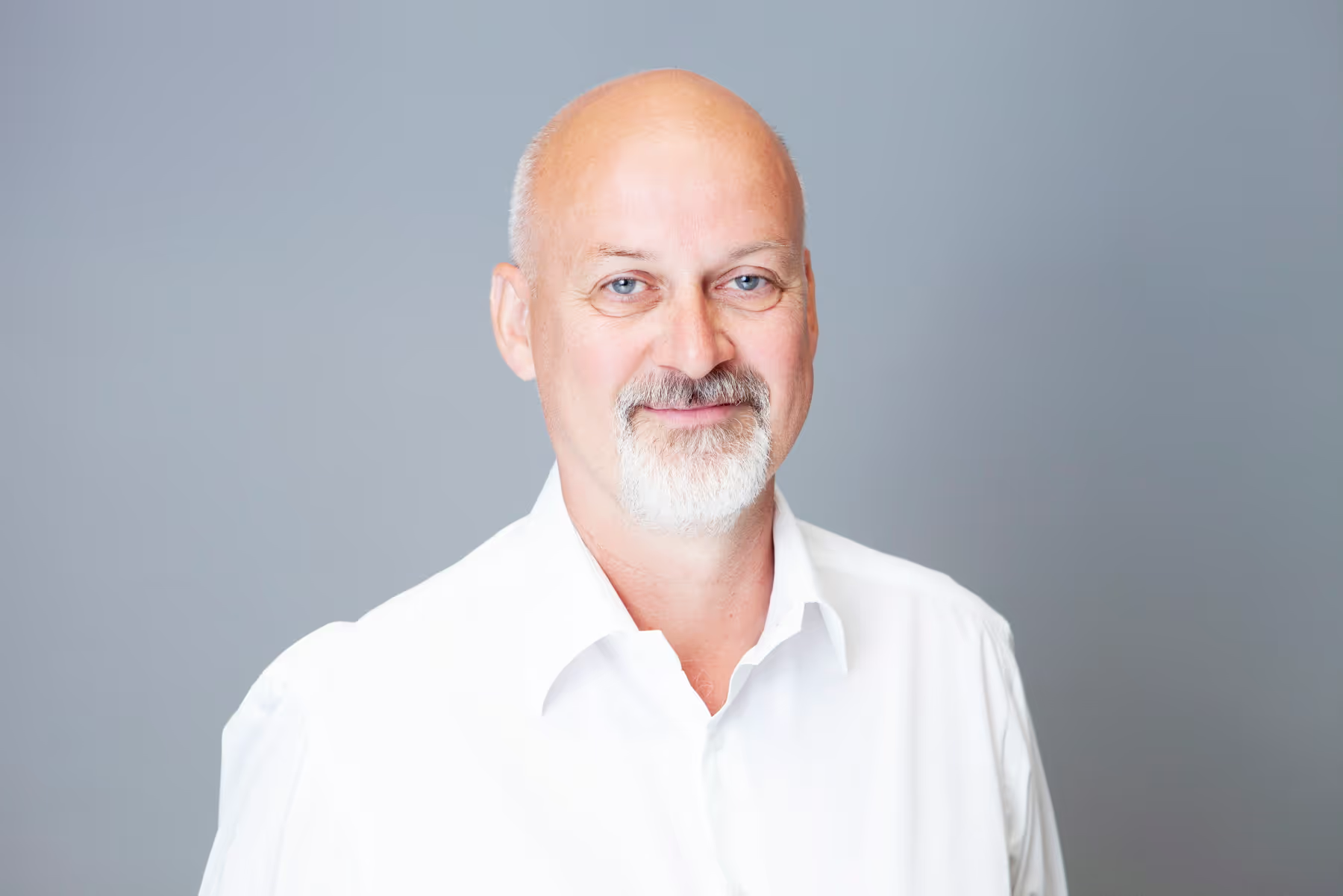
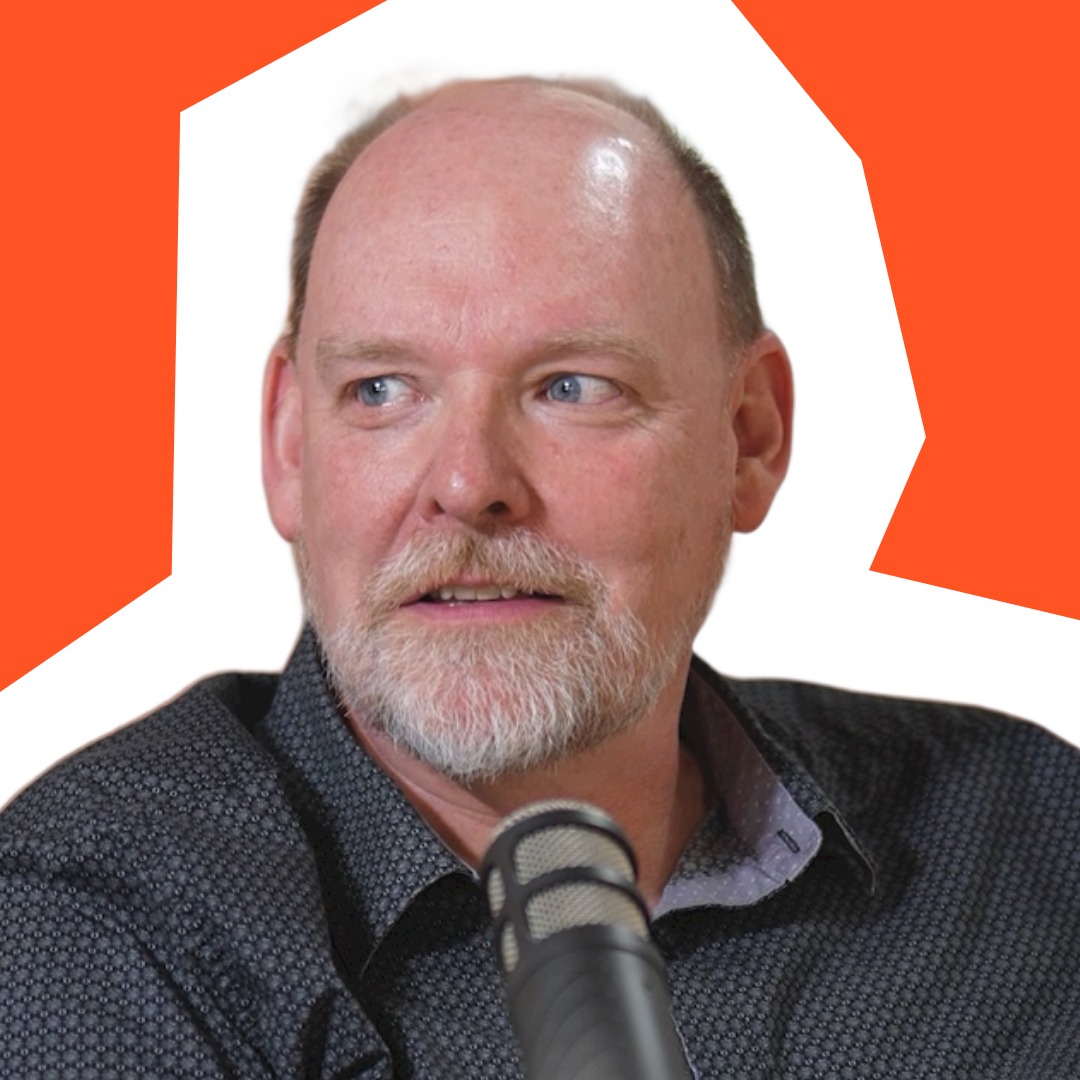
Lasse Gustavson is the President and CEO of Ocean Wise, leading global efforts to protect and preserve marine ecosystems. With decades of environmental leadership at organizations like Oceana, WWF International, and Greenpeace International, Lasse has driven marine protection and climate action through policy advocacy, scientific expeditions, and strategic partnerships. A pioneer in ocean conservation, he combines expertise in International Relations and Human Ecology with a passion for bold leadership to address the critical challenges facing our oceans today.
Lasse Gustavson [00:00:00]
So we've gone from a public response to other environmentalists or me as to why? Why should I care? How? Meaning, what can I do? And that's where we need to step up as environmentalists, figuring out what you do if you're just an ordinary citizen without significant wealth or political power. What can you?
Mo Dhaliwal [00:00:25]
Welcome to High Agency, igniting conversations with inspiring people, leading transformative change. Our oceans are at a critical turning point. The statistics paint a stark picture. Our oceans are drowning in plastic, with up to 200 million tons currently adrift in marine waters. Each year, we add another 33 billion pounds to this toxic legacy, claiming the lives of 100 million marine animals in the process. But plastic is just one thread in a complex web of challenges. Our oceans have become the planet's primary defence against climate change. Absorbing 23% of human-generated CO2 emissions and more than 90% of excess heat in our climate system. Now this heroic role comes at a devastating cost. The rising acidification threatens marine life survival, disrupting ancient food webs and undermining vital ecosystem services that billions of humans depend upon. Now, as we face a 93% likelihood that we will see the warmest year on record by 2026, and with global temperatures threatening to breach that critical 1.5 degrees Celsius threshold, we stand at a crossroads. The science is clear, the data is compelling, but numbers alone aren't going to save our oceans. What we need is bold leadership and unwavering human will, the courage to make difficult decisions and the determination to see them through. These are the forces that can transform statistics into action and challenges into opportunities. It's in this spirit of decisive leadership that we begin our conversation with Lasse Gustavson. Lasse is president and CEO of OceanWise, and he brings decades of global environmental leadership to this Vancouver-based ocean conservation organization. His career includes executive roles at Oceana, at WWF International, and at Greenpeace. Where he championed marine protection and climate action through scientific expeditions, policy advocacy and strategic partnerships. Lasse's career began in Sweden with an education in international relations and human ecology. He's since then established himself as a pivotal figure in the global movement to protect and preserve marine ecosystems. Welcome Lasse. Thank you. Thanks for joining us at High Agency. We're going to talk a lot about oceans today. And you'll work with them. But before we get into that. What did you want to be when you want to be when you grew up?
Lasse Gustavson [00:03:05]
So I'm one of the lucky few who figured out really early what I wanted to be. I told my mom when I was 14, 15 maybe, I'm gonna be an environmentalist for the rest of my life, and she started crying, and she said who's gonna pay your bills because this was in the the mid 70s and being an environmentalist was so far off any normality that she was just concerned. My youngest son is a marine biologist, and when he told his gran I'm going to be a biologist, gran. She said, that's a great career choice. The environment has come a long way since I started more than 40 years ago.
Mo Dhaliwal [00:03:40]
What were your influences? Like, how do you land on it?
Lasse Gustavson [00:03:44]
I think there were two different ways, two different reasons that brought me into environmentalism. One is the fact that I'm from a small, safe town, and my dad is an outdoorsy. It was an outdoor in mine. And we had, my sister and I, the rules were that we were not asking for permission to go outside. We were asking for permission to come inside. So Saturday mornings for us were breakfast and then out you go, come back when you're hungry. And by the way, that's 12 o'clock. So we were encouraged and didn't have much of a choice. We were spending a lot of time outdoors. The other reason was a young girl with red hair that I was fascinated with. And she was in a group called the Field Biologists. So the youth organization of the Swedish Society for Nature Conservation. So that brought me into organized environmentalism. So never underestimate the importance of hormones, puberty and career choices. So that was, you know. And honest and genuine interest in nature, but also the social networks of what I consider to be young and cool environmentalists. I wanted to be one of them.
Mo Dhaliwal [00:04:52]
The seventies are a pretty early time to be starting into this. Like I've, I consider myself kind of like a bit of a lame environmentalist, you know, like in high school in the nineties, it seemed like we were in a moment where environmentalism and concern and that consciousness, at least at the consumer level, was really at the forefront. You know, there were workshops, we'd have like sort of mini conferences in the high school about, you know, the environment. Regeneration and things like that. And I remember doing some work years later with the David Suzuki Foundation and actually, being on this, what they call the Climate Leadership Council with David Suzuki and him talking about himself being an environmentalist in the seventies and about how the data was available even then around what's going on with the planet and the human impact and the impatience he felt to get going. And at the time, people had reached out to him and said, well, you know, or sorry, he had reached out to people to say, you know, what should I be doing in order to make an impact? And they all said, well, this is a cultural shift. What you gotta be doing is focusing on education so that the next generation they grew up with this awareness and this knowledge. And he felt such urgency that he's like, we don't have time for that, right? And he wanted direct action and tried advocating directly, but decades passed with frankly, a lot of inaction. And you know, in sharing the story with us, he shared that one of his regrets was that he was too impatient, didn't feel or fully understand how long things would take. And I'd wish that he had spent a bit more time on education to kind of lay the, you know, the cultural fabric. How has that changed in your mind,f like the general awareness and care for environmentalism, like from the seventies till now, what have you seen as being the shift?
Lasse Gustavson [00:06:44]
I think it comes and goes. So sometimes, being an environmentalist, you're totally out of the picture. So that was the nineties, when everybody was making money, investing in the stock markets, no, nobody cared about environmentalism. On the other hand, in the eighties, we were heroes, just waving the flags. As we're Greenpeace, and we were here, it was in money just kept coming. Now I think we're in a, in a time where being an environmentalist is, yeah, that's a decent thing to be. That's normal. We're not yet in this space where everybody's an environmentalist. I think the success criteria for a wider environmental movement, if we can call it that, is just knowledge, absolutely fundamental. Science and traditional knowledge are the foundation for every solution we're looking for. But then you also need to attract many people. And people have busy lives. The environment is obviously on,e and climate is one of the major challenges we're facing. It's not the only one. We're living in times of war and poverty and drug abuse, all sorts of stuff. That people can engage in. So you need to find ways to mobilize many people. And the most important thing that's missing is actual conservation, actual action. So we've been going from, I think, the first UN conference was in Stockholm, 1972. And the number of conferences and meetings and commitments and papers that have been put out, it's exploding. The practical implication of that is not exploding. So that's why we at Oceanwise decided to be, when we were looking at what's missing, and it's actually real conservation, practical conservation. So we're trying to be the let's do it organization. And we also try to mobilize many people, which requires us to be not the radical front runners, but the second wave. So we are very happy to see people like David Suzuki or Greta Thunberg and others, but we need to go all the way over here. And we're not ready, so we need to mobilize people who are willing to take small many people take small step,s rather than a few people doing everything right. So that's what we think is our role. That doesn't mean we don't think these people are necessary, or we don't think the advocacy work is necessary; no, we just picked one niche that we think we can add value in. And you pick your role, and you pick your lever, and you say this is where we're gonna apply pressure. This is our focus. With full respect to other choices that other organizations and companies are making. We just try to do what we are good at.
Mo Dhaliwal [00:09:13]
So you mentioned the cyclical nature of environmentalism, which is kind of interesting because it makes it seem almost like it's a seasonal fad of every decade or so. But what are the regional differences? Because I mean, you've worked for several organizations, really storied organizations like Greenpeace, WWF, Oceano, but you've also lived all over the world. So what are their regional differences, and what have the cultural differences been between these various organizations that you worked with?
Lasse Gustavson [00:09:42]
So in the political world, the European Union has always been a leader, always been ahead of everybody else. The practical implication, not so much. I think there are really two kinds of environmental movements. The one that I'm part of, where people are actually not living with the consequences of environmental destruction. We have the privilege of living in a democracy and a very protected life. Yeah, very safe place. Safe space, Canada, Sweden, Spain. Or, yeah, you can live there. And then you have the other environmentalists who are actually living with the consequences. They live in drought, they live in floods, they live in scarcity, and they have record temperatures. They're suffering from environmental destruction. And the challenge is to make those two different subculture of environmentalism, is you like those two different constituencies to come together. So we can use our privileged positions in a... In true solidarity with the people who are actually living with the consequences of the choices our countries or our societies have made.
Mo Dhaliwal [00:10:47]
And that's, I think, been a big disconnect for a long time, because I know for myself and others, we aren't experiencing the extent of what's happening in the world. We might notice a little bit when, for example, so much of the province is on fire, right? We have the fifth season now, which is our fire season, and things get smoky and ashy. Between that, some rain and some flooding, sure, you can say some things are changing, but we're not feeling that direct impact. But our appreciation of it seems to be quite mundane as well. I'm sure you noticed the provincial election that just happened in British Columbia. For some reason, a lot of public opinions seem to hinge on one party promising to do away with a ban on plastic straws. And these sorts of minor issues come to the forefront as inconveniences, but there seems to be no necessary appreciation for what they mean. But what have you seen in terms of, like, the changes in individual responsibility versus government policy? Because I felt that for a long time, it seemed like a lot of responsibility was being thrust on the individual, on the consumer. Whereas the most massive impact is actually made at the government or policy level.
Lasse Gustavson [00:12:05]
So we've gone from a public response to other environmentalists, which is why, why should I care? How, meaning what can I do? And that's where we need to step up as environmentalists, figuring out what you do if you're just an ordinary citizen without significant wealth or political power, what can we do? And we have a couple of different things. We have a seafood label that helps people make the right choices when they buy fish for their dinner. Uh, we are cleaning up Canadian and American beaches. We've been cleaning beaches here for more than 30 years. That really should be the municipality's responsibility, but they don't do it. So we do it, and then we use the information to understand what kind of, what kind, of plasticsends up in the ocean and therefore end up on our beaches and straws are interesting. Uh, because they've always been, we have, we write the report every September called the dirty dozen and straw has always been there this year. However, it's not. The straw is gone from the top 12 different categories of pollution, including plastic pollution that we find on beaches. So that's good. It means advocacy and campaigning kind of work, but it is not great that we are so focused on symbolic issues. So, the mayor of Vancouver, with the relatively new mayor of Vancouver, one of the first decisions made was to take away what they call the tax on single-use coffee cups. And very proud of, yeah, I'm back to normal, whatever, it's BS. Change is necessary, but we shouldn't fight over relatively insignificant things like plastic straws. One, there's a solution that's relatively easy, but two, if we think that the environment is a left-wing or a right-wing issue. Everybody needs to be an environmentalist. If you're gonna fight climate change and nature loss, everybody needs to do everything they can. And we can live without plastic straws, but that's not the biggest issue. There are many, many more important issues where we should try to come together.
Mo Dhaliwal [00:14:19]
A reframing of the problem that was actually very useful to me came years ago. Again, when I was travelling a little bit more in sustainability circles. For example, I used to, in the late 2000s, produce this festival called 30 Days of Sustainability. And back then, it was a big deal to have 30 days focused on sustainability events and messages and creative concepts and people coming together and conferences and talks and all of that. And eventually the idea was, well, actually we shouldn't just have 30 days of sustainability, 20 foot seven. Yeah. This should probably be integrated into most of our work and our lives. But a reframing that was, was given to me was that in environmentalism, so much of it is about quote unquote, saving the planet and actually in a million, two million, a hundred million years, the planet's going to be fine, right? It's actually about saving civilization, humanity, and this brief period that we've been occupying it. There's such a disconnect, though, because humanity in general is bad at understanding exponential change, right? We don't understand it with pandemics. We don't understand it, with the environment. We only understand it when it just comes and slaps us in the face. So what are, what are you, what have you witnessed, how have you addressed the challenge of helping people understand what is actually exponential change and the timeframe of it, right? Because, you know, we're all very much ruled by our lizard brains. And unless the threat is imminent, not many people are motivated to move as quickly as we need to right now, right? And here we have a situation where the threat feels pretty imminent. It's maybe decades away, but there still isn't that action. There's still a pretty massive, it feels, human impediment.
Lasse Gustavson [00:16:08]
So I think environmentalists are often perceived as, pardon my English, but party poopers, coming in with all the bad news, telling people what they can't do. I think that's no longer a successful tactic. Maybe scaring people about what's gonna happen in the future was. Now they just need to watch the news. Now I don't know what you've seen, but I've seen Valencia, and it's a big city in Spain, a very rich country, totally devastated. Hundreds of peopleare dying because of rains they had. Half a meter of rain in four hours. That's a full year of rain and four hours, and that's the new normal. This is gonna be the 100 droughts or 100 floods a year, rather than a flood in a hundred years. That's fundamentally changed. So we will all be feeling it much more, but I also think it's time for the environmental movement to stop preaching and look for what people can do. And we're in the spirit of everybody needs to do everything they can, but also looking at, you know, some things are inconvenient, and convenience is a really important part of North American culture, no? So how do you do it? I, because I am a hardcore environmentalist and I live an hour's walk from my office. I take the bus. My wife is not an environmentalist. She doesn't take the boss. And it's not that I haven't tried. She says, no, I'm going to go shopping or all those. And I can nag my wife to death, and she's not gonna change. I know that she's a strong woman. She's gonna do what she wants to do. And that's true for everybody. So you need to find a way where environmentalism makes sense in your life. And I think there are three big things that everybody should reflect on. One is how you transport yourself back and forth to work, holidays, or school, whatever it is. Seconds, what do you eat? So we have a culture here in North America. We love our, we love our meat, no? People eat twice as much meat now as they did only 20 years ago. So maybe take, cut out some of that meat, which is, you know, hard on the climate, hard on water, hard on pollution, and eat more vegetables. They're probably good for some of us as well. But think about it, and then be happy with your choices. And then how do you heat your house? How do you? Here in BC, we have hydro, so that's relatively safe. But across Canada, if you have the possibility to choose, make a good choice on how you heat and cool your house. If you can. If you've done those three things, you've done a lot. And then start talking to your friends and neighbours to make sure that they do it too. Because if you make a couple of choices, your friends will notice, oh, he's taking the bus now. Why is he taking the buses? I'm taking the bus because of A, B, and C. Oh, he's not eating meat every time we have dinner together. Why is he not eating me every time? One, two, one. So you become a force for change in your social circles, and hopefully then that snowballs and you get. Traction as a movement. But the,n of course, you need to support the people who are trying. So if you're a, if you, when you vote or when you buy stuff, you know, you vote with your dollars. You support your, the leaders who are trying to do the right things. You imagine you're a politician. I never want to be a politician. It's a horrible job, must be horrible. Are you trying really hard, and then they don't vote for you? What are you gonna do? Or you put a product or a service on the market and nobody's buying. What are you going to do? You lose, no? So supporting people who are trying is also really important. So whether you want to support the company that's selling the right stuff, or you want to support an organization that's trying to do the right sstuff do the three or four things that you can do in your daily life. Make some serious changes if you have to, and then support others and then build community, talk to people. It's going to grow.
Mo Dhaliwal [00:20:01]
I mean, I think the reframing of some ideas has been really important. Another data point, I haven't validated this by any means, but I read somewhere years ago that if you are a vegetarian, you can drive a Hummer H1 guilt-free. So again, I have another math on it, but as far as reframing some of these ideas so people understand what the impacts are, what it means, right? Because even with what you're saying, the dirty dozen, plastic straws, the impact of it. I don't think it's widely enough understood and known. No, of course. That it has that sort of impact. It's definitely not understood when it comes to our election time or our politics, because these things become very, as you said, symbolic things that people fall for or against, and it's an oversimplification. What you're, what it sounds like you're describing is that the era of the environmentalist kind of being that, you know, finger-pointing party scooper, it's kind of over, right? And so we need to incentivize different behaviours. What has been your favourite way, or what have you seen as being the most effective way of getting people really mobilized and excited about doing something?
Lasse Gustavson [00:21:10]
So what I appreciate most is when people who have been really stubborn anti-environmentalists kind of wake up. And there's nothing better, and it's got nothing to do with Canada, unfortunately, nothing to do with me either, but the farmers in Australia, Australia is a coal power-producing country. And it's kind of a, environmentalism hasn't been at the forefront in Australia. For years, we called the US, Canada, Japan and Australia the filthy four. In every international negotiations they would really water things down, and walk away and make it hard. I'm sorry, that was the US, Canada, Australia, and Japan. Okay, the filthy four in the 80s and the 90s, Australian farmers are living with drought. They're not stupid. Out of pure business sense, they've changed their mind. Australian farmers are now pro-climate action. Not all of them, of course, but a vast majority of Australian farmers are now pushing the governments to do more on climate because they are living the consequences. And they're an important part of the economy, so that matters. And it's those kinds of changes where people say, You know what? I was wrong. I'm changing my mind. And now I'm gonna go all in for what I actually believe in. And there are many of those examples, but I thought that just farmers have a bad rep, and food is the biggest impact we have on the planet. So if farmersgets it right, we'll come a long way.
Mo Dhaliwal [00:22:40]
What do you think the world is doing right? Like, I mean, I started, you know, this particular episode with a perhaps classical bad news, scary sort of framing of our conversation about what's happening with the oceans. And to some extent, it is really frightening, and it is scary. But what are you seeing, in addition to the farmers in Australia, whether it's government or people or a cultural change, what are we doing right?
Lasse Gustavson [00:23:05]
So right now is the last day of negotiations in the Convention on Biological Diversity, one of the three most important international conventions for the environment. And there is not as much progress as we need, but there's significantly more progress than what we are used to. And there are a couple of things that are entering the negotiation arena that weren't there before. One is corporates who are pro-nature or pro-climate solutions and indigenous folks. So the indigenous folksdon'tt always have a seat at the table, still, but much more than they did before. And that's important because if you look around globally, land that is controlled by indigenous folks is in a better shape than land that's in the hands of governments or corporations. So we have something to learn. And the fact that it's becoming more and more obvious that environmentalism isn't bad for business, it's actually a business opportunity. Makes the stigma of being an environmentalist totally different. So you have people who are now building their careers as environmentalists. Even if they're venture capitalists, they can now build their careers as environmentalists. You have lawyers, you have construction folks, you have all sorts of people. When I was in my early 20s, you were either a biologist or just a pure activist, a sustainable banker. Unheard of, it's like a contradiction of terms. A banker is by definition evil. That's no longer the case. So environmentalism has been mainstreamed. And that's important because obviously biology is important. It's the foundation, but it's not enough. And driving change is not driven by knowledge. Change is not driven by knowledge; change is driven by emotional connections. So something that you care about, you're willing to make a change for.
Mo Dhaliwal [00:25:03]
Yeah, it's something that you care about for sure. But what you're describing as far as the changes with the fact that you can be an environmental lawyer, sustainable banker, the economics have been incentivized, right? There's an integration of this mode of thinking and working into the wider economy, which gives people viable paths to actually enter it. But what are we, so that sounds like an improvement, and it's a big shift and a change. What's getting worse? Like, what are you doing wrong? Continue to do wrong.
Lasse Gustavson [00:25:36]
Everything is getting worse still. So that's the big challenge for somebody like me who's been around for a long time, which is that we are moving the debates. We are moving awareness, but all the major environmental trends are still going in the wrong direction. Climate change is not slowing down; it's accelerating. The World Wildlife Fund just came out with a report a couple of days ago when they said, since the 1970s, we have lost 73% of all animals in the world. 73%? Of all the animals are gone in my lifetime. The only problem of significance we've solved is the ozone layer. The ozone layer is actually healing. And that was because the solution was relatively easy. There were technical products that could help us against the CFC gases. If you're old enough, you remember the deodorants and the hairsprays and whatever. And governments came together in Montreal, actually. So there was a Montreal protocol that everybody agreed on, and this is what we're gonna do. And then they did it. So now the ozone layer is healing, which means yes, it can be done. Is not done. And that's why OceanWise is so focused on the doing part of environmentalism, not the talking part of environmentalism, because we talk the right way. Most leaders now, mostly, not all of them, but most leaders now, are saying, yeah, of course, we have an environmental program, and they have different environmental programs, which is good. People should be able to make choices. But the doing is not happening. We're still in Canada, subsidizing the oil and gas industry. We're somewhere between 15 and 18 times more than we subsidize renewable energy. How is that environmental action? It isn't, it's just not there yet.
Mo Dhaliwal [00:27:19]
Do you wind up interfacing a lot directly with the government or advocating that on the government level?
Lasse Gustavson [00:27:24]
No, not because I don't think it's important, but it seems to be option number one for all NGOs, I'm an environmental group or I'm another, whatever it's cause I'm going to go talk to the government and governments are obviously are important because, you know, 90% of the people follow the law, 90 percent of the time. So if you get the laws right, that's great. But that place is full, crowded. Uh, so we're trying to be more market-focused, looking at things that aren't. Effective on the market because if you get the environment and the economy right and in harmony with each other, and you add social justice to that, then you have truly sustainable solutions. And once it's happening, so this is, this is what my mom told me once she said, if you just kept quiet and did what you did. It would be so much better because what you do is never controversial. It's when you talk about it that it's controversial. Nobody, I've no, and she said, I don't know any of my friends who think you've done stupid things, but all of them say you've said stupid things. So I like to be in the space where the action speaks for itself a little bit more, and that we have, we, we worry less about opinions and, and, and what's in the news. And worry more about what's happening in the ocean, in the forests,t or in the rivers or the soil because that's where it actually matters.
Mo Dhaliwal [00:28:48]
I mean, that's been really encouraging for us, even as Skyrocket, my company and working with OceanWise is working with an NGO that is so action-oriented, because you'd mentioned the seafood program. And I knew about the seafood program for years before I even knew that it was a conservation organization or what OceanWise was. Frankly, I just knew that if there was a menu and there was a seafood item that was OceanWise, I would order that because it felt like the right thing to do. It is the right thing to do. Absolutely. And that's one of many actions that OceanWise encourages. You mentioned the shoreline cleanup program, plaster reductions, and a variety of things. What are the efforts underway right now to motivate action?
Lasse Gustavson [00:29:34]
So it's interesting because we are actually measuring the hours of service that we are doing to the communities. So we have our youth programs, and they are building on three things. Education, we want people to actually know stuff about the ocean that they don't when they join a program. Leadership, because clearly, we need to lead the world in a new direction. But then also community service. So if you go, if you're a young person somewhere between 15 and 30, you join an OceanWise educational program, you will learn about the ocean. You will learn leadership. And then you will do a project where you live. If you live in downtown Vancouver, you do business in downtown Vancouver. Build a community around your idea. If you're from Haida Gwaii, you do it on Haida Gwaii. In your own community. And then we actually count those hours to see how many people we been engaging with and how many hours of service this is. So that's really important for us. Are we actually doing things? Are we saying that we're doing things, or are we doing them? And we're looking, we're working on four different fronts. Now, plastics, obviously,y we've been working with the apparel industry about how to design a jacket that works in the weather we live in here in Vancouver. How do we work with washing machine companies? It says, how do you wash your clothes so they don't shred more microfiber plastics than necessary? We're now looking at dryers. How do you dry your clothes without having a cloud of microfiber plastics just being out in the atmosphere? And then we're gonna look at detergents, I think. We're trying to help people buy the right fish. We're trying to plant kelp. So kelp is the fastest-growing organism on the planet. Really important for herring, for otters. It's a good sequester of carbon. And we've lost 50% of the kelp, of the kelp and BC is a really important place. And Chile, in South America, isa really important place. So we try not to talk to governments and say, why don't you plant some kelp? Now we're actually planting kelp together with our partners. And they are always in, both in Canada and Chile, led by indigenous folks with OceanWise scientists and experts, with support from whatever government, local or federal government. And our ambition is to First plant 50 hectares in Chile as a seascape laboratory, and then, based on what we learned, plant 5,000 hectares. That would make us one of the biggest stewards of the kelp forest in the world after the Chinese government. I don't think we're ready to take on the Chinese Government quite yet. We work with whales. Everybody in Vancouver, of course, BC, loves whales. I would have been an accountant, probably, if it weren't for whales. I love whales! And we've been able, as an environmental community, to almost face out the hunting of whales. There are still a couple of countries that are hunting, but the biggest threat to whales is no longer hunting. It's ship strikes and entanglement in fishing gear. So we built a system here, together with the Port of Vancouver, called the Whale Report and Alert System, which is 8,000 volunteers keeping their eyes open, an app on your smartphone where you can report, I've seen a whale. Observation goes automatically to everybody who's on a ship within 10miles ofm that observation, and then they can slow down or reroute if they want to. We're now taking that to Prince Rupert, then we're taking it to Seattle, and we're hoping to take it to Dubai, to Columbia, Sri Lanka, to San Francisco and have it in 13 different ports around the world by 2030. So there's all sorts of good stuff going on. And it's working because we're doing it in collaboration. Almost everything we do is a collaborative project. It's Oceanwise Plus, somebody or a group or a network or a bunch of individuals who know something that we don't. So we become stronger together. Our intention is to out-collaborate the opposition to the solutions that we are looking at. Not out-compete, but out-Collaborate. So working together with others,o we build strength. And that our solutions can get to scale because being right in the margins is just not enough anymore.
Mo Dhaliwal [00:33:47]
It's fantastic talking to somebody that's so clear on the impact that they wanna make, but buried within that, and I'm gonna be talking a little bit broadly, beyond OceanWise even, is there's a leadership style that you're describing of the idea of our collaborating, what you might face as opposing forces. Has your leadership style changed, or what have you learned? You know, the three main organizations that I named at the outset, because to me, kind of looking from the outside, we're only really familiar intimately with OceanWise ourselves, but just looking from outside, they seem to be even culturally very different entities, right? You know, Greenpeace, Oceana and OceanWise, they seemed to be, you know, even though there might be a universal intent there, culturally they seem like different organizations because Greenpeace, to me, is very, I still have the remnants of the memories from the 80s and 90s and the headlines that were made with this very activist, very forceful organization. But how has your leadership style changed, and how do these organizations differ from each other culturally?
Lasse Gustavson [00:34:53]
So the organizations are different by choice, no? So you're right, Greenpeace is confrontational, not in a violent way, but they are-.
Mo Dhaliwal [00:34:59]
Very direct.
Lasse Gustavson [00:35:01]
It's clear. Many of my friends work for Greenpeace. I like Greenpeace more on the outside than on the inside. It's a really hardcore campaign as soon as they turn inside the organization, as they tend to do, that's hard. But Greenpeace, the role of Greenpeace is to kick butt. And when they do that, WF can walk in. Because WF is really good at finding solutions that are acceptable compromises. And then they have scale because it's the biggest conservation organization there is, no? So there's a curtain stick going on there. Oh, and when these two organizations know each other, when I was the CEO for WF in Sweden, I was on the phone with the CEO of Greenpeace all the time saying, you need to be more radical, so I can be normal. If you're not out there, I look like an extremist. There should be nobody between the decision maker and me. And it's your job to create the crisis so I can help solve it. And sometimes that worked, and sometimes, of course the Greenpeace are hardcore. They think a compromise is a failure. So the setup is benefiting somebody who's more pragmatic than principled. We all play different roles. Oceana is the best organization in the world when it comes to fisheries policy on the national level. They've just sliced it. This is what we're gonna do. That's very specific. We're gonna be the best organization inthe world when it comes to national policies for fisheries. And then they've diversified a little bit, but I really like working for an organization. This is what we do, quotas, that's all. And they do it only in countries that matter. So, when all these organizations dare to do what they're good at, and they're not trying to be different than the core of their identity. They're all amazing. And they fail. So when Greenpeace tries to be pragmatic, or WF tries to be radical, or Oceana doubles in consumer campaigns, nah, that's not what they should be doing. They should stick to what they're good at and then talk to each other. And then the synergist that comes out of that could be magic.
Mo Dhaliwal [00:36:59]
So you mentioned that culturally, everything that's happening politically in Europe tends to lead the world. So I wanna talk about Vancouver specifically, because I would say even in the landmass that is Canada, we've got a lot of cultural differences here from East to West. But what are you seeing in Vancouver and in comparison to the world, and maybe major cities in North America? Where do we sit in our leadership?
Lasse Gustavson [00:37:23]
No, so I think Vancouver is extremely fertile soil for environmental organizations. It's not by accident that Greenpeace was born on Kitsilano beach. It's by accident that the Sea Shepherd has some of their first successes here. It's almost like everybody in Vancouver is an environmentalist. Not everybody, but it's not controversial to be an environmentalist here. There are other places where I would, I don't hesitate to tell people what I do for a living. That's not, it's not safe being an environmentalist ever. If you were a forest protector in the Amazon or you were doing work on illegal fishing in Spain, no, that's dangerous. Yeah, no, so a journalist is really dangerous. Environmentalism is really dangerous. Some of the most dangerous jobs in the world. Some places. It depends on the context you're in. So, Canada is safe. Vancouver, safer than safe. You know, your environmentalism is encouraged here. I'm very surprised I came here from Spain, which is a good environmental country, relatively speaking. One of the best supporters OceanWise has here is KPMG. I would never even dream of our accountants. I know KPMGs more than accountants, but our accountant would be one of our strongest supporters, but they are not. And that's amazing. I don't think that would happen in many other countries or many other cities, even. So, Vancouver's very cool that way.
Mo Dhaliwal [00:38:54]
Where do you think we can go next from here? Like, what is your outlook on the next generation of environmentalism and leadership in this space?
Lasse Gustavson [00:39:01]
So when it comes to leadership, I think we, COVID will change everything, and that's good because we came from a culture which was primarily top-down. Old guys with many years behind them, many years of experience, they are the ones who know. That would be me, no? I know everything, I've been around forever, and I'm a well-educated man, so I should be the decision-maker. That's the stupid model. So, what we're trying to do in Ocean Wise, we're experimenting with what we call a performance culture. So we don't force people to come into the office. We are not counting hours. We're not counting butts on seats. We are trying to be really clear with this. This is where the organization is going. This is what we're trying to achieve within the next three years, within the year, within a couple of months. And this, OceanWise number so and so, with this and that name, this is your contribution. And that's in a negotiation between the line manager and the staff person. I said, this is what we're going to do. And then as long as you live in a Canadian climate time zone, you're good. So we have stuff from Vancouver Island to Halifax. We have people working on the ocean in Saskatoon, which is kind of weird because when you're in Sask, I've never been to Saskatoon, but I can see them up, it's far from the ocean. And that works for some people, and it's challenging for others. So we're trying to build a support culture around people. So you can, yes. You can, you don't have to be in the office between these hours. You can work from your living room if you think that's the best place to be. We even had a guy for a while. He was living in a van in Mexico because he loved surfing. Then he came back because he said hadas too much freedom. I couldn't handle that. I need a few young guys. He needed some rules, but the idea of co-creation and empowerment is what creates this high agency that, that your, your podcast is all about. If people know what they are expected to deliver, and they have the resources to make it happen, and they are motivated, and they're talented, which is the kind of people we wanna be, you don't need to control them. You need to empower and unleash them, which is a very different thing. And I had a conversation with people yesterday and said, we wanna have a four-day work week. I said, no, you're not gonna have a four-day work week, you can work when you want. If you need to go to the dentist on a Tuesday afternoon, just tell your colleagues, I'm going to the dentist. And then figure out between you because you're all grownups, you're old, smart, how to work and realize you're not in this organization on your own. So it's not whatever you want. It's what's good for the organization and for you. Find that space. Then we will be effective. We will be powerful because if everybody's empowered in the organization, the organization is empowered. It's like love. The more you share it, the more there is. Power is the same. The more you share it, the moretherer is. So if the people who work for me are afraid of taking initiatives because they're afraid that I'm gonna criticize them or punish them because I'm their boss, that's bad leadership. That creates a nervous organization that's afraid of failing, and people will not take initiatives and therefore we won't get the best out of them. Do we have people who take too many initiatives? Yeah, sometimes they're doing it a little bit crazy. That's better than not having creativity in an organization. So unleashing it and power is critical, but the accountability in the system is the challenge. Now, how do we hold each other accountable? Because we are depending on each other. Conservation is teamwork, no? Yeah, and that's the challenge...
Mo Dhaliwal [00:42:42]
But what you described as far as high agency people are creating that high agency culture, I mean, that's what I gravitate towards, absolutely. And I'll share a quick anecdote. Years ago, many years at Skyrocket, there was this sort of rumour in a small team that I didn't want people to take a vacation. And the reason why this kind ofrumourr started was that somebody would request a vacation and I would kind of bristle and just get really awkward and not know how to have the conversation. And... The effect it left people with was, oh, he doesn't want us to take time off. He just wants us working all day, every day. And it took me a long time to realize myself. It wasn't that I didn't want people to take time off; I didn't want people to ask me because my point was, who am I to approve your vacation? I don't know what you're working on, right? You figure it out. You're talking to clients, you're talking to your team members. You figure out and let me know that you need to take time off, great, but who am I to approve this, because, you know, that's so, it felt kind of paternalistic. And at the time, though, I didn't necessarily have the articulation of the tools to describe what I was looking for was ownership of that empowerment, of you tell me what you're doing, who am I to tell you, right? But we learned, and we corrected, and we got to the other side of it. And I would say, you know, even us as a team now, organizationally, what you are describing is definitely what we're trying to create here, which is a high-performance culture, which is rooted in empowerment and accountability. But I feel that there's a bit of magic to impact organizations, right? Whether it's social or environmental, which is that you're already starting with a cause. So people that are gonna come to you aren't necessarily, I could be wrong, but aren't necessarily people that are looking to maximize the salary for their skillset, they're coming because they have an intent for a change that they wanna create in the world, right, and they're very purpose-focused. And those people are gonna be highly accountable anyway. I mean, in fact, when you say that, some people are taking too many initiatives, right? I feel like that's a problem that you would probably see in a lot of social and environmental impact organizations, because you almost have to tell people not to work so hard, because there's so much that they could be doing, right? But with the team that you're building and what OceanWise is doing, if you had to look out 10 years and say, here's my vision for where we've arrived, right, I mean, I know you've got targets for three years, we've talked about those. But if you had to look out even broader than that and say, this is what a fully arrived organization will look like, where we're fulfilling our potential and doing what we're supposed to, what does that look like?
Lasse Gustavson [00:45:16]
So I think it's a never-ending journey. I don't think we'll come to the, I'll come the point to say, I don't have anything more to offer. They need another CEO by now,w and I'll move on. I don't think that's anytime soon because we have more things to do, and I think I can add value still, even though I've been around for five and a half years. I actually never kept the job longer than the one I have now. Well, that's a good sign, I guess. It is a good sign. I'm not tired. It's not that. I actually think we have things to do. But I came here, and the board asked me to turn this into an organization with global impact. We have a long way to go before we have a global impact,t and there are two ways for us to have a global impact, one is to actually spread the geographical reach of the organization. So we've created a legal entity in Chile, in South America, we have a legal entity in the U.S. And that might expand into other countries or regions. So, actually just spreading what we already have. So you would have a Vancouver, OceanWise, you have a Toronto, OceanWise, you have Mexico City, OceanWise, et cetera, no? But the other one is doing things that are so amazing and so inspirational that they actually have a global impact independent of where they happen. That's a much more fascinating model for me. I think we need to use both those tactics, but when our whale report and alert system, which is one of the things I'm really, really excited about right now. Is in 15 ports, 20 ports around the world. Some of them are just licensed by Oceanwise, and somebody else owns it and runs it. That's the way, I mean, I really want it to, I like it when people steal my idea,s and they are more powerful thanmakinge them bigger, which happens every now and then. So I think Oceanwise will have a bigger geographical reach, but also we've done a couple of things that are really. U,h very special, I'll so they know some things you remember. Do you remember when Ocean Wise did this, and that they will have a few of those as well?
Mo Dhaliwal [00:47:16]
Yeah, there's a lot of legacy, but inspiration that comes out of those sorts of projects for sure. Yeah, I mean, I feel like in these conversations, we always try to take out some powerful quotes. The part where you said that with power, the more you create, the more there is, that it's like love, the moreyou create, the more there is. I think that's beautiful,l as far as like an invitation for people to come and get involved. As far as your sort of next steps in your leadership and what you would even do beyond OceanWise, if there was a personal development that you had to share with our viewers, what would that be? What does the next version of Lasse look like in your own leadership?
Lasse Gustavson [00:48:05]
So right now, I'm 100% committed to OceanWise, but there will come a day, I know myself, and I'm not the only one, one of my sons called me about a year ago,o and he said, are you moving soon? I said, what do you mean? Well, you never kept a job longer than four years, and you keep moving around. He said, where are you going next? So I asked my wife, are we going somewhere? And she said, let's try something new. So I thought, okay, we're going somewhere. Where are we gonna? No, no, let us try something, let's stay. So now we're staying so that we know that we bought a house. So now, we're committed to OceanWise and Vancouver, and we're staying here. But at one point, it's time to hand over. And I think my next step is not to be a CEO for another organization. Well, you should never say never, but I don't think so. I think my next step is to take all my experience and turn that into a couple of board roles. Maybe I'll write a book, maybe I'll become an advisor. And spread my experiences of leadership and my experience of understanding the fundamental challenges we're facing with climate and biodiversity loss and health into places where they are not. I'm fascinated by the big industries that we are depending on, but they are very unsustainable, like agriculture, like energy production, like mining. I... I don't think I'll be hanging around with too many conservationists on my last stretch because that's nothing wrong with environmentalists, but I'm fascinated. One of my best friends runs a construction company. Another friend of mine is a medical doctor. They're all struggling with climate change in their own way. And I think my experience is more useful in those arenas than hanging out with, you know, other ex-WF Greenpeace people. And you know I love these guys, but. If you want to continue to havean impact, you need to go to places where you're needed, not where you are comfortable.
Mo Dhaliwal [00:50:02]
So it sounds like a powerful legacy in the mix.
Lasse Gustavson [00:50:03]
Hmm, we'll see.
Mo Dhaliwal [00:50:05]
All right, Lasse, well, thank you so much for joining us on High Agency. We really appreciate it.
Lasse Gustavson [00:50:08]
My pleasure. This is awesome. Thank you.
Mo Dhaliwal [00:50:10]
All right. Thank you! Well, hopefully we've given you a lot to think about. That was High Agency, like and subscribe, and we will see you next time.

Get our latest insights on brand transformation and digital innovation delivered monthly. Join forward-thinking leaders who are building momentum.
We’re ready when you are.