The next move is yours
We’re ready when you are.
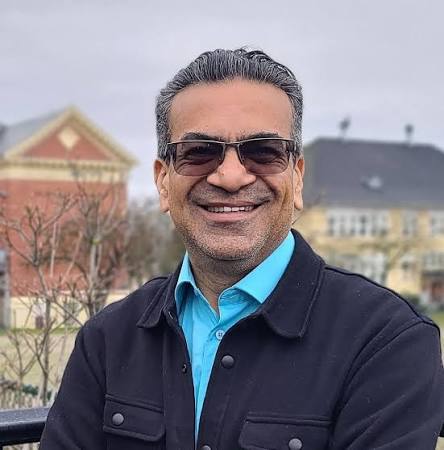
In this episode of High Agency, we sit down with Vik Khanna, founder of The Visual Thinking Company, former co-founder of Faronics Corporation, and longtime entrepreneur and mentor, to explore what he calls "phase three entrepreneurship"—the stage where purpose, mentorship, and long-term thinking take precedence over financial success. Vik reflects on his entrepreneurial journey, from bootstrapping a global software company to becoming an angel investor, and shares the lessons that continue to shape his approach to leadership and innovation. We unpack why systems thinking is critical to solving challenges in education, infrastructure, and urban planning, and how data and pattern recognition can support better long-term decision-making. Vik discusses the importance of mentorship, purpose-driven entrepreneurship, and how AI is reshaping the future of work. From reimagining public systems to investing in the next generation of founders, this conversation explores what it means to build lasting impact long after success.
Vik Khanna [00:00:00] Phase one entrepreneurship was you're trying to figure it out. You're starting and you're like, what am I going to do in life? Right. So I'm selling vegetables, I'm selling distributing paneer. I'm, I was in scrap metal in a big way. And you know, experimenting all these businesses.
Mo Dhaliwal [00:00:17] Vegetables, paneer distributor, and scrap metal.
Vik Khanna [00:00:21] Scrap metal, you know, hustling and try to figure it out. What am I going to do? Then real estate, then computer hardware, then computer software. Then I would say that was phase two was when you're in the software business, you actually see scale, bootstrapping to 120 employees in Vancouver, pretty cool. Very cool. Right. So then the phase two is really solid. All those lessons, right? Angel investment lessons, all that. Now in phase 3 It's like, okay, you're not doing it for the money. You're not do it for anything except the purpose.
Mo Dhaliwal [00:01:01] Welcome to High Agency, igniting conversations with inspiring people, leading transformative change. There's something really compelling about people who look at the world, see problems worth solving and then actually go and solve them. The essence of entrepreneurship is that impulse. It's the refusal to accept things the way they are and imagining something better. It starts with a spark of restlessness, some amount of impatience, a willingness to take a risk that most people wouldn't and a stubborn belief that you can build something from nothing. But what separates the people who do it once from the people who do as a way of life is something harder to name. Maybe it's the way they're wired, compulsion to keep exploring, to keep iterating, keep learning even after you've had that exit and could comfortably stop. But that's the part of the story that we're used to hearing. There's another, sometimes quieter side where entrepreneurs start sharing the lessons. These are lessons that they've accumulated about sales, about leadership, about... Surviving the moments when everything's about to fall apart. And this is when mentorship becomes its own form of building. You're no longer building a company, you're shaping the people who will build the next companies. And it's the humility to remain a mentee yourself, to keep learning from others, even as you teach. And that might be the rarest quality of them all. These rare qualities exist in Vik Khanna. Vik is a Vancouver-based tech entrepreneur. And the founder of the Visual Thinking Company. He co-founded Pharaonics in 1996, growing it from a computer hardware business into a global ed tech leader over two decades. He's a past president and board member of Tai Vancouver, where Vik spent years mentoring the next generation of entrepreneurs, including high school students through the Young Entrepreneurs Program. Now, Vik is back as president of this organization once again. And he's ready to apply a whole new set of experiences and lessons to feel something that he calls phase three entrepreneurship.
Vik Khanna [00:03:16] Welcome, Vik. Thank you for having me. Mo, this is way overdue. We've known each other for like almost two decades now.
Mo Dhaliwal [00:03:23] Yeah. And I'm really bad at like keeping up with you for coffee or lunch. Uh, but you know, this we've made happen.
Vik Khanna [00:03:30] So this is good. You know, also, I just want, you know, say, um, we share something that's very powerful, which is to foster entrepreneurs, uh, the space you have here, for example, I've been here many times and you're not here. And that's because you allow other people to use this space. So you're giving back to the community and ways that are very profound. And that what I think is our duty and our role, uh at our age and our wisdom. And that kind of where I start with. What does phase three entrepreneurship mean? It means you're not necessarily doing it for money. You're absolutely not doing it from money. You don't need money when you're in phase three of entrepreneurship, but you need purpose. So what is your purpose? You've figured it out actually. So... Then you can look at things such as, what is the definition of a company? Is a company a vehicle for private enrichment? Or is a company, a group of people with an aligned goal and purpose? So now you can at it as phase three. Let's look at it, as a group of people aligned goal, and purpose. So that's now then the visual thinking company and the newest manifestation of what I'm doing. And also applying that to the nonprofit. That I've been a Thai charter member now for 17 years, and I shaped a lot of who I am today because that mentorship relationship that you mentioned, when you get mentored, it's amazing. When you mentor others, it is even more amazing. But mentorship is always a two-way street. So you learn and you stay young, and you get wiser, so you get older too. But the wisdom is all about what I would call pattern recognition. So businesses, entrepreneurship, humanity, human behavior, philosophy, psychology, it's all based on certain patterns. So once you can apply a more systems thinking to these patterns, you can see an entrepreneur doing something on a scale that is amazing and at different time and place, but it's not being applied somewhere else. So then that's where you can create those lateral and orthogonal connections and make some magic happen. So it's all about relationships. At the end, you're not gonna own anything except your relationships.
Mo Dhaliwal [00:06:02] And, and you've always been good at that because, um, even Thai, so it's, it's TIE, the, the Indus entrepreneurs. I mean, it was a global organization. There's chapters all over the place. Um, like tens of thousands of members. And I hadn't even heard of this group until, until you actually, um I think the first meetups, the first gatherings, like it was actually our connection and you inviting me and saying, Hey, you should, you should come check this out. Yeah. And I feel like you're, you're constantly sort of inviting people to things. Um, and that's, that's the Vik that I know today, but I kind of want to go back to the beginning. Um, because I think sometimes, especially these days, like the, even the term entrepreneur has really become like a brand and carries a lot of meaning and, um, you know, it's, it, it it's a loaded term. Yeah. And if we go back the nineties now, when you first started Feronix, I mean, did you know you were an entrepreneur or were you, um. Out to start a company, were you just solving a problem? Like how did that get started?
Vik Khanna [00:07:04] Well, you know, this is quite amazing. Um, so I'm, I would say I almost never had a job in my life. Never applied for a job. Now I did twice, um, because my dad said you're now unemployable. So I said, well, I'll have to prove you wrong. So I, I can get a job, so got a job at Bata Shoes in Brentwood mall. And that lasted all of six weeks. And then I got a jobs at Superstore and that lasted another six weeks and so I got employed. But I'm not cut out for working. All right. So dad was right. So dad was a hundred percent right. But, um, dad said, you know, you got to become the doctor of the family, eldest for, of four kids. So big responsibility, um came to the country when I was four years old. Um, so then my brothers were born here. My sister was born here and as the oldest, there was some responsibility to become the family doctor. So I took sciences in high school. I was a B student. I went to Langara College, took more science courses, a B student, but the arts courses I would take, I would automatically get A's without trying much. So I had my bent. I told dad, you know, look, I'm not going to come out and become a doctor. He said, it's okay. This is all new, but I got other kids to work on. It wasn't that bad, but it was different. Then what do you do for a career? So I'm taking Peace and Conflict Studies, History, Psychology, Sociology, and I like those courses, but what are you gonna become? So I got a Associate's of Arts degree in Peace and conflict studies, and then I took the real estate course, because a friend was taking the real state course. So then I became a real estate agent at the age of 24, and I had two rules, no friends and no family. Why? If you can prove your sales ability, you can't rely on friends and family. So how do you do business with the public if you're a realtor? So I got really good at it for sale by owners. So I'm 24 years old and I'd go there with two contracts. I'd say, hey, you know, I get this game. I'm a brand new real estate agent, but you know there's this thing called the MLS which provides free service to buyers and they're not going to find your house. So put yourself on the MLS with me. But the separate contract says, if you can sell your house by yourself, pay me nothing. So one out of four appointments were closed. I had 38 listings, one or two would sell every month. It was quite nice. Then next year, I challenged myself. I had said, how do I find a cold buyer? So someone I don't know. Before internet, I'm sure it was around, but I didn't have an email address or it wasn't popular, but fax was. So I went to Future Shop and I bought this program called Dorina WinFax. I bought a modem, installed it on my dad's 46 computer and typed out a letter to 300 travel agents saying, if you got a buyer coming in who wants to see some houses, call me, I'll be there in one hour. I got one call. And that was a guy named Fareed. He's like my older brother, hi Fareed, and he came down with his wife, Omas, they checked out Vancouver, Toronto, we became pen pal and DHL fans and send videos back and forth, which had to be converted into that new format, NTSC or whatever, the European format versus Western format, and then on December 8th, 1995. Sold him a house. He arrived and then December 20 sold him a house and we became friends. And he said, I got this company that does computer hardware export import. Um, so one, he helped me out. And that was a start up for Onyx here. We became then hardware, white box manufacturing, lots of wholesale computer parts. And then we sold hardware to a software company two blocks away from us. And they came to me in July 1999 and said, hey, we know you do some business with school districts. Why don't you take a look at this software product? And that was, it was called Deep Freeze back then. So they had great branding and I took a look at it and I said, within seconds, give me the rights to sell this. And I said can I have all the rights for British Columbia? And they're like. You can take all of Canada. Canada has losers. We'll go to the US, you have all Canada. And over the next year, I outsold them 10 to one in a 10 times smaller market, which is effectively 100 to one. So they're after me specifically. They say, leave Pharaonics, we'll give you one third of the company and big salary and we'll go. And that was a challenging thing. I said, would my values allow that? If I left, my partner, Fred, would be out, but he's wealthy, he'd be okay. But 19 employees that we had would be at a job too, so I said no. And That was a wise move. So we retrained all 19 employees and slowly over the next two years, we transitioned to a pure software company and then we merged the two companies together and we became four equal owners. And that ride lasted for quite a while. And then one day I went down to Silicon Valley and there was these two amazing guys, X McAfee and I said to them, I said, hey, I'll invest a quarter million dollars You guys resell your product?" And they said, sure. Came back to my partnership and one partner said, well let's copy their idea. And I said, Well you can't copy entrepreneurship. It doesn't work that way. So then pulled a shotgun and then I exited. I knew that would happen. So kind of retired at age 44. But then became an accidental angel investor. So I like those guys in California. I And that company was a raging success. They're, um, securely today. They do a lot of, uh, internet, uh safety and internet filtering in the United States. So really cool. Are you allowed to mention their name? Like, uh. Securely. Okay. Yeah. Secure. Um, so about $65 million annual run rate today, U S dollars. So that was an amazing, amazing, uh investment. Good call. And then, um. Accidental angel investor. I invested in more companies. One of the biggest ones in Canada is a company called Jobber and that was with Horace Wirtz and Pankaj Agarwal.
Mo Dhaliwal [00:14:19] So you were an accidental, uh, angel investor, but I feel like you were also an accidental travel vlogger, um, cause I didn't know about your investments, but I remember following you online and you have this escalade and I swear to God, I think you drove that escalade in like every corner of North America.
Vik Khanna [00:14:34] Well, this is a part of, of retiring at age 44 and having young kids. So there's a few lessons I've learned in life that I've been wise to, and one of them somebody told me very early was your kids grow up really fast. So if you look at it, you only have like 15 summers with them that matter. So that's not much. So then how do you maximize all those summers? How do you maximize everything? So then when I retired at age 44, became an accidental angel investor, you got nothing but time. So then what do you do to occupy your time? You got young kids and you like to travel and you got this big slate, right? My car's got a name, right. And it's 11 years old and it's part of the family. Yeah. So it's probably the family's not going anywhere, right, but it's been to, you know, 49 states, 10 provinces, one territory and, uh, you knows, toured the kids around. Right. So now the. You know, as part of the family and the kids learned how to drive in it on the bondable salt flats. So there's many things that I would say that have been pretty exceptional about being able to raise kids that way with so much time being trapped in a car. Our record was 47 days on the road. Wow. Yeah. So pretty epic in terms of travel that way. And then they've been flown to a lot of countries.
Mo Dhaliwal [00:16:05] I have friends that are, I have friends that our parents, um, you know, they stress about a couple of hours on the road with their kids.
Vik Khanna [00:16:12] But, you know, the diversity that they get, the experiences that they, get the understanding that the world is a really small place, that there's so much out there, uh, that, there's like just an incredible amount of opportunity. So that's kind of what you want to impart with anybody, right? It's again, back to that mentorship. So how do you mentor your own kids? Right. It's actually a big challenge, right. How do you make sure your kids don't get anything that you have? Because you have to make sure that they're self-made. Right? That's another big challenge. So I consider myself the third generation self-made entrepreneur, right? And the first generation that made it necessarily lost it all because both of my grandparents were born on the Pakistan side of what is greater India back then, right. So they lost everything. But, you know, different stories. My grandfather on my mom's side, So My mom's dad was an industrialist in Karachi and he was building infrastructure and he was very wealthy. He had exited a flour mill and had quite a bit of wealth. So he flew my mom, who was one year old, and her six siblings to Kanpur from Karachi in 1947. So getting an airplane back then was quite a feat. And then On my dad's side, they were in what is today, no man's land. So they were very close to the border and they literally walked across swamps, but they could not walk on the road or the train track because there was a lot of chaos going on there. But it was one of the biggest migrations on earth and shaped a lot of people. And especially people who are immigrants to Canada, because you actually know what it means to be displaced. Right. If we never got displaced, I don't think we would be here. Right. And it's, I saw an interesting stat one day. Only 4% of the world lives outside the country it's born in today. Really? Yeah. So 96% of people live in the country they are born in. That's quite amazing, but when you look at Canada, we're a very unique experiment, extremely unique in the world. And there's very few of us, only 40 million people.
Mo Dhaliwal [00:18:56] That's so fascinating. I've never actually thought about the ratio, but when you put it in those terms, yeah. I mean, aren't her lineage is part of that 4%. And I mean, and then on the partition side, I mean that's, that's quite incredible. Um, because being successful in that era, uh, obviously carried a lot of privilege with it, right. Um, and to lose all of that, um, but still have the fortitude to move forward and raise kids and help them shape completely new lives. And then I'm sure not even in their wildest dreams would they have thought that, you know, their great grandkids would be living the lives that they do today or having the experiences that they do because you can't imagine what the future is going to hold.
Vik Khanna [00:19:41] Totally right. Um, but you know, it's also, um, values, you know, like back then, you know imagine the choice, convert and keep your empire, fight and die or run. Only three choices, right? There's nothing else. So a different time and place, but I think if I look back at where Canada's going and where we were, I think Canada's becoming more tribal now, right. So I think the integration is not as, as good and as fruitful as it was before. And what I mean by that is if you look at the public school participation in Vancouver. The Vancouver School Board is now planning for only 76% of the 100 future kids. So what would cause that? So then more people are going to Khalsa school, Muslim school, Jewish school, Christian school, elite schools. So then what are you causing in your society if this perpetuates another 50 years? Well, then you have the Indian education system. Right? Which is primarily public education system in India is for the poor and anybody middle-class and rich goes for private education. So is that the kind of future Canada wants? So these are the kind of system thinking questions that I'm asking now. Yeah. I mean,
Mo Dhaliwal [00:21:13] Systemically, it's really interesting because Like years ago, Finland made this like policy change where they just decided that, you know, I think they were having similar struggles where there was strain on the public system and there was kind of a bit of a burgeoning private system and there was a push and pull happening and they just scrapped it all and said, okay, all education, the whole country is just free now and we're not, we're dealing with all of this push and poll anymore. And what they found in this kind of like, you know, long-term study was that actually just giving everybody access to the same level of education. For free, right, all the way through to university, actually had a massive impact to their GDP and created more harmony in the country and just a lot more mobility, right? Because if you have people that are lower middle-class that are rubbing shoulders with their classmates who are part of some, I don't know, like really elite or high-class family in Finland, then their ability to actually understand each other, to get along, perhaps even like work together in the future, like all of that goes up exponentially, right. As opposed to having just these pockets of elitism and I mean, India, you know, like we don't need to, you know, talk about that too much, but it's, it's a classically, incredibly segregated society, right? Like there's just, um, it's very tribal, very tribal and you know both laterally, right, there's tribalism and then vertically, right of the classism, right? And In that place, like, you know, it's not even middle-class. It's like anybody's barely scraping middle- class. The kids are immediately in some sort of private institution. They wouldn't even consider, right. And going to public school, but you also see the issues with that. Right. Is that there's so much, um, myopic thinking as a result, because I think the orientation really becomes around, you know, whether you're, um. You know, in business or in public life, it really becomes around, how do I just take care of my people, right? How do I take care of me and the ones around me and my networks? As opposed to looking at it from a more like civic angle of we're all a part of a system. What can I do to contribute to the system and how do we improve the system? So it actually benefits everybody. Yeah.
Vik Khanna [00:23:31] So system thinking is hard because it requires long term thinking. So if you look at it from a population health study point of view, it's no brainer. You invest in your children today and you get better outcomes in the future. So what does that mean? That means like, okay, the state of Texas doesn't care what you are, but if you're five years old or six years old, they will test you for dyslexia. It's a $20 test, okay? Doesn't matter your status. Private kid, public kid, right? Legal, illegal, doesn't matter. They want that $20 to have an impact in their future so those kids are not screwed up. It's very simple. We don't do that in British Columbia. Why? Right? Because there's somebody making money on the business of dyslexia. Right? So everything here is structural. We make our choices. Um, 25 years ago, you had to go to your catchment school. You had to, there's no choice. Uh, now there's a free for all. So now people who live in a neighborhood with a shitty school, never want to send their kids to the school across the street, they'd rather drive the kid across town and then that way the government saves money because they don't have to fix up that shitty school. Yeah. Because if you got the ability to be able to like ship your kids all the time, then you just deal with it. Right. So then the government saved money in that sense, but what kind of money are to save them is short-term thinking. So that's the issue is in systems thinking, if you think long-term, you're always going to save money by buying in bulk or thinking long- term or investing in now for future savings or pooling your money together. So, why should the health authority spend separate money? And housing spends separate money, and school boards spend separate money and the park boards spend different money, why can't they pool all their money together and build like a new Britannia master community center? Right? Like it wouldn't be hard, but they don't do that, right? And if they did pool their money together then the feds will say, oh, you know what, hey, you guys can do something good here, we'll put some more money into. So I think there's something called integrated planning. That a lot of places are doing and succeeding at, and other places are not doing well at. So then that's kind of where we're going with the visual thinking company and data. So what is the visual-thinking company? So the visual and thinking company is, it came out of frustration. And the idea came from a big problem that I saw where a school board, the Vancouver school board. Is closing schools in transit areas where the province has legislated density. A school near Joy Skytrain station, where I went to school when I was an elementary kid. The school board just closed that on December 17th and 18th. So just a few months ago. Now, why would they close a school and remove 557 education spots from a school 800 meters away from Joy Sky Train station? Yeah, especially in an area that's been slated for density. Yeah. By the province, legislated, right? So they say they don't need that school because they have other schools around there, which will be fine. And they say birth rates are low and they say housing's expensive. So I said, why are you building thousands of housing units around this school that you wanna close? And they go, we just told you housing's expansive. We don't believe that kids are gonna live in small apartments, okay? What about the multiplexers? What about two-bedroom? What about three-bedrooms? What about some kids that are actually squeezing in one-bed rooms? Right, so I think the school board's out to lunch. So then I said, OK, well, I think I can do some entrepreneurship around this. Right? So then what is that entrepreneurship? Well, it's data. So we're taking 500 government data sources, like Census, Stats Canada, and then really, Manush data, like school board meeting minutes. No one's going to go after that. Nobody would go after, that except Vik Khanna.
Mo Dhaliwal [00:28:10] Yeah, I was going to say who in their right mind would be reading school board minutes? Yeah, they kind of.
Vik Khanna [00:28:14] Because he cares about schools. So then we cobble together now an incredible database, which is a data lake. And we organized it, sorted it out, made it Geospatial. So now we can create things like school space finder. So every private school, every public school, its enrollment, the capacity, the facilities condition index, does it have asbestos, lead pipes? Does it have good air, clean air? When was it built? Is it seismically safe? Will it kill your kid in the event of an earthquake? Then the test scores, but the real test scores. Not the ones that Fraser Institute publishes. So now why would you, why would the real test scores be different than the one that Fraser institute publishes? So the Fraser Institute does not publish the real ministry test scores? No one knows that. I don't understand that. I'm confused about that as well. What are they publishing and then why? So they're publishing their own derivative of their version of test scores so they take the ministry test score. And then they modify it based on their parameters because their goal in life is to pump up private education. So they always make the private schools look better than the public schools. So they have a system for that, right? So they, if you don't have full participation, for example, they may minus you, right. So a lot of the teachings apparently are like from the Fraser Institute or like the private schools always score higher. Why? Right. But it's not the real test scores from the ministry. That's all I know. So how they make their data cannot be replicated. They don't disclose their formula. Now the visual thinking company, if we can make a calculation, we disclose our formula. And we're open for academic review. So if you're a university professor, come email us and we'll give you all our data, our sources, and so you can replicate our numbers. Because we're not into this for making a bunch of gating of the data. We want this data to be used.
Mo Dhaliwal [00:30:33] And especially these days, I mean, gated data loses trust pretty fast, right? Cause with, with AI and everything else, what's the first question we're asking is how is this trained? You know, um, you know, what are the guardrails, what biases are loaded into this, cause it's all a black box.
Vik Khanna [00:30:47] But I also personally believe you can no longer sell data after three or four years. So while a visual thinking company will start selling data, we want to sell it to the point where it can no long be metered, which will tie in with the AGI cycle where data will be always perfect. So then in three or 4 years from now, you can't sell data. Then you have to sell intelligence, which is what we're selling right now. So then we use a data and we create intelligence out of that. So then we're selling pattern recognition workshops. And that then is going to fuel future tools that would be algorithmic. So the data then has algorithms that help people make decisions.
Mo Dhaliwal [00:31:33] Why wasn't this done before?
Vik Khanna [00:31:36] It's just really hard to, so we started in November 2023. Kind of like there was no AI was not, not as good as what it is now. Right. So if you remember, Chachi Petit was announced November 2022, right. So then we incorporated in February 2025, but we started hiring our tech team in November, 2023. So my co-founder, Josh, hired him in November. And when we started, we used Fiverr Upwork and we would take these group meeting minutes and long range facility plans and AI would be junk. Yeah. Can't even use it, so Upwork, Fiverr, we would, you know, transcribe them by hand. So then that was the early prototype version one, but never released it because time is not right to release something like that, but showed it off to 500 people, got feedback. Then version two, we built that out and then it didn't have the scale. It was built on something called R Shiny, didn't have the pure scale that we needed. So they have to move through. Different platform. So then we moved to version three and, and then now that is what we're just released. Um, so school space finder is now out in beta and we already got our first couple of customers, so that's kind of cool too. And the first couple of customers are real estate agents.
Mo Dhaliwal [00:33:05] FULL CIRCLE, MAN!
Vik Khanna [00:33:06] Right, full circle. So that, that goes back to the pattern recognition. So it goes back, to what is in your brain? What's your domain knowledge, right? So phase one entrepreneurship was you're trying to figure it out, right. You're starting and you're like, what am I going to do in life, right, so I'm selling vegetables, I'm selling distributing paneer, I was in scrap metal in a big way. And you know, I experimented in all these businesses.
Mo Dhaliwal [00:33:33] Vegetables, veneer distributor, and scrap metal.
Vik Khanna [00:33:36] You know, hustling and try to figure it out. What am I going to do then real estate, then computer hardware and computer software, then. Then I would say that was phase two, was when you're in the software business, you actually see scale, bootstrapping to 120 employees in Vancouver, pretty cool. Very cool. Right. Not even a single investor money, pure bootstrap, right. So that was quite amazing. Incredible. So then, um, retiring, all the travel. So then the phase two was really solid, all those lessons, right? Angel investment lessons, all that. Now in phase three, it's like, okay, you're not doing it for the money. You're not do it for anything except the purpose. So now you get to exercise a true definition of company, group of people align goal. You have something that no one's ever done before. You had all these government data sources all over the place, right? And no one put it together. Why would I put it it together? Well, because way back in 2010, I was at a course. Now the visual thinking company is actually a play on the weather network. So in 2010, I'm at Quantum Shift at the Ivy School of Business in the Maple Leaf classroom, and in comes Pierre Morissette. And he comes in, and he's teaching us to class that day, a little keynote. And he walks in, he goes, if you ever need to make unlimited money, find a way to sell government data. And he goes that's what I did. I founded the weather network. That was all based on government data? 500 government weather scientists published an Excel sheet across every country in jurisdiction in Canada. It just seems ridiculous to think about it, but yeah. And this guy comes along and he goes I can add journalism. I can, that feels like I can have the sun icon, the moon icon. I can create the weather channel. I can rate the weather network. I can go on a cable TV. What do you think happened? That turned into a billionaire. Right. So he shared that secret with us. I parked that in the back of my brain for all those years. I had no reason to use it until the school board pissed me off by shutting down your school. Well, the school board first, they pissed me off in, in 2019. So that was the first time they pissed me off. They said they want to build my kids, Eric Amber, uh, they're going there and they go, we want to built a brand new school. And it should be a time of celebration. I'm thinking this is good news, right? But no, the parents are upset. So then, uh the parents each are emailing each other, right. And then I get an email, action required. So on one January day in 2019, at 5 p.m. I get this email action required. At 8 p. M. I email my MLA, George Heyman. I go, George, do you know about this? This is a tragedy. They want to build a school without space for the arts, no auditorium, half-size library, half-sized lockers. And the schools can be 30% smaller than the schools we're placing. And it's going to be the same size for 1,700 kids, a smaller school, and in growing neighborhood. This is a canby corridor. George, nothing makes sense here. Do you know about this? He goes, no, I don't know about. I go, okay, well, can you find out? And then I also email my friend, Emily Michael Lee, and I say. Do you know about this? He goes, no, I don't know about this and go find out. So anyways, a year of them trying to find out, they don't find out they say they can't do anything. I go, what do you mean? So then I, I go okay. Well, I got to get out my sales skills. So there's a treasury board. There's 11 people on the treasury board, I put all of them into, you know, Excel sheet and I start calling them.
Mo Dhaliwal [00:37:54] Start the follow-up list.
Vik Khanna [00:37:56] They're calling them right and emailing them calling them emailing them calling him and you know it takes seven touches to hit somebody so i don't give up right i got the whole record i know who replied who didn't reply i got it completely nailed down i had four meetings so and it was a quarter time And I asked people a simple question. Why do you not wanna build space for the arts and auditorium in a secondary school? If you need help raising money, let me know I raised money for the children's hospital. I can get some fundraising going for you guys. They didn't ever answer the question. Instead, they gave $7 million. So the school got built with space for the arts and auditorium. Still smaller than, still got half-size lockers, but better than it was gonna be. So the government coughed up $7,000,000. That was my first fight with the school board.
Mo Dhaliwal [00:38:53] Was it entirely a funding issue? Is that, is that like?
Vik Khanna [00:38:56] I have no idea what these people are doing, right? It's not entirely a funding issue. It's like a foresight issue. Why do you think arts and auditorium are not important in a secondary school? Like why? They're not answering that question. The question is still outstanding, and this answer is in something called the BC area standards. So the prescription for secondary schools is they are not to be built for space for the arts and auditory unless you get extra funding. Oh, no way I didn't know that. Yeah, so then I'm asking the question are those standards are correct and nobody wants to answer right When you ask hard questions, you can't get the answer But you will get the money, guaranteed. Because it's too embarrassing for them to answer. So they'll always give you the money. But if you ask for the money they won't give you money. So the trick is never to ask for money. Ask the questions. Ask the question, hardest question you can. But never ask for them money. We need $7 million for auditorium. Yeah, any school board would claim poverty and they say, Oh, you know, we had no money, blah, blah blood, you know what we can do. No, no, no. Don't ask for money. Why are you not thinking about arts and an auditorium in a secondary school? What's wrong with you people? That's what you want to ask. Do you need help? Right. If you need, help like, let me know. Right. Then they have no, way to wiggle out of that.
Mo Dhaliwal [00:40:35] Nowhere to run it down.
Vik Khanna [00:40:35] Nowhere to run. Government is like, they're wasting a lot of our money nowadays because silos, they don't plan together. Humanity lives like horizontally. Government works in silos, verticals. And they don't intersect. Very independent domains. Yeah. Right. So government will waste on four studies, right? Four people will be urban planners at a school board, park board, health authority and city, and they don t even talk to each other except for once, like every quarter for two hours. What gets done? In the old days, no computers. Guess what people had to do? They had to sit behind a big drafting board and work together. Right, that was camaraderie We actually got more stuff built at a better cost in the old days before computers and technology than we are getting now
Mo Dhaliwal [00:41:38] Coming together and working. I mean, this is a very mundane example, um, but I've been, you know, we have a small team here, I've been encouraging that more and more with my team because there's occasions where, you know, just to kind of get ahead of the curve of, of our production cycle and what the work is. There's been many times where we'll just gather on the board table. Right. And to just have even like six or seven people just working on the same thing, live conversation. Um, and everybody will walk away with the same thing saying, like we got more done in that afternoon. Right? Then we have in weeks of project management, right? Cause the social connections there, high bandwidth conversations there.
Vik Khanna [00:42:16] I'm finding something pretty cool right now is just tag-teaming a document for one hour. Such a good... In a powerful, powerful way, especially with AI. You tag team a document, put it back through the AI. It comes up pretty damn good. So I think, um, the entrepreneurship cycle now in phase three of, for like visual thinking company and for any new businesses emerging is actually scary, but it's also very exciting because it's hybrid employment. Now it's robots and humans working together. So it's a different world coming very fast.
Mo Dhaliwal [00:43:00] It's a completely different type of work. I keep thinking that I'm on the AI curve. And even just this week, I realized that some of like my own requests of the team are kind of like mundane in the land of AI, right? So I'll give you a very simple but mundane example. You know, we were doing this massive data migration project for a engineering company that's a client and we've got to build out a new web platform. Hundreds of projects, thousands of linked records, we need to filter through. And in my mind, the request was to be like, okay, use AI to clean up the data and get it into like clean spreadsheets so we can import, right? Even that was behind the curve because as we're going through it, I realized, I'm like, oh my God, why did I have this like built-in bias that the data needs to land as a clean spreadsheet? Whereas actually the request was, hey AI, can you clean all this up and shove it into the thing that we need it in? Right? So, you know. Even as I feel like I'm keeping up with it, I'm finding that my mentality on, a bunch of the work we're doing actually needs to shift because I haven't fully caught up with new ways of working and what's actually possible now, right? And when you talk about system thinking, especially, these are the variables that are at play, right. So first of all, on the visual thinking company, I just think it's very cool that you've got this data layer created. And it also kind of blows my mind that government doesn't have this for themselves. Because it does confuse me a little bit then of like what decisions are based on, right? Because you'll hear policy announcements or especially during obviously election campaigns and various platforms are announced. But then I'm a little confused as to what that's based on and where they're pulling data from to be making decisions.
Vik Khanna [00:44:46] So then from a data science perspective, so we're up to nine, nine employees now, and, um, you know, a couple of our data scientists from a data scientist perspective, the data has to be inspected. So there's, you, know, how do you rank the data? So how do say data is like, you 100% if there's such a thing, right? So what does L one mean versus L five level of data, right. So, you know, ranking the data is a science. But once you get the science right, then you can say, okay, this data piece, this number that the school board is using cannot be replicated. So it's automatically L5, lowest quality data. If a number cannot be replicated, then say Y cannot be replicate. So you're making a calculation. You're saying, the school board is saying we're planning for 76 out of 100 future kids. Now they're not telling you how they came up with a number of 76, they're just picking out of the air. It's arbitrary. Right. They're telling you, like if we Google it today, right? And Google, a Vancouver school board capture rate and it's not gonna be 76, it's gonna be 80 something. So now if Google is telling you that the Vancouver school boards capture rate is 80 something percent. And now they're planning for 76%. It is a delta. Then they're planing for less kids than they should be. Now why? Are they trying to close schools? Well, they did on my old school, right? Now why would they do that?
Mo Dhaliwal [00:46:32] I'm sure that was a targeted hit.
Vik Khanna [00:46:34] Well, you know, so this is something that's weird, right? Life is actually very impersonal, but people take it personal. So, um, I think I took that, you know, quite personally, but, you, I'm sure they were not attacking me, uh, but if they were, they'd take, they picked the right guy, right? Um, but it's just weird how, you know, the hammer, the first fight and this fight, it's weird how a fight with a school board would go on for seven years. That's a long time for a guy who's 55 years old. More than 10% of my life, I've been fighting the school board. Good adult life. And not making any money on it until hopefully now. But the visual thinking companies, it's got almost half a million dollars investment in it. And we just launched now. So imagine that runway it takes to build this beast. So the data lake then powers Finder products. So school space finder, then neighborhood finder later on. So then who wants to find stuff? So then it's gonna be somebody who's looking for a school, childcare, community center, ice rink, swimming pool, pickleball court, you're looking for civic amenities. So it's like a civic guide. But going back to one thing that's really important is we're proud Canadians. And when you look at Canada, we're only 40 million people who control, you can argue it, but anywhere from 15 trillion plus in value in the ground. We have the Canadian shield, we have lots of oil, we've lots of resources. We have very little, uh, manufacturing here of our resources. We're primarily just an exporter of raw resources. Raw extraction. Right. So raw extraction. I think adding a lot of value add could add a lot of employment to Canada. I think Canada is a growing country, so it cannot be 40 million people forever. It's going to be growing more. So then I think urban planning and integrated planning are vital and really important for how Canada grows up. So where will our people be? Will they go vertical? Will we grow broader? Economic opportunities in the middle and the north right now and are too many people stuck in Vancouver and Toronto? Likely. So then that's one thing that we want to do as part of Thai is to bridge that and get people connected to the middle and the North where opportunities are. So Thai Vancouver is going to expand its service area to all of Western Canada. So that's something I'm really looking forward to in the second run of the Thai presidency. Um, but, you know, I think these kinds of things are really important to the fabric of Canada. So, then that's another reason why. The visual thinking company exists is because this data is important. Yeah. Cause you can identify those gaps and you identify the coordination gaps. And then if we get multiple people working on those gaps, we save money. For example, Vancouver has 45 seismically unsaved schools. A lot of them are elementary schools, right? We have 18 secondary schools, 11 are seismically unsafe. Most of them on the east side. Um, but lots of elementary schools are seismical unsafe and they're in small neighborhoods everywhere. So why would you not take an elementary school, which still has pretty big piece of land and chop it down, get rid of it, build a new one with senior housing on top or teacher housing on top, or unionized housing on the top, and then allow that to trade on the market as strata leasehold. So the scruber will make money. You have seniors or unionize workforce, which is compatible on a school property. And If they're seniors, you could have a little senior center, let them volunteer, run the gym, right? You have better healthcare outcomes. So you can co-locate social infrastructure onto these sites that are seismically unsafe and pool your money together and create something good as a community hub. The other thing that I see in the future, which is really important for society is. We're probably gonna have to retrain adults. So. The school system was always meant not just to educate kids, but also in the time of need for adult education. So I remember those days when I was very young, there would be night school. There was even a sitcom night school, right? So for old people, there was always night school and you would take that at a public school. And sometimes it would be like you and me, our level of people would go in and teach because you need more teachers. Right So I think those kinds of days are going to come back too. Why? Well, I see AI coming as something overall long-term good, but it's going to be a lot of shit show at the start and a lot of unemployment where people are going to have to get retrained to get the new jobs faster than going to university for two or four years. I don't think that model will work anymore. Yeah, they're not going to have the time. So how do you get back on your feet within a month, two months, six months? You know, those kind of quicker cycles have to happen, which your college and your K-12 system merging together can help a lot of that out. So regional skilling centers, upskilling centers, at scale will be needed.
Mo Dhaliwal [00:52:41] So here's where I think there's some dissonance, like from a data and like rational thinking perspective, everything you're saying makes sense, right? Um, I mean, there's data that shows that even like, you know, intergenerational, like social interaction is good for the kids and for the seniors, right. It's like, it just expands their whole being. It's good for their brain. It is incredible. Um, but. The will and imagination required to even consider having like an elementary school with like an attached senior center. That just seems so foreign to the way like we've, you know, shaped our society and the culture and these sort of paradigms that we're used to, right? Because that's a pretty paradigm shattering visual, right, like it would be considered revolutionary and like weird and interesting when somebody did it. So again, from a data and rational thinking perspective, absolutely makes sense. But you know people aren't entirely rational decision-makers, right? There's a whole emotional imagination and just will side of that as well, right?
Vik Khanna [00:53:40] Yeah, well, you know, if I had my way, I'd go back to the concept of educating people locally in a high quality local school. If everyone had a high-quality local school, there'd be no issue, right? Then everybody would want to be walking to school, right. Well, that's not the future, right? It's kind of like, how do we return to a, where do we wanna be in 50-year situation? So these kind of things move so slowly that it took 25 years to get to where we are, where you have a school space crisis and 45 seismically unsafe schools in Vancouver alone. Okay? And then you look at Surrey, you probably need to add immediately 25 schools and then plan for another 25. So the backlog in Surrey would be 50 schools. Okay. So how do you catch up on that kind of backlog? Well, you stop building bespoke schools. Number one, we're spending $150 million building Olympic village one school. Okay. Which is five times the normal cost of building an elementary school. It's the most expensive construction project for elementary school in North America and the previous record holder was Honolulu, which would make sense. Okay. So these are the kind of numbers I know because I study these things like, but like why Why would you make mass Kimber bespoke schools at five times the cost? You'd want to like, get like a scaled cookie cutter, all schools, 50 of them the same, maybe a little different, you know, like Lego, but most of the same.
Mo Dhaliwal [00:55:32] That's the Finland way.
Vik Khanna [00:55:34] You have to, because you have a problem right now.
Mo Dhaliwal [00:55:35] And they have the data. It's proven out to be better.
Vik Khanna [00:55:39] Then you can do it at scale. Some should have senior centers, some should have, you know, union workforce, right? You could have a different mix. Surrey, Langley, SkyTrain, that whole SkyTain line, if you have, say, 100,000 people around three SkyTaint stations today, you're gonna have 600,000 in the future. How many more schools would you need just within those three Skytrain lines? So nothing's being planned like that. So I think Trialsic needs to get involved, right? Build some regional skilling centers right at the station.
Mo Dhaliwal [00:56:18] I think there's a level of advocacy here as well though where it's like, so your approach and your thinking on this is, is so like systemic at the end of the day, right? They'd say you're looking at a whole systems and how, you know, resources and information and people are moving around, um, and you're pretty far out, right. So I think a level advocacy required there because you know for anybody on a three year election cycle or less, um there's, the incentives are almost misaligned, right, it's like there's a different incentive out play there. Um, you know, and then, and this is a whole other world where, uh, you know, there's a through line of your long-term systems thinking, which is your work with tie, right? And the work that you're doing with young entrepreneurs, because there as well, it's like, you're kind of cultivating, you know, these, these fields of young people, uh knowing that your influence today is going to be making an impact like 10, 15, you know 20 years out. Um, so even your work will tie and data and thinking about Okay. Where, you know, where's the population need to go to actually, you know, better and further develop this country? I don't think that's, yeah, I just don't think that that a comes naturally. And secondly, like I said, it's, it kind of misaligned with the cycles that we plan at, right. It's like, you know, in business and corporate life, it is very quarterly and annual. Right. And it might extend a little bit on government to an election cycle, but even there it's pretty siloed, right? So not only is it vertical, as you put it, right, we're looking at one It's like We're going to just talk about jobs or we're just going to talk about social programs, right? And then to, you know, to, to further exacerbate that it's on a compressed timeline, right. Cause we're only looking at a couple of years of mandate to, to make these big sweeping decisions.
Vik Khanna [00:58:01] Yeah, so it's kind of like you summarized that so well the Everything comes in a hunch and and this was explained to me by Don Davies So Don Davy's is the MP federal MP for the writing where Carlton sits in the school that the Vancouver school were closed near Joyce Geithrin station So I went to dawn many times right and I go dawn, you know, can't you do something about this, right? He goes, this provincial people are crazy, right? His buddy is Adrian Nix. They both were advocating to save Carleton. Both powerless, right, but Don goes to me. He goes you know, the problem with infrastructure is Everyone keeps changing what they want. They keep changing the policy and there's no civilian oversight over infrastructure. So he goes, you probably want, and you want some civilian oversight or infrastructure where it's outside or half outside political cycles. Now, how that would work or what countries do it like that, I don't know, but that was his own reaction and he's an MP. So this is a problem, it's a national problem. So in a way, Canada has so much money that we are able to afford silos, right? So imagine that, right? So the health authority has so much money, has been spending more money than ever, we're getting poorer results. Why?
Mo Dhaliwal [00:59:45] Morale. And in fact, we have multiple health authorities that have.
Vik Khanna [00:59:49] In different interests for some reason. Morale, systems, right? So there's got to be a lot of reasons, right. You know, whatever the reasons are, one big reason is they simply work by themselves, right? They live in their own fiefdom. So they got fat and lazy and each style did, right. So the first thing you got to do is say, look you all can, but your budget is chopped, but you all got to work together. So work with the park board guy, share something with that guy, share something with the city, and build something together. Shared HVAC, shared construction costs, I mean, how much money are you going to save? 30, 40 percent? Minimum. Plus your ongoing cost to maintain everything. Right? So. There's ways to save money and other countries do do that. And we've done it in the past. How many joint school board and community centers do we have West End Community Center, Killarney, Britannia. So there's some evidence. Some evidence of past planning, but again, those were done before saddles, before computers, right? People were draft men sit down, work together. So now I think financialization, silos, budgets, this is the biggest problem is actually we have too much money and we're being foolish on how we spend it now.
Mo Dhaliwal [01:01:20] Mm-hmm, so it's a problem of privilege, not necessarily scarcity.
Vik Khanna [01:01:25] 100 percent. I mean, we are the richest people on earth, Canadians. There's no doubt about it. It just doesn't feel like it. Well, it shouldn't feel it, right? But that's because of policy decisions, because of choices. Our leaders, our lack of drive, our lack competitive desire, right? I think there's a lot of factors.
Mo Dhaliwal [01:01:54] So what's your advice to young people then like you know when you're working with a kind of pre-entrepreneurs almost right like they're just you know just young people looking at the world and trying to figure out what they might build one day. In the face of everything you described right what's what's the advice to them these days?
Vik Khanna [01:02:13] Be like Mo, be like Vik. You know, find a passion, stick to it, stick to it and, you know build something. So create something. All young people are necessarily going to have to become way more entrepreneurial now. So they're necessarily going have to be like you and I were and are. So What does that mean? It means, um, you're going to have many jobs, a lot more, a lot more gig work, a whole lot more freelance, a lot more entrepreneurial thinking. Um, and a lot is going to be, you'll make money based on what your skill and your passions are. So if you can do that, then it actually gets you into a really magical place where you're actually living out work life integration, not work life balance. The work-life balance is kind of like, I hate my life, I love my life or I hate work or vice versa, right? And then work-lifing integration is, well, I like everything. It's just one continual ball. So then that's a sweet spot for young people to be in is become so good at one thing that that one thing allows you to make money, right. So if I look back at the, you know, all the things that I tried to do in my phase one. I tried to be really good at winning the bid on scrap metal. And when those came in, it was like, wow, great, great money. Right? I tried really be good at no friends, no family, and real estate sales. I tried be really at how to find a cold buyer. Right? I got really good software sales, number one sales guy for sure. Right? Then I got good at whatever you apply yourself to. I got very good at fighting with school boards. All right. So. You apply yourself to that passion that, you know, Malcolm Gladwell said that 10,000 hours. So what do you put your 10,00 hours into? You're gonna become the world's best at that. So now can you build something with that? That's the only advice I would give the young, young people, because those two things will set you up. And I'm not worried about the young people. Like the young growing up with AI, they're gonna get that automatic. If he generation that.
Mo Dhaliwal [01:04:35] Squeeze in the middle,.
Vik Khanna [01:04:36] Squeeze in a mill. They may not know, so they may need help, yeah.
Mo Dhaliwal [01:04:45] Well, Vik, if somebody wants to follow your journey, whether it's the visual thinking company or whether it is you scrapping it out with school boards, uh, where can they come learn more about you?
Vik Khanna [01:04:57] So at TiE, TiE has been a really cool part of my life, 17 years as TiE charter member. So what does that mean? That means a lot of learning, a lot of meeting global international entrepreneurs. So United States, like I don't think Canada could exist or entrepreneurship could exist in Canada without United States. The visual thinking company right now is actually a very unique thing. We're only selling in Canada right now right, but most like for onyx and deep freeze. You know 90% of our sales for United States
Mo Dhaliwal [01:05:41] Same with Skyrocket.
Vik Khanna [01:05:42] Right. So I think we're very fortunate that we have the United States is right next door to us. So, um, with the TiE world, there's many, uh, chapters, 63 chapters across 14 countries. And most of those chapters are in India and the USA, so great coverage in the USA. So wherever I go to the U S got a lot of good friends there. And there's always an annual conference. This year is May 29th to May, April 29th toMay 2nd. In Santa Clara, always in Santa Clara, that's called TiECon. We'll go back there this year, um, taking my son there for the third year. So it's also a very friendly place to bring the next generation of entrepreneurs and they can learn too. So that's one thing that would put on everyone's radar. Um, and then another one is that we in TiE Vancouver do every spring, we do a pitch fest and in the fall, we'd do a fall pitch test. So a spring pitch fest and a fall pitch fest. And that basically will start our programming and end our programming.
Mo Dhaliwal [01:06:50] I've attended those before and like, they're inspiring for anybody that's even been in business for a long time, right? It's like, just young people come in crazy polished, incredible ideas. So thorough, so well-developed. And you sit in this room and just like be intimidated by like high school kids. It's mind blowing.
Vik Khanna [01:07:10] It's really cool. So like, um, 500 kids have gone through the program in the last 12 years that we've done it. This will be our 13th year. And, um so the TYE program, TiE young entrepreneurs, grade 10, grade 11 and 12 high school kids. One of our flagship programs, 50, 60 entrepreneurs get involved, teach the kids, mentor the kids judge the kids. Um, real flagship program. That was the, in my first presidency, it brought that here in 2011. Um, and we've ran with it and we won the global championship three times in 12 years. So we're, we got good entrepreneurs here who really teach the kids well. So that's a fantastic, uh, undertaking. And then we're expanding the programs to TiE university kids. Um, And then to TiE woman and then a TiE nurture program, a Thai health and wellness program, so the team has grown quite a bit. And, um, next week we'll have our spring pitch fest at UBC Robson Square.
Mo Dhaliwal [01:08:10] Incredible.
[01:08:11] Very fun. I'll call you. And then Ravi. Ravi Siddhu.
Mo Dhaliwal [01:08:17] East India Carpet.
Vik Khanna [01:08:18] Yeah. Yeah. That was a really cool, uh, seeing him the other day. And, um, that story there inspires me because there's I've been in Canada 51 years now, and Canada's 159. But Ravi and his father, um, came way back and Ravi shared a story with me, which was very profound. His father in World War II time, um got an opportunity to become an aircraft mechanic, aircraft engineer, but had to go to Saskatchewan to do the training. So he went. And over those, you know, time there, over a couple of years there. He learned completely different things that he would never have learned if he stayed in British Columbia. Got the exposure. Got the exposure. So I go back to that as one of the most fundamental things of being Canadian is getting the exposure, right? It's just one of those beautiful things in life where you're in Canada, you're on the most diverse country on earth and getting the exposure is what it's all about.
Mo Dhaliwal [01:09:30] Amazing. Thanks, Vik.
Vik Khanna [01:09:31] Absolutely. Thank you for having me.
Mo Dhaliwal [01:09:33] No, I appreciate you taking the time. I know you're a busy guy, but it's, uh, it was great actually digging into your life. And I'm realizing, uh learning a lot about you cause like you share details of your life that I just had no idea. So it was very cool. Yeah. Yeah. Well, thanks man. Hopefully we've given you a lot to think about that was High Agency like and subscribe and we will see you next time

Get our latest insights on brand transformation and digital innovation delivered monthly. Join forward-thinking leaders who are building momentum.
We’re ready when you are.