The next move is yours
We’re ready when you are.
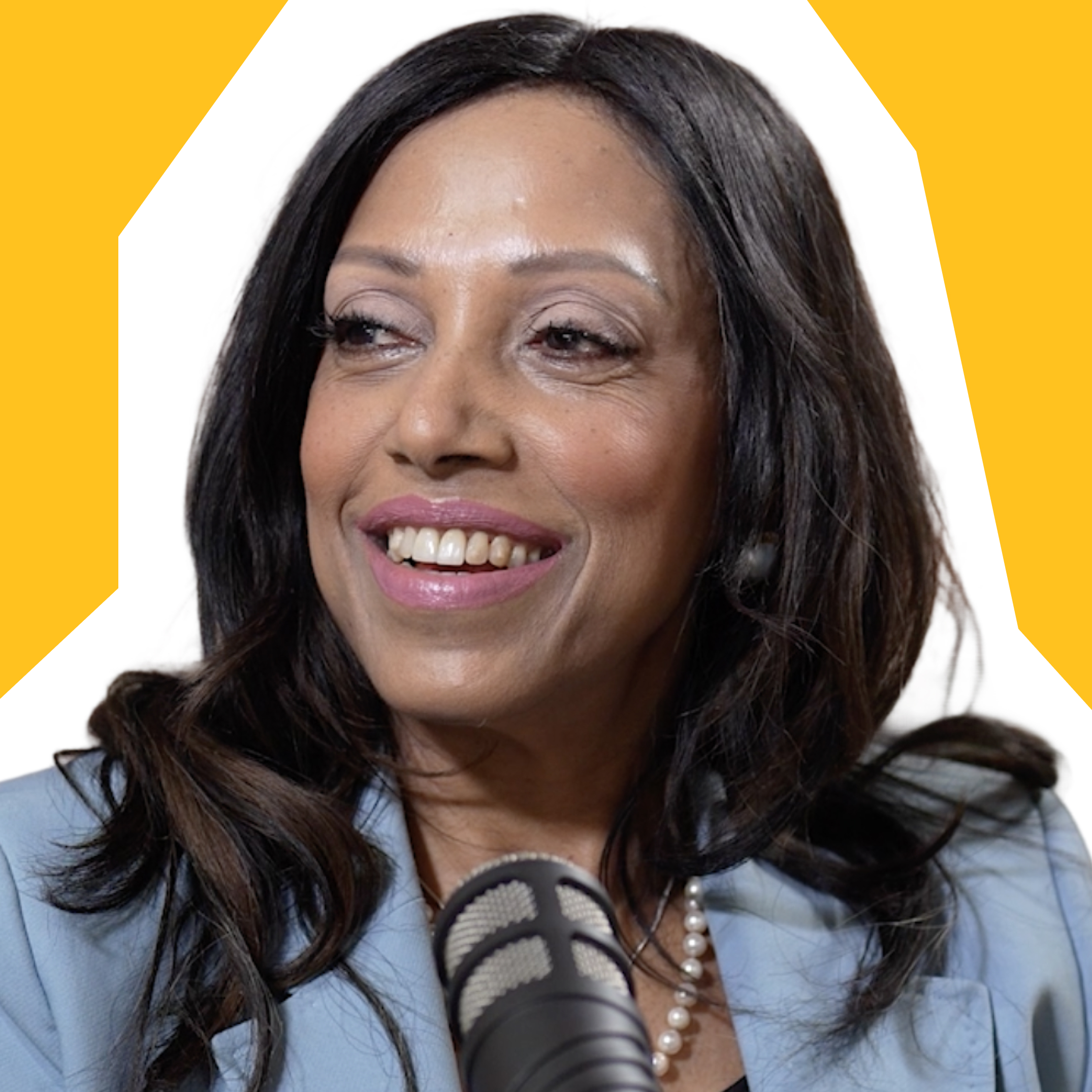
Joanna Li is the COO and co-founder of Switchboard, where she helps small businesses leverage automation and AI to boost efficiency. With over a decade of experience in project management and user-centric design, Joanna combines her tech savvy and operational expertise to streamline processes for growing companies. A Vancouver native with a global perspective, she's passionate about using technology to solve real-world business challenges and empower teams to work smarter.
Joanna Li [00:00:00]
Yeah, it's interesting. I mean, the McKinsey deck thing is very apt. And I think because you can open, being part of that government experience on the receiving end of those decks, you're like. You can see yourself.
Mo Dhaliwal [00:00:11]
You can see yourself in it.
Joanna Li [00:00:12]
Great it's a million-dollar deck, and now what, right like how do I actually build this thing, and for clients, um, you know, we kind of just get to the point faster, you know, like so that we can get you done.
Mo Dhaliwal [00:00:30]
Welcome to High Agency, igniting conversations with inspiring people, leading transformative change. In our rapidly evolving business landscape, digital transformation has become a critical imperative for companies of all sizes. Studies show that 70% of organizations have some sort of digital transformation strategy in place or are working on one. However, the journey is far from simple. Only 16% of executives say their company's digital transformations have successfully improved performance or equipped them for long-term changes. At the heart of this transformation lies automation and artificial intelligence. Now these technologies are reshaping industries, with 45% of current paid activities potentially being automated by this technology. So the impact is profound. AI could potentially deliver additional economic output of around 13 trillion dollars by 2030, which boosts the global GDP by about 1.2% annually. But for small businesses, the stakes are even higher. Because 80% of small business owners acknowledge the importance of digital transformation, many struggle with the implementation due to limited resources or expertise. And this is where automation agencies step in, bridging the gap between cutting-edge technology and practical business applications. So in today's conversation, we're gonna explore how these trends are shaping the future of work and business operations and learn about our guest, Joanna Li. Who is a co-founder of Switchboard, an automation agency? She's the COO, and in this role, she helps small businesses leverage automation and AI to boost efficiency. And with over a decade of experience in project management and user-centric design, Joanna combines her tech savvy and operational expertise to streamline processes for growing companies. She's a Vancouver native with a global perspective. She's passionate about using technology to solve real-world business challenges, and she empowers teams to work smarter. And I'm told she is also really good at Mario Kart. Welcome, Joanna.
Joanna Li [00:02:46]
Thank you so much, Mo.
Mo Dhaliwal [00:02:48]
So, before we get into it. When we first connected, I was already gushing to you about Switchboard, how much I appreciate the company and not only what you do, but how you do it. But before we get to that, I'm really curious about your story because it is a very technical and potentially nerdy value proposition that you guys have. And so I feel like there might be actually some, you know, kinship here, but I'd love to hear about how you actually arrived at Switchboard. What did you do before?
Joanna Li [00:03:22]
Yeah, thank you for the question. I mean,
Mo Dhaliwal [00:03:25]
Or as a little girl playing video games, where you're like, one day I'm gonna start an automation agency.
Joanna Li [00:03:28]
I mean, the nerd level was real from the start. And I think I've always had a keen interest in, well, keeping up with my brother for one, when it came to video games and just exposure to computers and technology, when things like ICQ and all these things became really prevalent when I was coming up in high school. And so I entered a tech program, which was the first of its kind when it started. It's now part of the SFU series. It's like. CYAT program for interaction design. And so just kind of leaning into this pretty early space when a lot of people didn't know what UX was, there weren't job roles for that. I think they were still defining what the curriculum and the program were with the teachers that we had there. And so, it was a really eye-opening experience to pivot the conversation in tech around the user and focus more on the user experience. And so it was. Just such a nice, I don't know, like revelation in how to approach things. And it's not just applicable to tech. And I think that's where, you know, I was working actually in government at the time when I was still in uni, and I ended up, after I graduated, shifting into the immigration sector and helping work on some of their programming for resources for newcomers. And I think that was. Interesting time because you know, like we were just developing websites that weren't just the Ministry of Attorney General's like page, where
Mo Dhaliwal [00:05:04]
Not shining examples of UX.
Joanna Li [00:05:06]
Exactly, right? I was like, why am I having to justify updating content for a program on the Ministry of the Attorney General's website? No one is going to think to look there. So it was an interesting time because I think this was like that moment where digital transformation and government started, like the UK already had its portal that was an amazing best-in-class example for that time. And this is way back in like 2011, I want to say maybe. So it was a real moment in time to learn about all the intricacies of government transformation and seeing all the different areas that needed to come together, but how challenging it was because you're also looking at a lot of infrastructure that's not ready to be just ported online. Like you're having to do the groundwork first. And so, yeah, the Welcome BC portal ended up being, you know, one of. Really big resource in a lot of ways for newcomers to access things from different ministries, but not from a ministry perspective. It was about what the user cares about. How do I get a driver's license?
Mo Dhaliwal [00:06:19]
The basics.
Joanna Li [00:06:19]
How do I sign my kid up for school? It was really focused on the lens from their experience. So I think taking that principle around user-centred design and user-centric focus just helps you think about people in a more empathetic way. And taking that principle into what I do has really been at the core of it. But at the same time, seeing these is really big. Organizations like the government, where it's, everything is organized by departments. You have to write briefing notes for things to get things done. And it was just, as a young person out of school, it's a confusing process. You're like, I don't understand why I can't just update this website. Why does a browser extension require a one-year process through IT to get something done? So.
Mo Dhaliwal [00:07:07]
Sounds fairly soul-crushing.
Joanna Li [00:07:08]
Yeah, it was a bit soul-crushing, and it's funny because I remember some younger interns coming in and worried they'd lose their sparkle if they ended up staying.
Mo Dhaliwal [00:07:19]
You just see the life go out of their eyes very slowly.
Joanna Li [00:07:20]
Yeah. And it's not all that. I would think that I was fortunate that it was a good time to make a real change and have an impact because those resources really did have an impact. I mean, I remember getting letters from new immigrants who were like, thank you for these books and things that I mean, they were just to the minister, but I'll take it. I think it was just really an important time to realize that you can just get it done. And honestly, A lot of those things were just. Reaching out to the different groups and pulling that content together so that we had a foundation, but also building those relationships across different ministries and organizations and whatnot to have it all come together. So that was kind of like a big catalyst for me, of like the why. And yeah, coming from that, I went into the agency world because I was, you know, I just wanted a different experience and wasn't.
Mo Dhaliwal [00:08:19]
Yeah, agency world will do it.
Joanna Li [00:08:20]
Yep, it couldn't be a starker contrast from government life because the pace is so different. And I ended up working in the UK for like a year at a smaller startup agency, or not a startup, I guess they were about 12 people, but it was small and more of a print-focused design agency for real estate, and I was helping run their digital team, and so helping translate print designers to web focus to do like marketing sites. Whatnot. So it was definitely an interesting experience to see going from one extreme to the next and how really small business runs where your co-founders are also the ones doing the coffee runs and buying toilet paper for the office, all those fun things. So it just was just a good eye-opening experience. And then when I came back to Vancouver, I ended up at Blastradius, again, like many Vancouverites. As a project manager, yeah. So I think that was also, again, another inflection point of a medium-sized, like organized, or level-sized company, I guess, for the Vancouver office, with a lot of process for us to manage and a lot more responsibility there, and then eventually moved to MetaLab, which is another kind of BC-based product design agency. And
Mo Dhaliwal [00:09:48]
So names like Blast, Radius, MetaLab, like these, are fairly legendary agencies in a Vancouver context. And it's also interesting because both of them came up and made a huge impact at different points in the sort of wave of technology and digital change and revolution that's been happening. So what was it like coming into and out of MetaLabs?
Joanna Li [00:10:15]
Well, when I started at MetaLab, it was about 50 people and grew to almost like 200, so it was an interesting time because I think you've got this big reputation of a company and it's really exciting and they were actually a pretty lean team, which is amazing because I think sometimes it is just focusing on the core values and the principles of what what they're about and I think they really leaned into doing. Interfaces and interaction design really well, and being quite humble about it, actually. And I think for me when I came in, I noticed having been with bigger organizations, you can kind of see you at that point of scale when things start to grow and we're expanding our team in different countries and we are already a remote company with a couple like local offices, but it was an interesting challenge to not only create a culture, but also. A standard and process for things. And we're still pretty scrappy at 50, you know, like things were still in Google Sheets and quite manual, like siloed systems. And I think timing has been such a key point in a lot of my tech but ops journey as well, because when I started, you know, we had really disparate systems across project management, time tracking, revenue, and invoicing, and all these things were just... Separate, and so being able to bring it together was more of a passion project for me. It was side of the desk because I was a project manager at the time, but...
Mo Dhaliwal [00:11:50]
So it wasn't like a mandate that was handed to you? That was just something that you thought about?
Joanna Li [00:11:52]
I think I could see it I could see why there was such a disconnect between why resourcing didn't have the same numbers as our project managers and you know at like every startup we're like we care more about quality than making people track time and I'm like well but you know like then your responsibilities start to shift as the business grows and I think being prepared and organized and having your in a way that's, like, in sync. Makes sense versus having people manually do it in separate systems that aren't talking to one another. And I think seeing that was such a critical thing because it was part of everyday business when you're in a larger organization because these systems are already established, but starting it from scratch is another thing. And so, yeah, I helped roll out, I guess, the first version of our put together like PSA offering because... You know, for a lot of agencies that end up with really big products, they don't always. You're probably using like 10% of it at the time we were using like Mavenlink or something, you know, like that. And you're really only using-.
Mo Dhaliwal [00:13:01]
You're not leveraging that product fully.
Joanna Li [00:13:03]
Yeah, exactly. And then it becomes very burdensome to adjust because it gets expensive for these feature changes that should just, you just want it to work. And so I think, you know, having rolled out that integration to create a PSA like system for our team was kind of my, the jump into the ops world for me. And then. Once I fully transitioned to the operations team, that's when Zapier and Airtable were really coming on the scene. So that was a really exciting time to realize we can actually build a lot of this ourselves. We're a product agency. We kind of take that approach to a lot of how we organize things. And quite often, it's not gonna be a finished product. Everything is an iterative process for managing these things. But one of our first. The big workflows that we built were to help our sales team. Help with their pipeline to briefing the teams once the work is done, translating that to a project and having that data flow more seamlessly, versus having people manually create all these templates and using the same emails. And there were just so many repetitive tasks that people. Didn't need to be doing. And I think a lot of them want to focus on the networking and the connection with their prospects and not being in the day-to-day and the monotony of like saving sheets and Google Docs, you know.
Mo Dhaliwal [00:14:38]
Yeah, I mean, speaking of monotony, I'm seeing an interesting parallel there though, because what you're describing from your experience in government of various departments, maybe even within an agency or connecting with a variety of agencies, but the idea of needing to bring multiple stakeholders, multiple departments together to work on something and then recognizing that again later on the technology realm. So you seem to have some sort of penchant before. Seeing that there are disparate parts that need to work together more harmoniously. And is that from your education? Is that from your experience? Where does that come from?
Joanna Li [00:15:18]
Interesting question. I mean, I always say like I feel like I'm a systems thinker, I like to look at the big picture of things and the interconnected points, and so I'm sure where that happened actually, but somewhere along my career. I think it just like it became more obvious To just see where the disconnects were where people weren't speaking to one another or this group Wasn't speak like if the data points are the same if finance is needing the data from projects or resourcing, and that's gonna be something that's important because not only we're gonna be audited on this, like that's a critical thing. We need to better align teams around the core focus, values and things, and that's a big part of bringing. The infrastructure is together. And yeah, I think a lot of startups end up focusing really in siloed domains because we're all focused in our lane.
Mo Dhaliwal [00:16:17]
Yeah, and a lot of the gaps just get filled with human tasks.
Joanna Li [00:16:22]
Exactly. Yeah.
Mo Dhaliwal [00:16:23]
And it's something that I struggle with quite a bit because. As an agency at Skyrocket, our work is understanding our clients, understanding what they're trying to do, and then going and doing that, right? And over time, and I think any company can be guilty of this if you're around long enough, it's over time you build up this sort of internal bureaucracy. And eventually that internal bureaucracy sometimes starts feeling like the work and the outcome isn't the work, right? And so we've kind of gone through that ourselves internally where... Our internal bureaucracies around how we manage projects or how we define and try to manage work. We actually had to go through a period of kind of ripping a lot of that out and to sort of get lean again and get nimble, and then look at and decide what tools we are using and how they talk to each other. But that's even when you're conscious of it, because I think in a lot of organizations, government especially, I'm not gonna keep shitting on you, but it's a good example here. But in government, especially, you'll have people of that art. Undertaking roles and performing a lot of actions without necessarily understanding the value of that action.
Joanna Li [00:17:32]
I think that's why I keep going back to the value, like the core values for the business, but also the why, when people don't know what the focus is anymore, like you're kind of losing the point. Yeah, or why you're doing anything. It's the driving point to just keep things simpler. I think we overcomplicate things quite often, and that we don't need to be. And I think focusing, you know, like the way we support our clients too, it's like we're not. In the weeds in the business in the way they are, we're coming in sort of as outsiders looking at it. And sometimes you need that perspective to pause and reflect on whether businesses do that themselves. I'm not sure. Like, I think everyone has a different approach to whether they do quarterly planning or annual planning on these things. But I think sometimes those resets are so pivotal to actually take a step back and ask, like, is this serving us? Are these things actually adding value? And do they ladder up to the mission of this business? And so I think, yeah, quite often you can lose track of that really easily, because we just get into the day-to-day of our work and just keep going without ever pausing to actually look, take a look at the system.
Mo Dhaliwal [00:18:44]
I think pausing to reset is important, whether that's, I mean, we do quarterly planning and those are great, like day long sessions where we get to stop and take a look at things, but this is also where, um, you know, I'm plugging agencies here a little bit, uh, but, this is where an outside perspective is critical, right? Like one of my favorite things to say that I say all the time is that you can't cut your own hair.
Joanna Li [00:19:09]
Well...
Mo Dhaliwal [00:19:10]
I mean, you could give it a shot.
Joanna Li [00:19:11]
You could try. I've had some friends do it. Question of labour, I guess.
Mo Dhaliwal [00:19:14]
And you can see the results, right? But for anyone who wants to be presentable, we tend not to cut our own hair, right, it's because.
Joanna Li [00:19:21]
Don't do bangs during a pandemic.
Mo Dhaliwal [00:19:23]
Cause you need a perspective, you need somebody to actually look at you from the outside, right? Um, and that's, you know, I think a big part of what I've been trying to actually even bring into skyrocket as someone who was first introduced to agile project management, like a decade ago, and that's a perspective where, you know, whether you're looking at lean methodologies or whether you looking at Scrum and Kanban and everything else. The crux of it at the end of the day was whatever action you're taking, is it something that is valuable to the end user, right? And many times we'll do many things that aren't valuable, and there's no way of getting around that. You just have to do it, right? It's like the only valuable thing is putting food in my mouth. But unfortunately, I have to go to the grocery store, and I have to do X, Y, and Z to make that happen. But at the end of the end,d if I could just put food in my mouth without doing any of that, then that'd be the value. We don't necessarily break down all of the work. And this is where that comment about bureaucracies comes in, right, where the steps are so many, and the connection from the work, from the value has actually been lost. The end user value has been lost, and now that's the entire conversation is like, well, and I think if you were to ask any small or medium business what they should automate and correct me from wrong, but I bet that there's a lot of situations where they don't even know what to ask for. Yeah. Because... They do it that way, and they don't know that there's an alternative.
Joanna Li [00:20:52]
Exactly. And I think too, with certain things that are kind of like AI can be a buzzword too, for a lot of companies. So they might see something and be like, oh, I want to implement it, but you know, actually taking a step back and looking at the overall strategy, like for themselves as a business, is really important to make sure it's serving them as well. And I think our approach at Switchboard to starting any engagement is going to be an strategy phase to do a deep dive like discovery to unpack like what the current state is to really understand the pain points the issues and Then propose a bit of a roadmap to how you get there to help to help them focus and organize like you know Business owners are really focused on their day-to-day things They don't need to be worrying about how do I like like launch AI and you know Maybe they want to do it and they can see the value, but they don't know how to get there And so helping draw that path to delivering it and also being that trusted partner to help them not only build and implement the technology and the solution, but also support them through the change management of it to help train and onboard their team and document process and work with them almost like an augmented ops team, you know? Like a lot of small businesses don't have a dedicated ops team. And I think that's the interesting thing about hiring, I guess, out, I know plugs here, but I do see, I mean, I'm biased. Um, I, you know, having a team that has a diverse skill set of a technical, strategic and delivery lens is going to help you get results faster. And I think in the long-term, businesses see that ROI because you're more impactful in a shorter timeframe and helping them focus and helping them get organized. And quite often it's a relief for clients to feel like they're being project managed. Because they need that guidance themselves, because they are dealing with a thousand emails a day, and worried about going to this conference, I don't have time to do this. So just having someone who's taking care of that and kind of plugging them in when needed is kind of like a very, I don't know, I've seen it be more impactful, like in this short timeframe, since we've launched, just being able to support clients in that way, which is pretty exciting.
Mo Dhaliwal [00:23:13]
Yeah, I have no doubt of that. Like if AI is a buzzword, then a close second is actually digital transformation, but that loses some relevance for small media businesses, because the good thing is that they don't necessarily have the layers and layers of enterprise systems and software.
Joanna Li [00:23:33]
Tech debt, all of that.
Mo Dhaliwal [00:23:34]
Yeah, and there's so much technical debt and almost like the sort of calcification that forms That is so hard for large enterprises to break up that they have to do something that's you know big and Kind of traumatic which is this digital transformation thing try to break that up and get things moving again And so small businesses aren't saddled with that always But at the same time they might not have the resources time and like just the reams and you know teams of people internally To manage some sort of massive automation project, right? Um, and so there's a, a sort of a middle area where I see you guys fitting, which is why I found the company actually so fascinating, um, where for a smaller media business that can't undertake what would normally be considered a big, you know, digital transformation project and the thing that, uh, you know McKinsey and other agencies will, uh consultancies like that we'll talk about, but still want to improve things, still want us to say, how do we get more of our people focused on doing the work rather than pushing. The digital equivalent of paper around their desks, right? So at what point did all of this sort of culminate for you, and you said, actually, you know, as a project manager, you've been kind of greasing the wheels and going in and kind of lubricating internal systems for a while.
Joanna Li [00:24:49]
Yeah.
Mo Dhaliwal [00:24:50]
But when did you realize that actually that was the entire value you wanted to create and put it into something?
Joanna Li [00:24:55]
Yeah, it's interesting because my co-founder, Justin, he also came from MetaLab, too, and has a wealth of experience and is way more technical than I am in this area. And so he actually started an agency prior to Switchboard and was doing it solo, bootstrapping himself. And there was definitely an increased demand for this big need that people didn't quite understand. And ChatGPT had just. Like, I think, and all these things were kind of, again, a point in time culmination that made sense. But after doing it solo for a bit, he realized it's a lot to run an agency, and it's a lot to take on and do well and really level up the service that we wanna be able to offer. And so, like that's when he tapped my shoulder, and I was so excited to team up with him because... I mean, I loved working with him at MetaLab, and we did a lot of great work together. And so just knowing someone who's also really passionate about this space is such a visionary, and it really helps kind of spark, I think, in this area too. It's always nice to collaborate and bounce ideas off someone. So yeah, that was kind of the segue for my career path to take that on. But. I mean, it's still the first year of us running, and so far I'm loving it, so no regrets there.
Mo Dhaliwal [00:26:25]
No, it's a company I was excited about when I first saw that you had launched. It was really fascinating to me because again, speaking from like a super nerdy perspective, as the founder of my own company and as somebody who's thinking about work and systems and processes, like I'm somebody that will, you know, on a weekend be playing on like make.com and like tuning my little automations and things, right? Cause it's fun as a technical hobbyist, but there's a profound implication to putting all of these tools together in an interesting way. And in some ways, it's kind of like the ultimate video game, right? Because it's people, it's resources, and it's leveraging different things to see how things will improve. What are the biggest challenges you guys have had in sort of playing this, you know, small, medium business video game of automation?
Joanna Li [00:27:16]
Well, I mean, I think there's still always the underlying of any change, like a management challenge. It's always gonna be resistance to change, right? And I think for us, some of the big things for our clients are like, how do we successfully help them navigate that? Like the technical side is one aspect of building, and actually, we feel like usually that's the simpler thing, but it's the business process side. It's the people side that is more of the layered challenge of helping people successfully implement things. And so yeah, I think that's gonna always be at the core of any successful implementation, like, is there actually adoption? And if you're worried about training your team, how can we support that? And I think, yeah, so much of any sort of change is really making sure the thing that you implement gets used, or if not. Like taking a step back, iterating, and understanding where the issues are.
Mo Dhaliwal [00:28:21]
No surprises. It's, you know, these are human systems, right? At the end of the day. Yeah. And there's going to be human challenges, right? And it might be emotional or psychological. And it's interesting how often that actually comes up whenever we're talking more technical change. Yeah. Because the technical side can be figured out. Yeah, the unknown typically is the culture, and how do we, how do you work with the people? And this has come up a number of times. And I had a really interesting epiphany, actually, just a little while ago with a past guest. Where we were talking about digital transformation and technological change, and how we need to bring people on board and what that takes. And I am someone that internally, I had gotten to a point where I would have like an allergic reaction to spreadsheets. Because in my mind, if I saw somebody spending a bunch of time formatting, constructing, building these complex spreadsheets, I was like, that should be an API, right? That should be a dashboard. Why isn't this data plugged in, et cetera? And what this person kind of explained to me was that I was discounting the emotional need that somebody has to wrap their own heads around what's going on. And that means they might need to build a spreadsheet, right? And it doesn't mean that it has to be the core of the business or the system, but humans have our own needs, right? And sometimes we've got to do things differently, and we need to accommodate those. And one of the ways people do that in a knowledge working environment is by building complicated spreadsheets for themselves. But how have you guys found any? Cheat codes, any tricks, any ways of getting people on board, especially when you're talking about automation, which sometimes comes with new software, new systems, new ways of doing things. And you've got somebody in the office that's like, well, you know, I like to do it this way, right? Or we've always done it that way.
Joanna Li [00:30:06]
I think it's also just putting it in front of people and showing them. I think for clients who are coming from really large spreadsheets, I'm just thinking of the call I had this morning, it was so complex because it's a whole scorecard algorithm that I'm not gonna pretend to understand. But at the same time, when we brought that into Airtable and demoed what that interface looks like, it's simpler, right? Like you're not seeing the back end of how that calculation is working. You're just getting to use it. You're gonna have to learn a new interface, but as soon as they see the value in that, that's the proof point right there. And then it's just working with them to iterate on it. And I think for a lot of what we do, it's as kind of like that advisor in consulting is just breaking it down for them. They don't care about APIs; they don't care about the script you're using. We can nerd out and show them. Sometimes they're interested, and maybe if they, when they take it on, like they might need to manage it. But you know, when we're demoing things to our clients or even just working across the internal team, like we really leveraged the just experiment and testing and trying to see if that approach works and solves the problem, and just working out through things in that iterative way. And so I just find, like, with this sort of opportunity with the software that we're using now. It just makes it so much easier. Like you said, you can just be a hobbyist and tinker, and it's not like you're spending three months' effort to build something that you might have in an enterprise way, right? And something that's a bit of a beast of a program, but with a lot of what we do, it's a little bit lower stakes to experiment and just show and see if that thing's gonna work. And usually it blows their minds because they're coming from pen and paper or a very manual way of doing something.
Mo Dhaliwal [00:32:05]
It was actually in one of Switchboard's, I think on your website, you have like an introduction deck or something, but I saw it somewhere, and there was this amazing slide deck and one of the slides in there. And when anybody shits on McKinsey a little bit, I'm always a fan of that. It's fun, it's easy, they're your target. But there was one slide that actually had, you know, McKinzy advertising their digital transformation services and then a piece of McKinzie thought leadership that said, 70% of digital transformations fail, and it's just a fantastic juxtaposition of what's actually going on in the world. Improving the value of what you're doing, because what you are describing is, you know, putting it in front of somebody and showing it to them. But how do you explain that before you actually build it? Because having experienced it after the fact, that's, you now, the job's gonna be done to some extent, and now it's about sort of onboarding. But how do you tell the story beforehand?
Joanna Li [00:33:01]
Yeah, it's interesting. I mean, the McKinsey deck thing is very apt, and I think, because you can open, being part of that government experience on the receiving end of those decks.
Mo Dhaliwal [00:33:13]
You can see yourself in it.
Joanna Li [00:33:14]
You're like, great it's a million dollar deck and now what right like how do i actually build this thing and for for clients um you know we we kind of just get to the point faster you know like so that we can get you done and i think part of that is just working more collaboratively with them we have very engaged business owners who are part of it because they understand the value of what we're doing, or else they wouldn't have signed on with us. But, you know, it's in their interest to make sure that we're set up for success, too. And part of that is making sure we're speaking to the right people who are the business drivers, the decision makers, and the subject matter experts in the organization for us to be able to actually make a recommendation that feels way more tactical and actionable. So I think that's, you know, we're not taking months to do something. And we're taking weeks. And I think seeing that immediate return for them, they can see the value. They're already getting excited about how we're gonna implement because that's us automating and how their email generation, leveraging AI, is gonna save them hundreds of hours. That's the sort of thing that gets them excited. So they're motivated to roll things out with us. And I think that's. It's a closer working relationship than I think you can get with then maybe with larger organizations, like the magnitude of change. It's a different approach, right? And I think for me that's why I'm very passionate about small and mid-size markets because it's exciting to see that. It's very rewarding to see that change for business.
Mo Dhaliwal [00:35:00]
That's clearly exciting to you because you're like lighting up as you're telling the story of, you know, it might be faster and easier to start invoicing.
Joanna Li [00:35:06]
Yeah. I mean, it's amazing. We had a client who was like, yeah, we might be leaving some money on the table because we have an invoice, and now there's sanctions in that country, and now we can't collect that money. So there are real business impacts. They're not just trivial administrative things. These administrative things are like big dollars for some companies.
Mo Dhaliwal [00:35:30]
Switchboard, am I right in saying, like, this is your first foray into startup founder land?
Joanna Li [00:35:35]
It is, yeah. I mean, I've worked for a startup and, like, you know, but yeah, this is the first one.
Mo Dhaliwal [00:35:42]
And how's it going so far? What have been your biggest challenges today?
Joanna Li [00:35:46]
I mean, just that transition from almost like I see in management from my previous agency to this, it's definitely a different switch. You're wearing a lot more hats, you're kind of, we've learned a lot from our experience working in an agency, and that's really, I feel like gives us that leg up for sure, of like just understanding how a business is run, but doing it is very different, like being in charge of the books and the. All these other areas, so it's exciting. I mean, it's also really satisfying to be able to start from scratch with things and have no tech debt or any other process debt and just start to build things in your ideal state of what would I have liked to see, but it's really exciting creating new career paths for people who are interested in tech, but they don't know what that. Job looks like in the real world now because this is a new space for a lot of people, but it's also giving opportunities for operations professionals who might have worked in a very siloed space. And so to me it's very rewarding to be able to create different opportunities for people, but also offer something different that we haven't seen in the market yet for our clients.
Mo Dhaliwal [00:37:08]
So, from what you're describing so far. This is one of those Steve Jobsian sort of quotes, of you know, connecting the dots, looking backwards. You are leveraging what you learned at these various agencies and these different roles into your role at Switchboard and the founding of Switchboard. It makes a lot of sense. So you're leveraging a lot of the strengths and aptitudes you'd built there. You're into it. What are the new things, or what are the gaps that you saw in yourself that you had to fill, and like learn really quickly?
Joanna Li [00:37:35]
Well, I think I told you before this podcast, having to be the face of something is very different for me. As an ops person, I'm very comfortable behind the scenes and just like having an impact in that way. So being conscious of like the marketing efforts and all these other areas was definitely a new focus for me, but also just like other areas of running the business, having to do reporting and business-level board decks and all these things that are just not things I had to do before, but very fun to learn.
Mo Dhaliwal [00:38:15]
Well, especially the era that you're in, because more than ever, for I think companies of any size, frankly, um, CEO, led and founder-led marketing is a huge thing.
Joanna Li [00:38:27]
Yeah.
Mo Dhaliwal [00:38:30]
So you were mentioning that this is your first podcast, but hopefully not the last one. You're gonna have to do a lot more of these because founder-led marketing is the thing. So you gotta do it. But aside from coming into the front and kind of putting yourself out there, right? If I'm paraphrasing, but what I'm hearing from you is that you were more comfortable operationalizing things and kind of being tucked away in a room somewhere, wiring stuff together, and now you're being the face of something and really putting yourself up there. You know, what's exciting you? Like what are you interested in sort of learning next in your own leadership and startup founder journey?
Joanna Li [00:39:10]
Being able to grow a solid team, like an empowered team to do this work, I think it's interesting to be able to find people with the values who get this work and who want to drive change in the way that we do, is gonna be a big focus and learning how to navigate that as running an agency in that way. But I think that's probably gonna be. A big core of that, as well as the brand and marketing aspect. And for me, it's, like you said, the marketing space has changed a lot. I mean, I studied marketing way back in the day, too. And it's a completely different game now with how social media and content marketing are driving things. So yeah, there's a lot in there that I think we're going to be diving more into. And as we have. We've been really working on things like case studies and to really showcase to people what we do because I think there's people who are engaged and already interested in this work who might get it right away, but to see the value in a tangible way and with real examples is really how you kind of get that critical mass. And so I think, yeah, building. Building the right brand and marketing approach, but also the team behind it. That's really gonna be the core of what the business is gonna, our service offering, right?
Mo Dhaliwal [00:40:41]
I mean, I'm gonna sound like a fanboy here again, but with Switchboard, one of the things I really like is that it's such a technical value proposition, actually. Automation, artificial intelligence. But you do such a great job of communicating your culture. Even though the company is showing up, there's a culture being communicated. And moving forward, my prediction for Switchboard is that the technical stuff is easy. You guys are good at that, you'll continue being good at it. What? But the communication of culture would be my hope for you, that you just really lean in on that because you're doing a great job of it so far. Did this just come naturally to you guys? Like, how did you just knock it out of the park on your first try?
Joanna Li [00:41:20]
Um, I don't, I, I mean, I think we also have, or just being ourselves, I guess, in some ways I think our values are very much aligned with being very human. It's, it's actually one of our core values. We do talk about like, you know, we're optimizing systems, but you're doing it for people. Yeah. Right. Like, we're not doing this to be more of a machine. So I think just people resonate and understand things better when you speak to them in a more human way. And that's why I think. The storytelling aspect and analogies to understanding tech, it can be very overwhelming. I mean, I won't say I'm the most proficient tech person either, I think, but it helps to break it down in a way that's more relatable and understandable for more practical applications. I think a lot of small businesses just get overwhelmed by it. They don't know where to start. And I think for us, it's very important, but also for the team culture too. I think having empowered people who have those values. They're gonna be interested in continuous learning. They're gonna wanna have a safe space to have that culture to do those things. And yeah, culture has always been very important. I think even when we came from MetaLab, it was very much like when you're a remote agency, you kind of really need to lean into those other soft skills and other areas to create that point for collaboration and how people work together. So I'm really excited that that comes through. So thank you.
Mo Dhaliwal [00:42:46]
Yeah, absolutely. Was MetaLab entirely remote?
Joanna Li [00:42:49]
Well, we had an office, but primarily, yeah, a very remote work culture. So it was very foundational to us. It was a stark contrast for me coming from those government days to everything's on Slack, and I've never had to use so many emojis so quickly in my life. I think it really highlighted, I always call myself a geriatric millennial, but honestly, I could not keep up with the speed of. How people emote. And so I think there was an unnatural DNA that gets formed when people just feel comfortable with one another. You're creating that safe space for people to just share, not just the work things, but the personal things, and it gives them space to learn and grow.
Mo Dhaliwal [00:43:32]
Yeah, and I think that is such a fascinating focus, like the focus on the humanity and the focus of the people, because there's an interesting sort of parallel I'm just drawing out of technology and even like the application of discipline, you know, individually. And the reason to apply discipline, or the reason frankly to use technology, is to take the basics of what you have to do in life and just get them out of the way.
Joanna Li [00:43:58]
Mm-hmm.
Mo Dhaliwal [00:43:59]
So that you can spend more time being human, so that you can spend time actually living and expressing yourself and receiving what this life has to offer. And that's still a tough sell to someone who thought that that was what work and life was, to do the steps and do the things, right? And the humanity of that story, like, do you have any interesting or recent examples of places you've gone in and kind of made that impact where you can show efficiency, as you mentioned, the invoicing and somebody that might've been left on the table by somebody that didn't have efficient invoicing. But is there any recent example or story of where you were able to actually bring in some automation to frankly just save people the time so that they could just be people?
Joanna Li [00:44:47]
Yeah, actually one of my favourite clients. Not that I should have favourites, but they are a green surveying company, and it's a family business. And the father is passing down this business to his daughter, and this was really interesting because so much of how the business process worked was in his head. And he was manually checking like 5,000 emails a day, and that is for someone inheriting that business. Not something you want to maintain. And so I think it has been, I've noticed this actually now with a couple of clients too where when you're transitioning between leadership, that's usually a good moment to reflect and understand the business because you naturally have to, but also it's, yeah, a really big opportunity for them to unpack why was something done that way and should we keep doing it that way? Like, is. You know, oftentimes it doesn't make sense if it's not serving you. And so in this case, we ended up helping them find a better system to manage their 5,000 emails a day that they were manually tagging. And it was, it always blows my mind because coming from tech, I'm always like, it always surprises me some of these stories too, where they'd have to send these reports and the surveyors would take a photo of the Excel spreadsheet to send it on WhatsApp to get it back to the. To the, you know, for them to process everything. So there's just like this mix of tools without a real system in place, and even though rates and all these other areas of the business were, decision points were being made. Everyone had to step back to understand how that was actually done. And they realized that's all reliant on a person. Not a process. And so I think that's... Usually, like when we're saying how a lot of this isn't necessarily just the technical side, it's the business process, it's the people side, it's helping them unpack those things so that you can get to a cleaner tool and data infrastructure and helping them distill it down. Because it is overwhelming, it's a pretty overwhelming conversation to have, and you can go into these like rabbit holes of discussion and not really have an outcome. And so I think for us, being able to help them. A first project to help them just streamline email intake has actually really made a difference in how they're communicating. Things aren't being like the margin of error is less. We've been able to systematize things and have them communicate in threads in a different way. So yeah, it's been really important to have them see firsthand like a quick win and then help them also build an infrastructure or further other, you know. Tools and processes across the business for like sales to job management, and invoicing.
Mo Dhaliwal [00:47:46]
And ultimately, that's smoothing the transition of succession for a family business.
Joanna Li [00:47:51]
Yeah, exactly. I mean, they know there's a lot to do, but you have to start somewhere. And so, without getting too overwhelmed, it's like putting a roadmap in front of them. This is how we're going to get there. And you're in safe hands. We've got you, like, we're gonna help you, like, train your team and work through those different regional offices and work through the implementation planning. So I think, you know, for them, it's helped them be able to focus on the business and the day-to-day and not worry so much about like. The overall process things and know that they can have someone that's going to help them do that.
Mo Dhaliwal [00:48:31]
How much of your success would you attribute to being good at Mario Kart?
Joanna Li [00:48:39]
This is the perfect question. So much of it. Yeah, I mean, I was surprised in myself how much I would take Mario Kart so seriously, but I will say, again, having an older brother where he was so good at all the video games, you need to just be really good at one thing.
Mo Dhaliwal [00:48:58]
Oh, so you specialized early on.
Joanna Li [00:48:59]
I specialized early on. I was all about mapping that feather efficiency to jump off that rainbow road. And I don't know. I guess it was like a subconscious thing that I didn't realize I was doing until I did it. But yeah, there's some sick drifting skills, I have to say.
Mo Dhaliwal [00:49:19]
I think we can draw a pretty straight line from that to Switchboard.
Joanna Li [00:49:23]
Yeah, it's all about the Tokyo drift when you slide into first place.
Mo Dhaliwal [00:49:31]
Um, so for anybody that wants to learn more about you and what you're doing and your company, where should they go?
Joanna Li [00:49:36]
Well, you can go to our website at withswitchboard.com or find us on LinkedIn, also with Switchboard. And yeah, we're gonna be posting a lot more on our case studies and other examples, so just excited to get the word out there.
Mo Dhaliwal [00:49:52]
And hopefully you're going to be talking and speaking and sharing a lot more.
Joanna Li [00:49:55]
No, we've got there, baby steps. Alright.
Mo Dhaliwal [00:49:58]
Well, thanks, Joanna.
Joanna Li [00:49:59]
Thanks so much, appreciate it.
Mo Dhaliwal [00:50:02]
Well, hopefully we've given you a lot to think about. That was High Agency, like and subscribe, and we will see you next time.



Get our latest insights on brand transformation and digital innovation delivered monthly. Join forward-thinking leaders who are building momentum.
We’re ready when you are.